Beijing Confucius Temple and Guozijian: Ancient Cedars, Exam Steles and a Quiet Ritual Route
World Travel 编辑部 · 2026-09-11 · 8 min read
What you can take in in half a day
The Confucius Temple and the Guozijian (Imperial College) share one axis: first sacrifice to Confucius, then run the academy. This was the site of state Confucian rites and the top academy across the Yuan, Ming and Qing dynasties. Beyond the red walls and glazed tiles, the real draws are the ancient cedars, the steles of successful imperial exam candidates, and the water-ringed Biyong hall at the center of the Guozijian. On a first visit, treat it as a quiet ritual route and walk slowly — that fits better than rushing. Plan about 2–3 hours; you can chain it with nearby Yonghe Temple for a half-day.
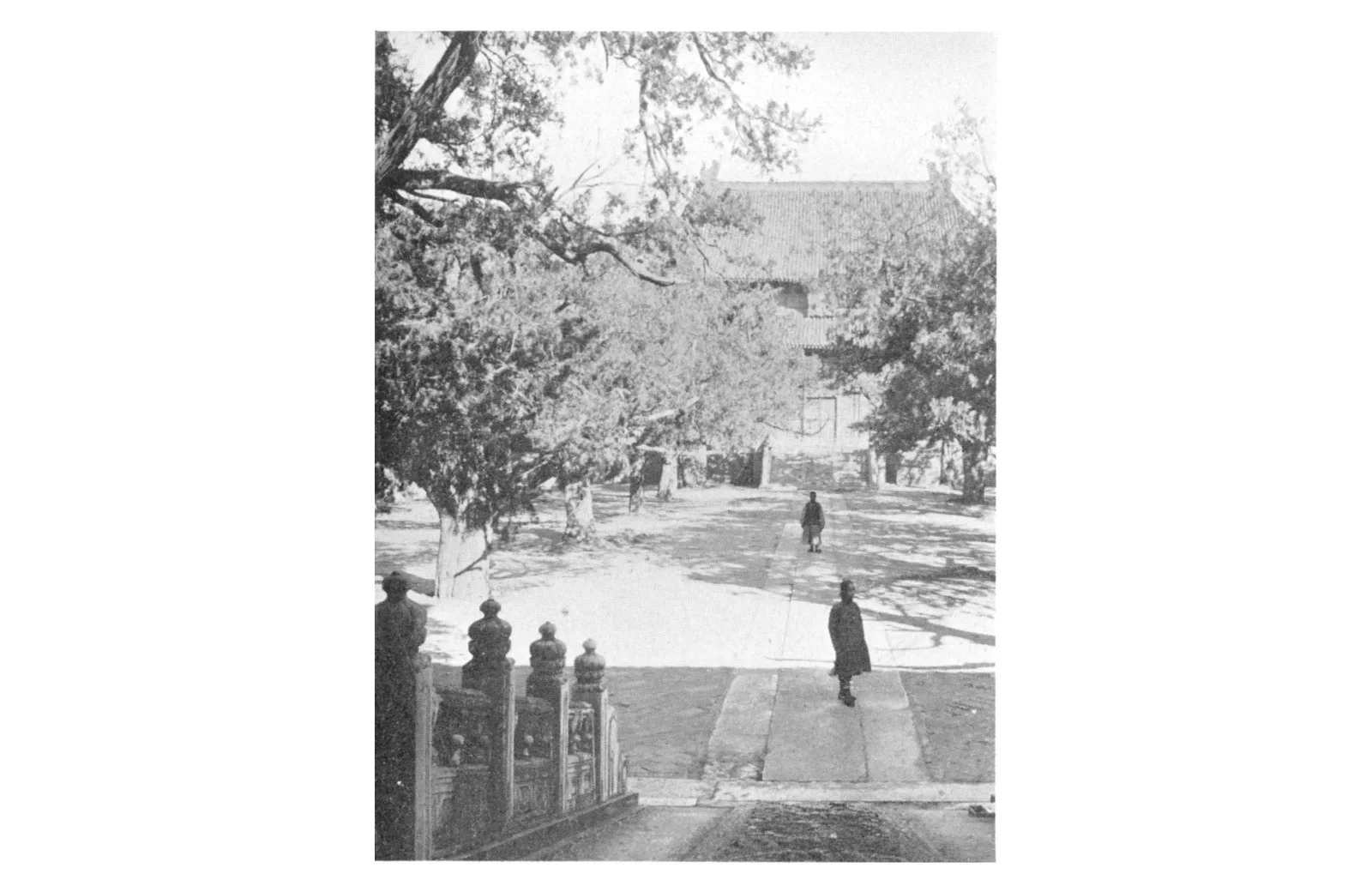
Beijing Temple of Confucius
Photo: Unknown authorUnknown author · 1901 · Source · Public domain

Tickets and opening
The Confucius Temple and Guozijian are one combined museum (Beijing Confucius Temple and Guozijian Museum), usually one ticket covers both; exact price, discounts and closing day (often Monday, except legal holidays) follow official notices. In peak season and holidays, check the official channel for booking in advance; on-site queue time follows the day. Bring ID; entry verification follows on-site rules.
Route: Confucius Temple first, then Guozijian
Enter at the Confucius Temple's main gate, see the Dacheng Hall and the side steles, then walk the cedar-lined path to the forest of exam steles; the steles bear the names of Ming and Qing (and Yuan) successful candidates — the most tangible form of "passing the top exam." Out the back gate of the temple you enter the Guozijian; follow the axis to the Biyong — a platform hall built in the middle of a round pool, linked by bridges on four sides, the symbol of the emperor teaching in antiquity. The route is basically one-way; follow the courtyards and you won't get lost.
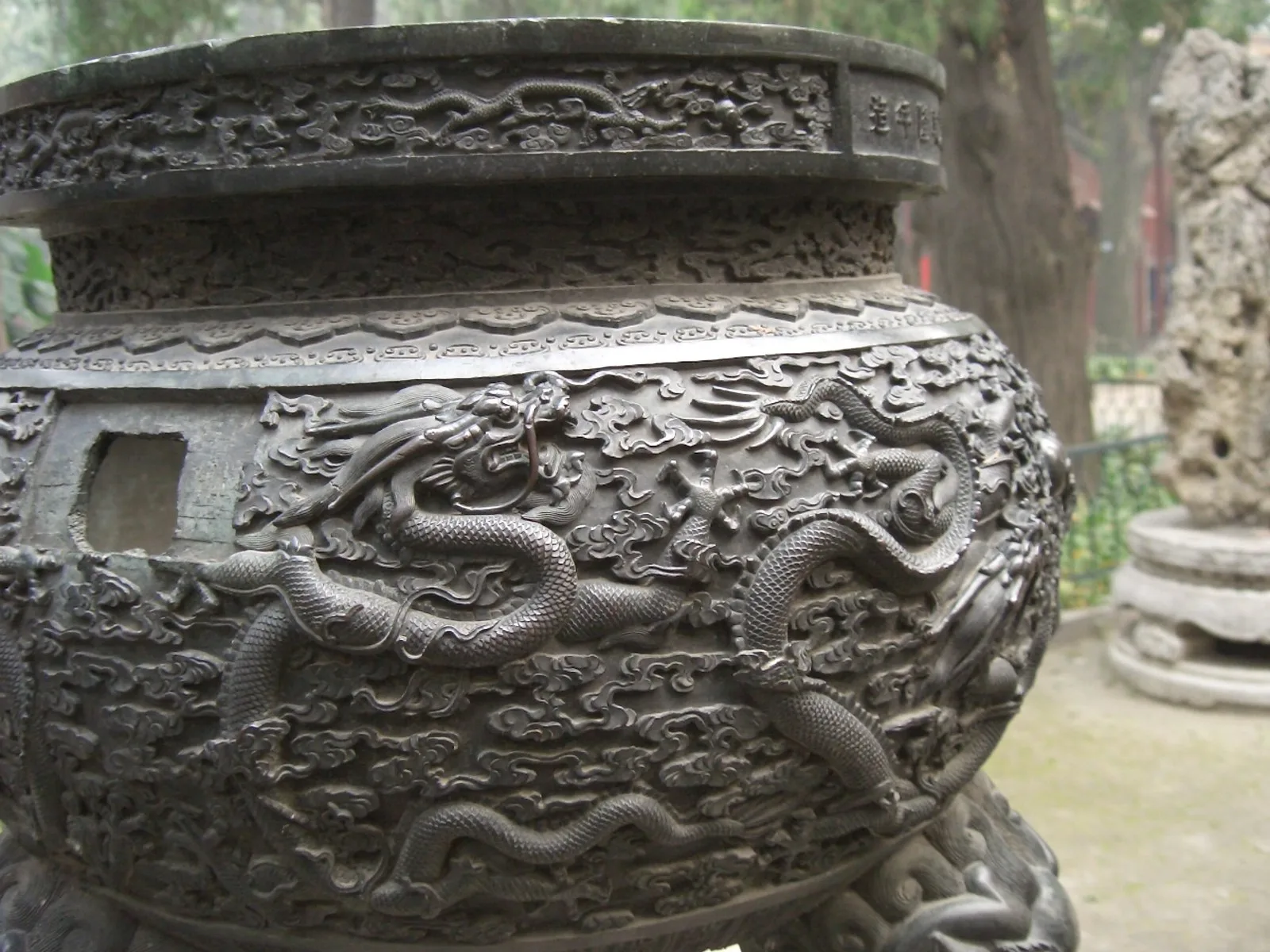
A censer at the Confucius Temple in Beijing, China has intricate carvings on it.
Photo: me (w:User:pfctdayelise) · 2004-10 · Source · CC BY-SA 2.5

How to read the cedars and steles
The cedars in the temple are centuries old and their shapes alone are worth seeing; nicknames like "traitor-removing cedar" are folklore — enjoy the story, don't take it as history. There are many exam steles; you don't need to read them all. Pick two or three near the entrance with clear carving and note the difference between phrases like "dered jinshi" and "ci jinshi." The stone is badly weathered — don't touch or rub it, to protect the relics and avoid damage.
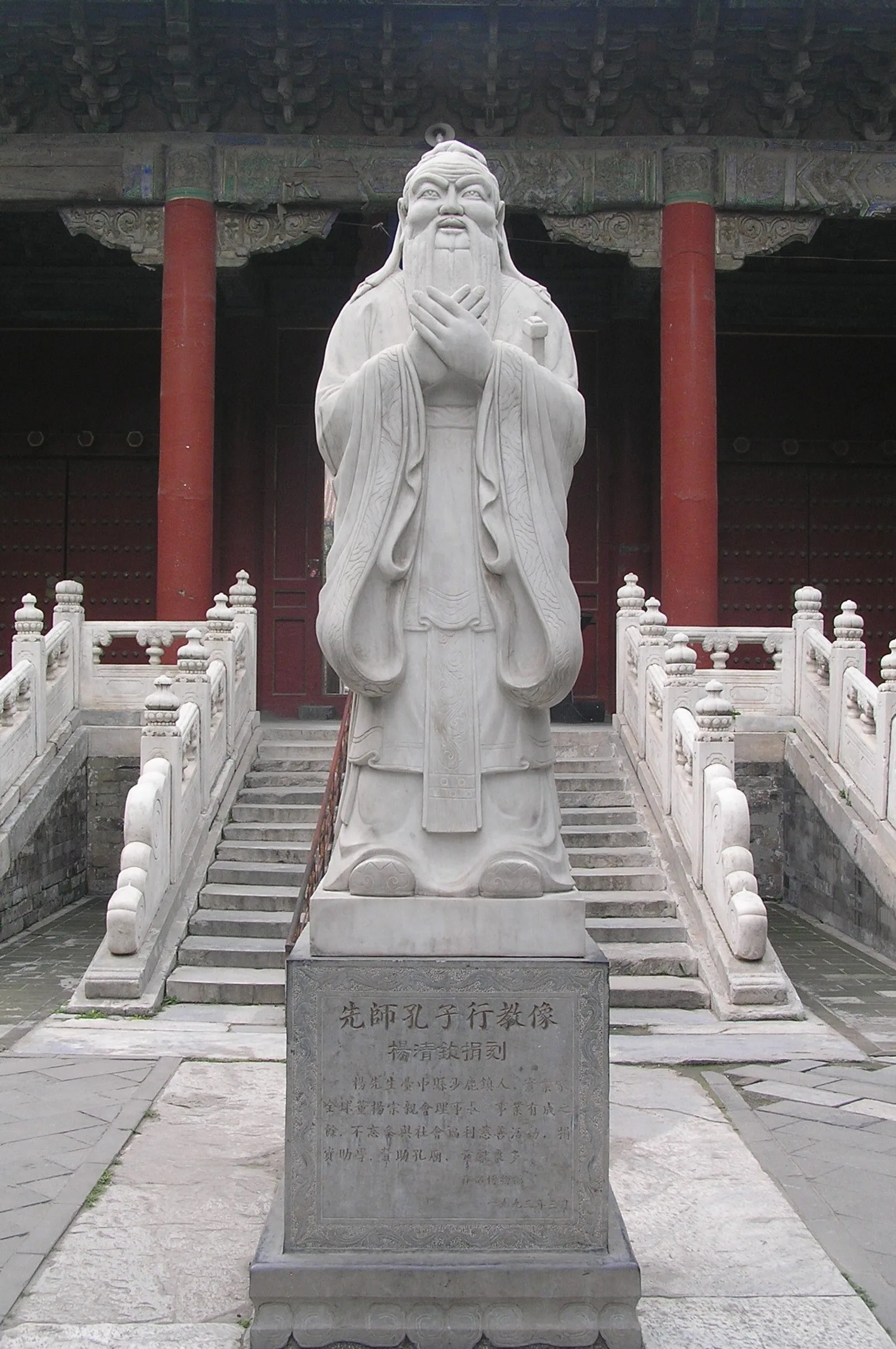
Confucius statue at the Confucius Temple (Beijing, China) Author: Mr. Tickle Date: 07/19, 2005
Photo: No machine-readable author provided. Mr. Tickle assumed (based on copyright claims). · 29 January · Source · CC BY-SA 3.0

How to chain with Yonghe Temple
The temple and Guozijian sit on Guozijian Street inside Andingmen; Yonghe Temple is at the east end of the same street, about a 10–15 minute walk. A common plan is Confucius Temple + Guozijian in the morning, Yonghe Temple in the afternoon, or vice versa; both are quiet and suit the same day. If you only have time for one: pick Confucius Temple + Guozijian for "rites + imperial exams," pick Yonghe Temple for "Tibetan-Buddhist monastery + incense." Opening follows each site's official notice.
First-visit notes
- One ticket covers both; closing day is often Monday (except holidays) — times official.
- One-way route: Confucius Temple → exam steles → Guozijian → Biyong, follow the courtyards.
- Cedars and steles are the draws, but folklore isn't history; don't touch the steles.
- Same street as Yonghe Temple; chain for half a day to a full day; both are quiet.
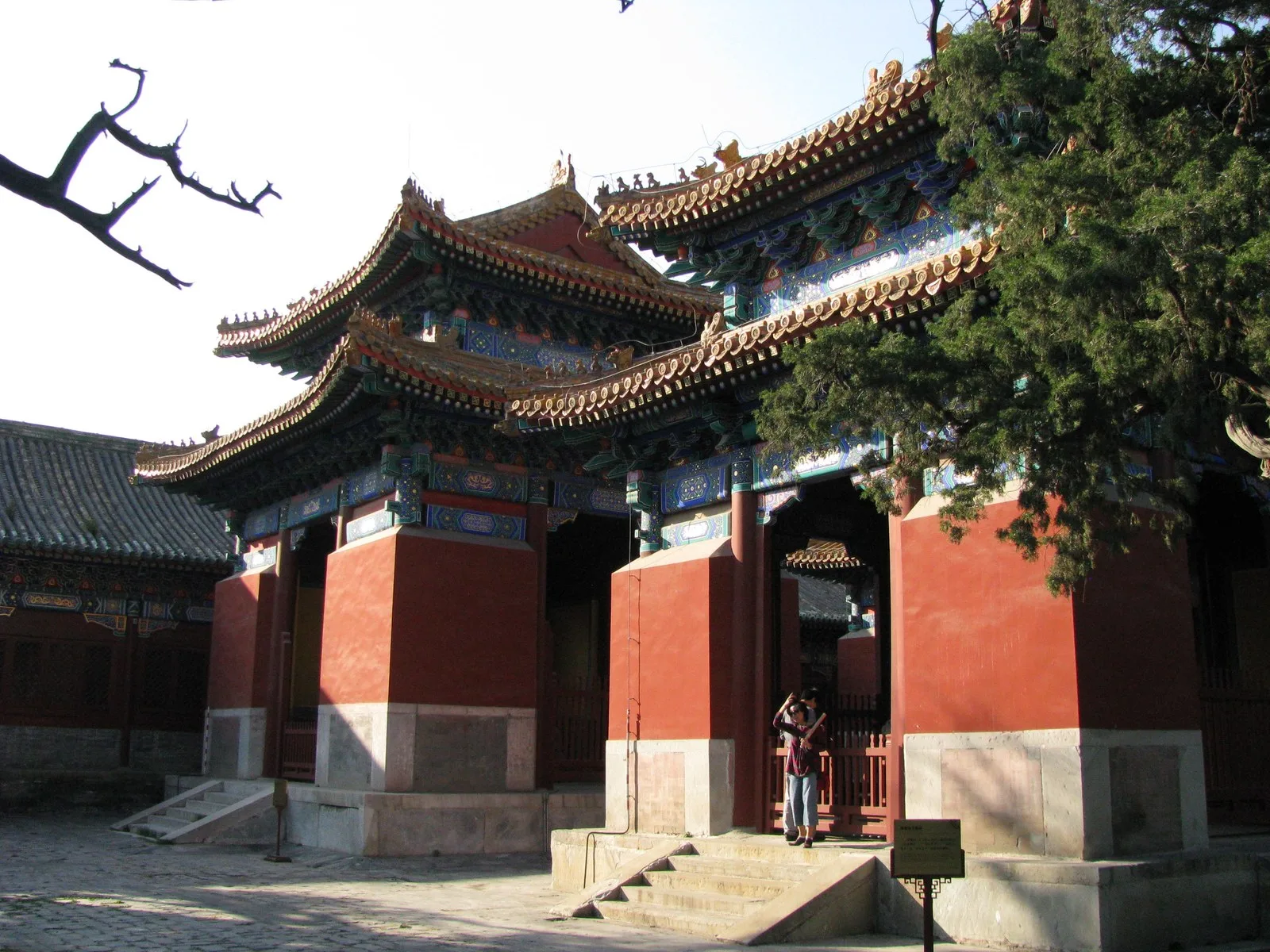
Chapels at Beijing Temple of Confucius, China.
Photo: Laurent Bélanger · 2010-10-04 · Source · CC BY-SA 4.0
