Walking Wangfujing: The Golden Street, Bookshops and Dongdan
World Travel 编辑部 · 2026-09-11 · 9 min read
How to walk Wangfujing
Wangfujing is a city shopping axis that can be divided by interest, not a gated attraction to “complete” in one visit. The pedestrian street, department stores, bookshops, the church and the Dongdan direction form a flexible route. A first visit can use two to three hours for street observation, architecture and changing commercial spaces; shopping or indoor visits need extra time. This is an editorial plan, not a personal shopping report or business review.
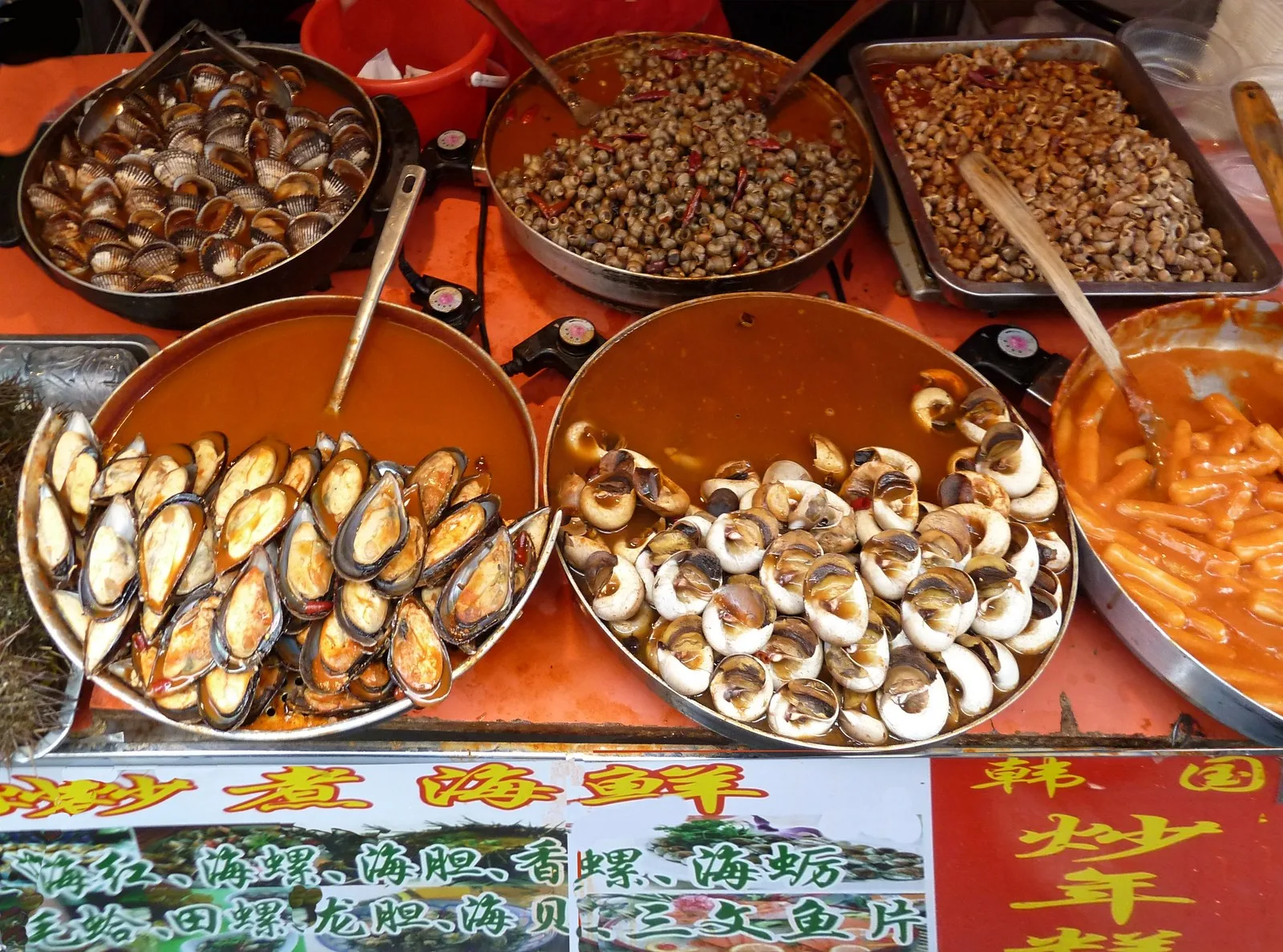
Beijing Wangfujing - Street food. The visible dishes are mussels (贻贝, yíbèi) prepared in a chili sauce, cockles (蛤蜊, gélí), popular in Chine
Photo: Pierre André Leclercq · 2011-09-09 09:45:55 · Source · CC BY 4.0

The main line: from Wangfujing Station toward Dongdan
Start around Wangfujing metro station. Walk along the pedestrian street in the direction that best matches the day's crowd flow, then keep one continuous section rather than repeatedly crossing between malls. Think in four chapters: street, exterior of a commercial building, a cultural node and a rest stop. Wangfujing Bookstore, older commercial façades and public art can be observation points. Confirm each business's opening status and entrance through its own official notice.
Visitors interested in architecture or city history can use the church and nearby historic buildings as exterior landmarks, but an exterior view is not an indoor visit. If shopping is the priority, list target malls in advance and order them by station and street position. The distance toward Dongdan is walkable, yet holidays, events, rain or snow can slow the route considerably.
Shopping, food and budget
Commercial projects change quickly. Brands, shops, floors and operating hours should not be copied from an old guide. This article does not endorse an unverified mall, restaurant or snack, and it does not turn labels such as “golden street,” “popular” or “must buy” into rankings. Divide the budget into transport, food, shopping and possible indoor admission, then set a limit before choosing.
Check security, storage, photography and event rules when entering a mall. When photographing signs from the street, stand clear of the pedestrian flow. Avoid close-up identifiable portraits of passers-by. For an evening walk, confirm the return metro, bus or ride-hailing pick-up point; temporary road closures can change the practical route.
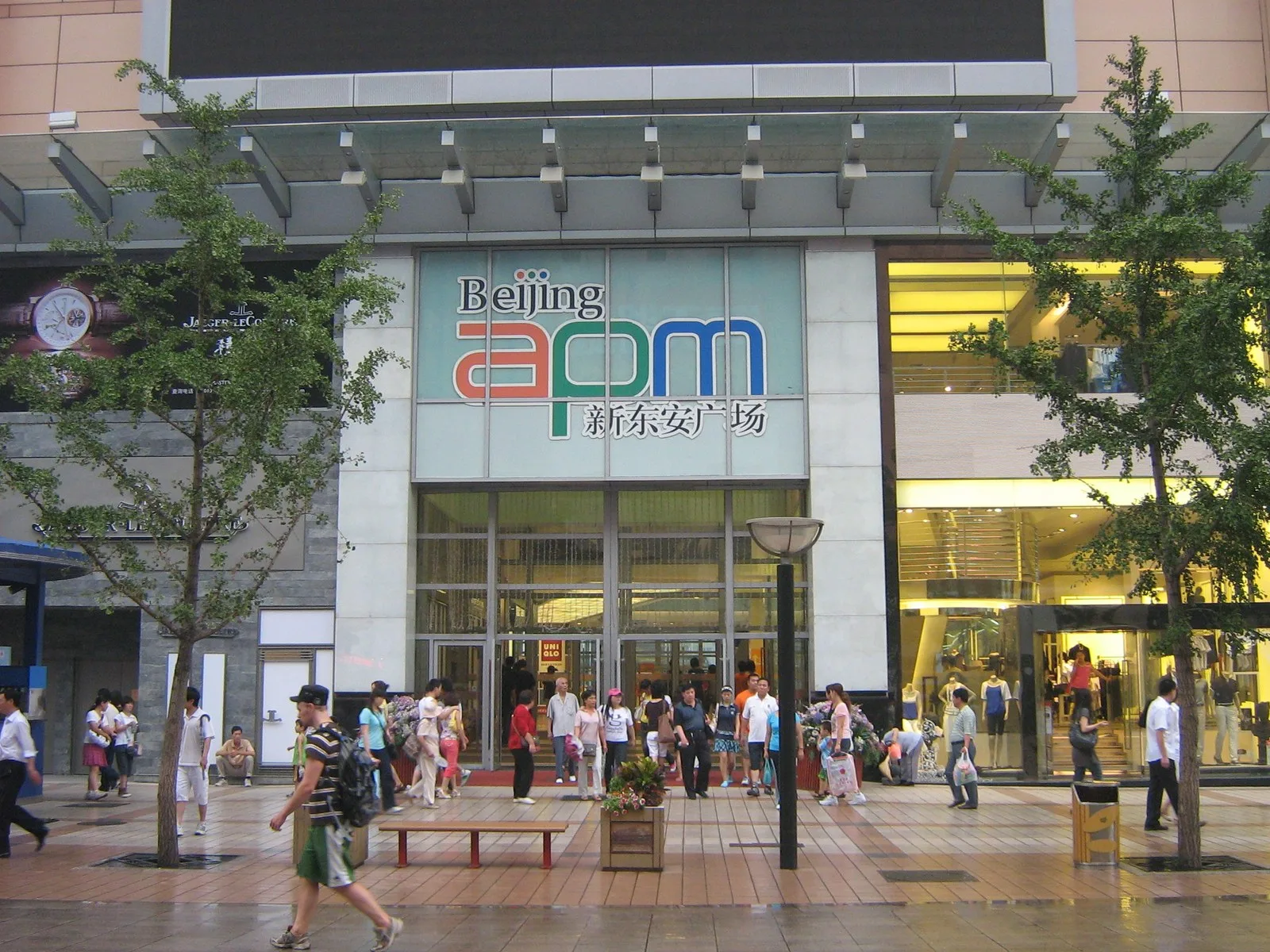
Beijing apm, a shopping mall at Wangfujing, Beijing, China
Photo: Neo-Jay · 2008-07-14 12:43 · Source · CC BY-SA 3.0

Weather and group planning
In summer, split the outdoor walk into shorter sections and use a verified indoor venue or rest area at midday. In winter, prepare for wind, icy surfaces and large indoor-outdoor temperature changes. On rainy days, do not build the entire route around street photographs; prioritise indoor spaces whose access is confirmed. Large events, festivals, construction and security arrangements may change entrances and pedestrian flow.
With children, shorten the route to one section of the main street and agree on a meeting point. With older visitors, reduce repeated crossings between malls and prefer nodes with lifts, seating and toilets. This guide does not promise that accessibility facilities are currently available; confirm with the relevant venue.
Sources and image candidates
Sources.json records the district background, the commercial group's official entry and tourism references. Candidates include street scenes, commercial buildings and indoor public spaces; some photographs are older and must not be treated as current shop conditions or décor. Before use, open every Wikimedia Commons description page and confirm the exact place, any personality-rights notice, date, author and licence.
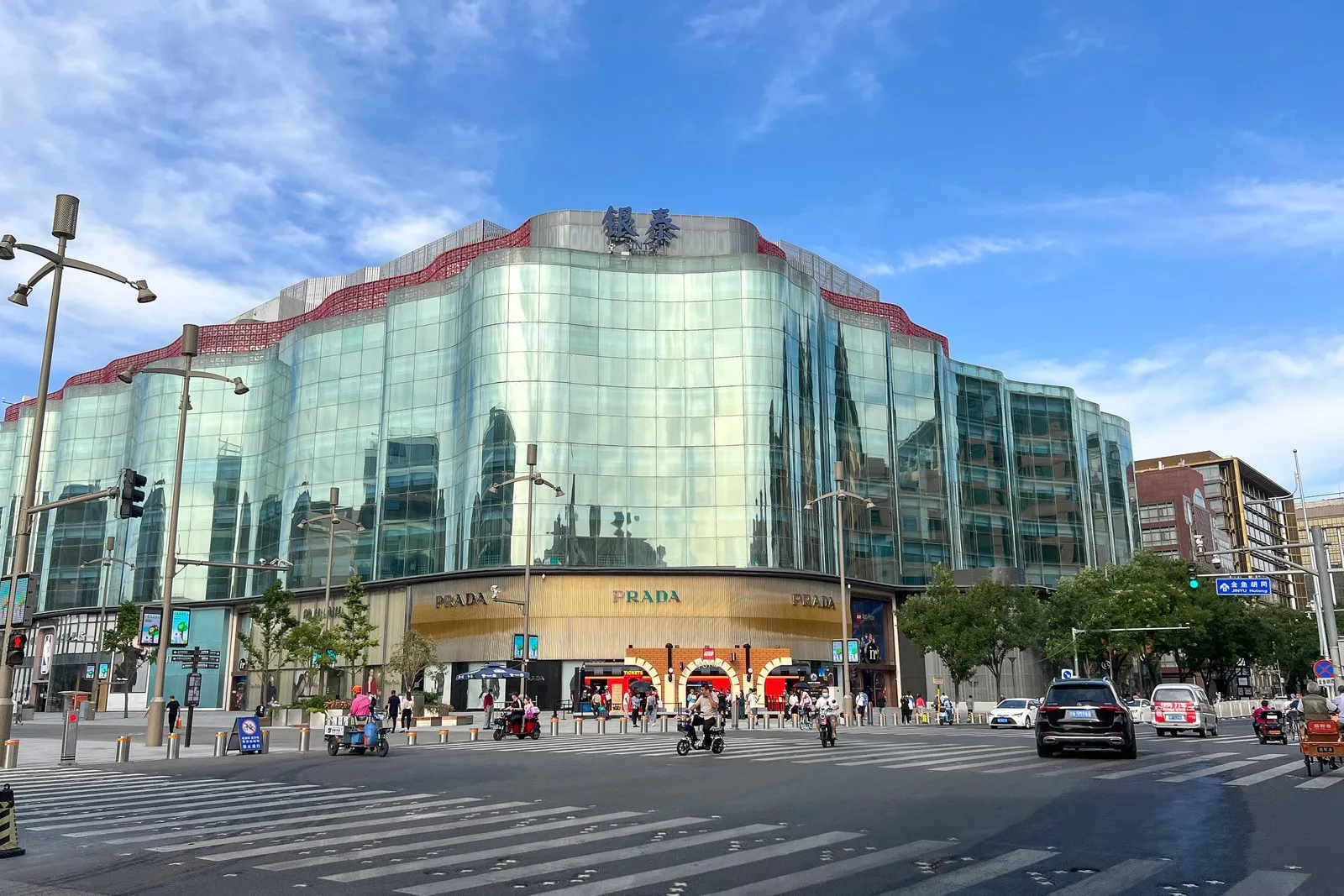
After Line 8.
Photo: N509FZ · 2022-09-08 15:44:25 · Source · CC BY-SA 4.0
.jpg)
Image placement
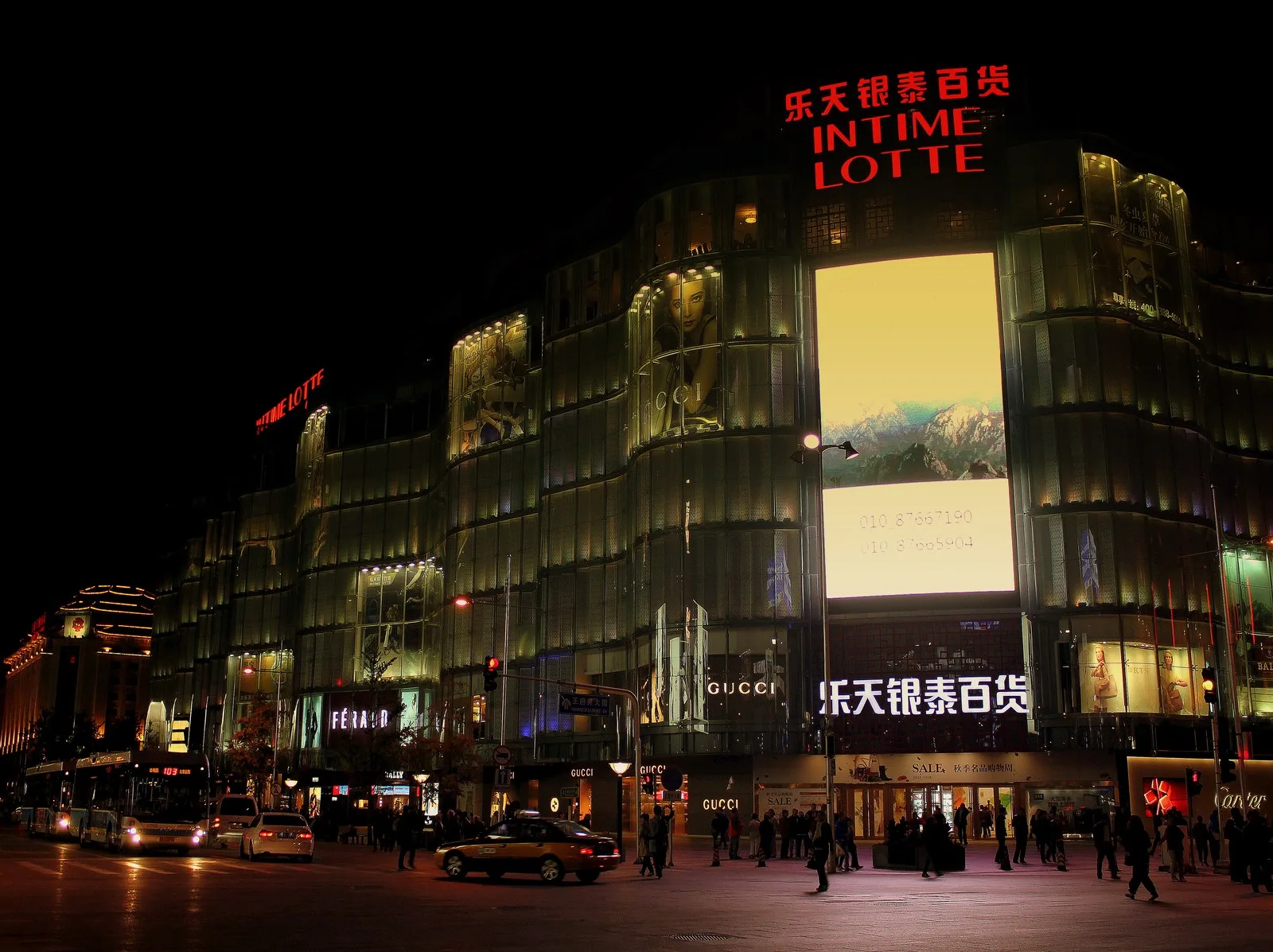
WANGFUJING STREET BEIJING CHINA OCT 2012
Photo: calflier001 · 2012-10-18 12:48 · Source · CC BY-SA 2.0
.jpg)
IMG1 can be an overall street view, IMG2 a commercial building or pedestrian space, IMG3 a cultural landmark, and IMG4 an evening or alternative street view with an accurate label. Captions must state only what the image can support; an old photograph is not current evidence.