A Half-Day at White Cloud Temple: A Quanzhen Temple, Qiu Chuji and a Quiet Route
World Travel 编辑部 · 2026-09-11 · 7 min read
What you can take in in half a day
White Cloud Temple (Baiyun Guan) is one of Beijing's most important surviving Quanzhen Taoist temples, and the place where the Yuan-era master Qiu Chuji (Changchun Zhenren) stayed and died — which gives it a special place in Taoist history. It's not in a busy scenic belt; red walls, grey tiles and compact courtyards suit slow looking at halls and steles. On a first visit, treat it as a living religious building rather than a checklist sight: read the central-axis halls, note the steles and couplets, and don't let the folklore at the gate sidetrack you. Plan about 2 hours.
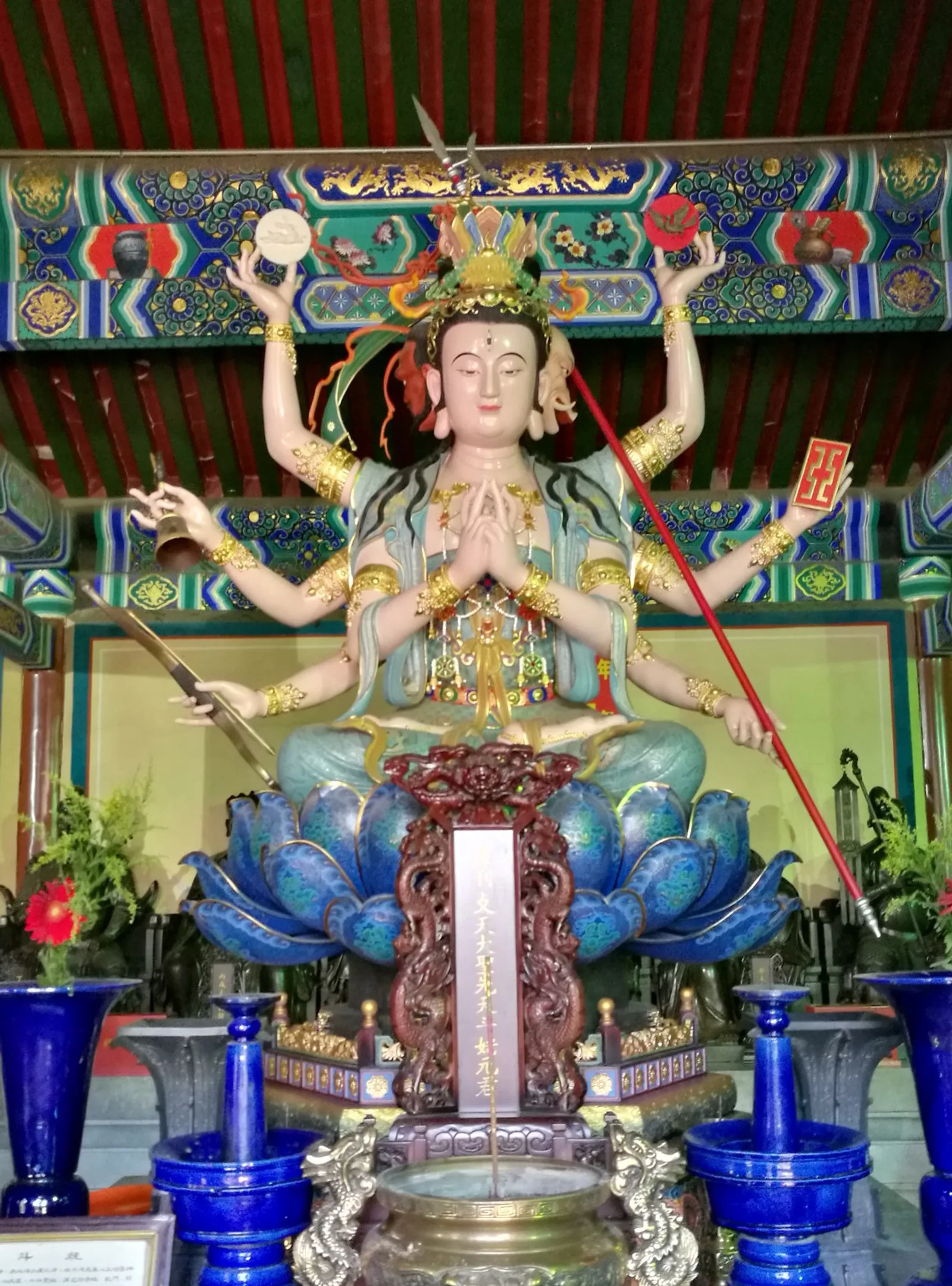
中国北京市白云观元辰殿所供奉的摩利支天大圣先天斗姥元君像
Photo: · · Source · CC BY-SA 4.0

Location and opening
White Cloud Temple is outside Xibianmen in Xicheng District, near Baiyun Road; exact bus/metro and opening hours follow official notices. Daily visiting requires a ticket; price and closing day shift with season and ritual events, so on-site notice is most reliable. Inside, keep quiet; indoor incense is usually not lit — follow the temple's guidance.
Route: start on the central axis
Enter at the gate and follow the axis through the Lingguan Hall, the Yuhuang (Jade Emperor) Hall, the Laolü Hall, the Qiu Ancestor Hall, then the Jiyun Garden behind. The Qiu Ancestor Hall is the core — it enshrines Qiu Chuji and symbolizes the Longmen branch's ancestral seat. The grounds are small; basically follow the axis and you won't need to detour. For steles, look at the Qing-era inscriptions before the halls; for architecture, note the glazed roofs and arched gates.
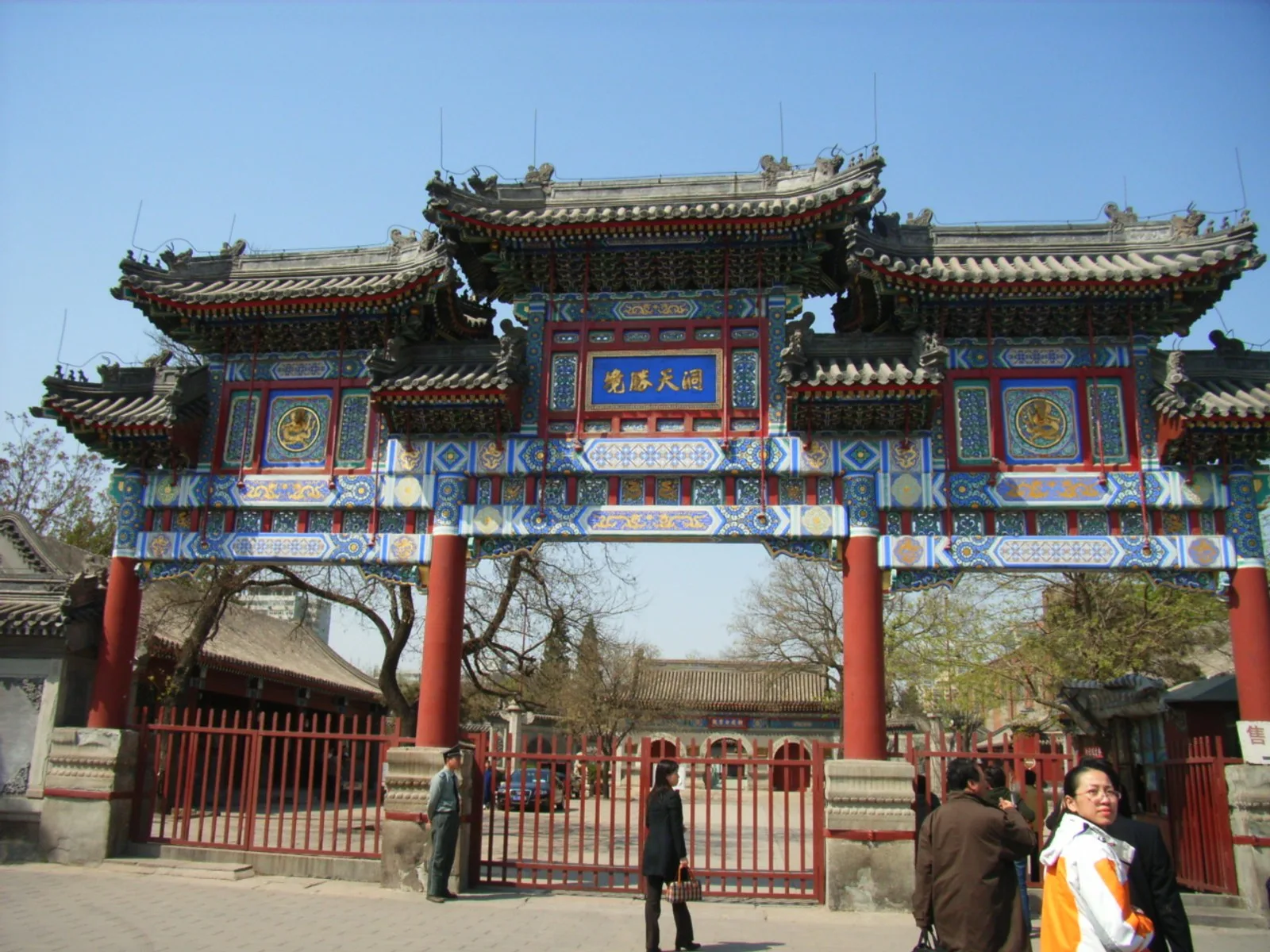
The White Cloud Temple gate — in Beijing.

The "touch-the-monkey" and other folklore
On the right of the gate is a small monkey carved into stone; folklore says touching it brings smoothness, and during the lunar-new-year fair people queue for it. It's custom, not doctrine — enjoy it as a curiosity, not a guaranteed wish. Similar old customs include "shun xing" and striking the money-eye; knowing the background is more interesting than just copying. This article doesn't encourage any blessing act, only notes that these exist.
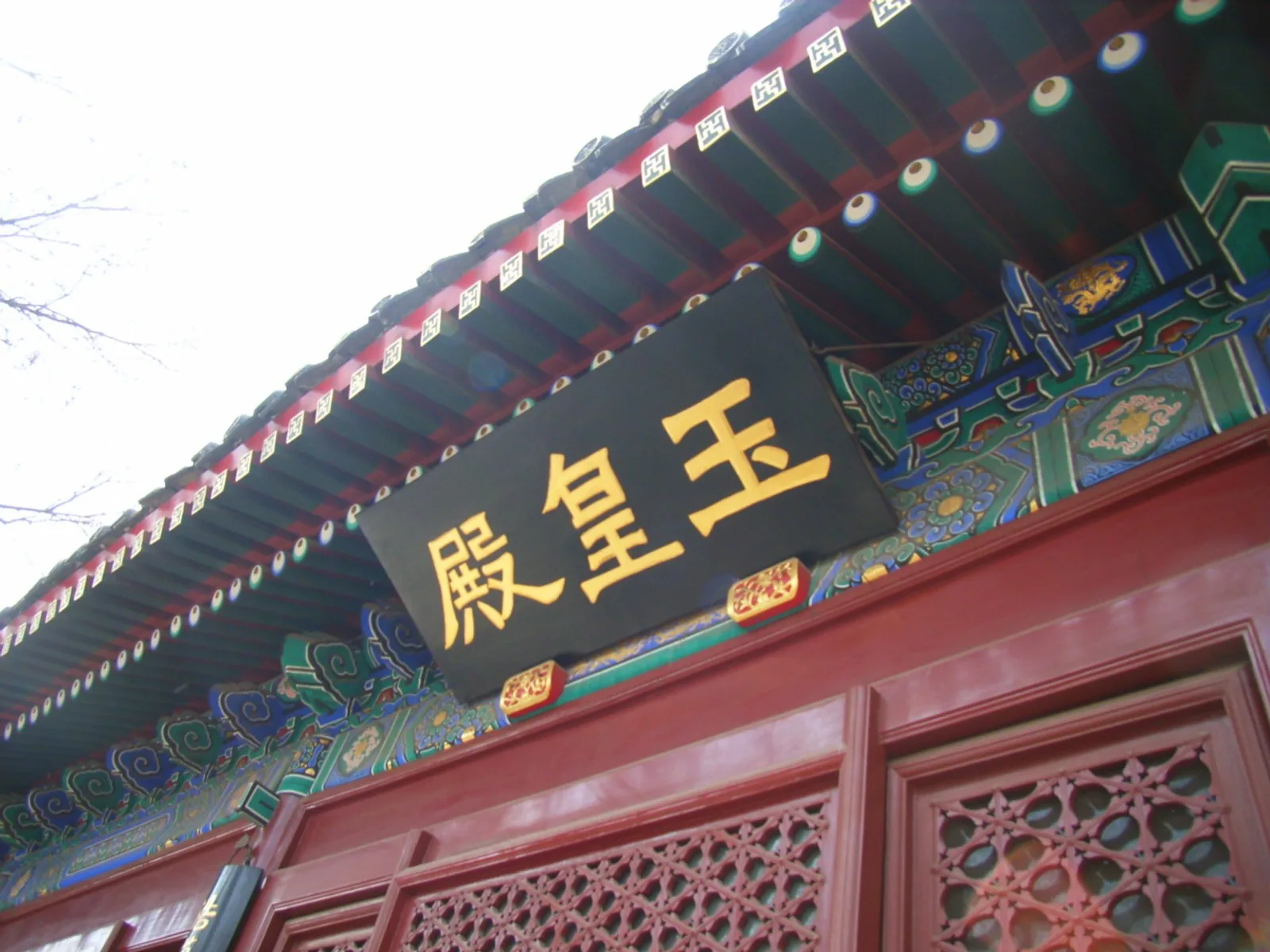
The Jade Star Hall (玉星殿, Yu Xing Dian) in the White Cloud Temple in Beijing

Lunar-new-year fair notes
The White Cloud Temple fair (usually from the first to about the nineteenth of the first lunar month, per that year's notice) is one of old Beijing's temple fairs, with performances, snacks and folk stalls — and the biggest crowds. If you come specifically for the fair, allow more than half a day and avoid peak days like the first and fifth; watch the cold, your belongings and the crowds. On non-fair days you actually see the architecture better. Exact dates and whether it's held follow official announcements.
First-visit notes
- Daily ticket; price and closing day shift with season/rituals — on-site notice rules.
- Axis route: gate → Lingguan → Yuhuang → Laolü → Qiu Ancestor → Jiyun Garden.
- The monkey and money-eye are folklore, not doctrine; know them, don't treat as wishes.
- Fair days are crowded; avoid peaks; non-fair days suit architecture better.
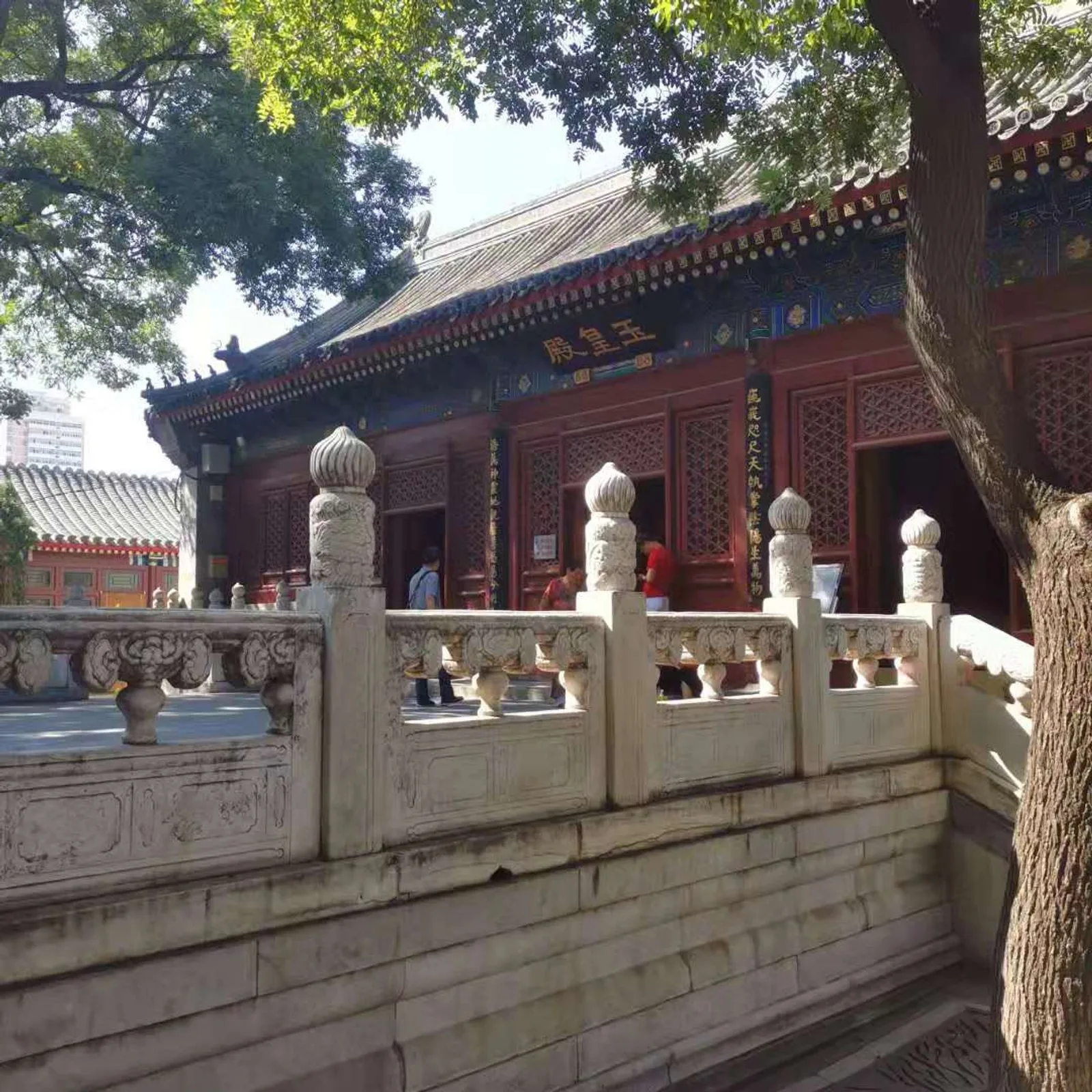
北京白云观玉皇殿
Photo: · · Source · CC BY-SA 4.0
