Visiting Yonghe Temple: A Courtyard-by-Courtyard Route, Tickets and Etiquette
World Travel 编辑部 · 2026-09-11 · 9 min read
Visit Yonghe Temple as a religious space
Yonghe Temple is easy to read courtyard by courtyard, but it remains an active religious space. Focus on the gateways, courtyards, roof colours and changes along the axis. Do not treat worship as a performance, and do not invent claims about incense queues, crowd levels or personal experience. This is a source-based route with practical etiquette.
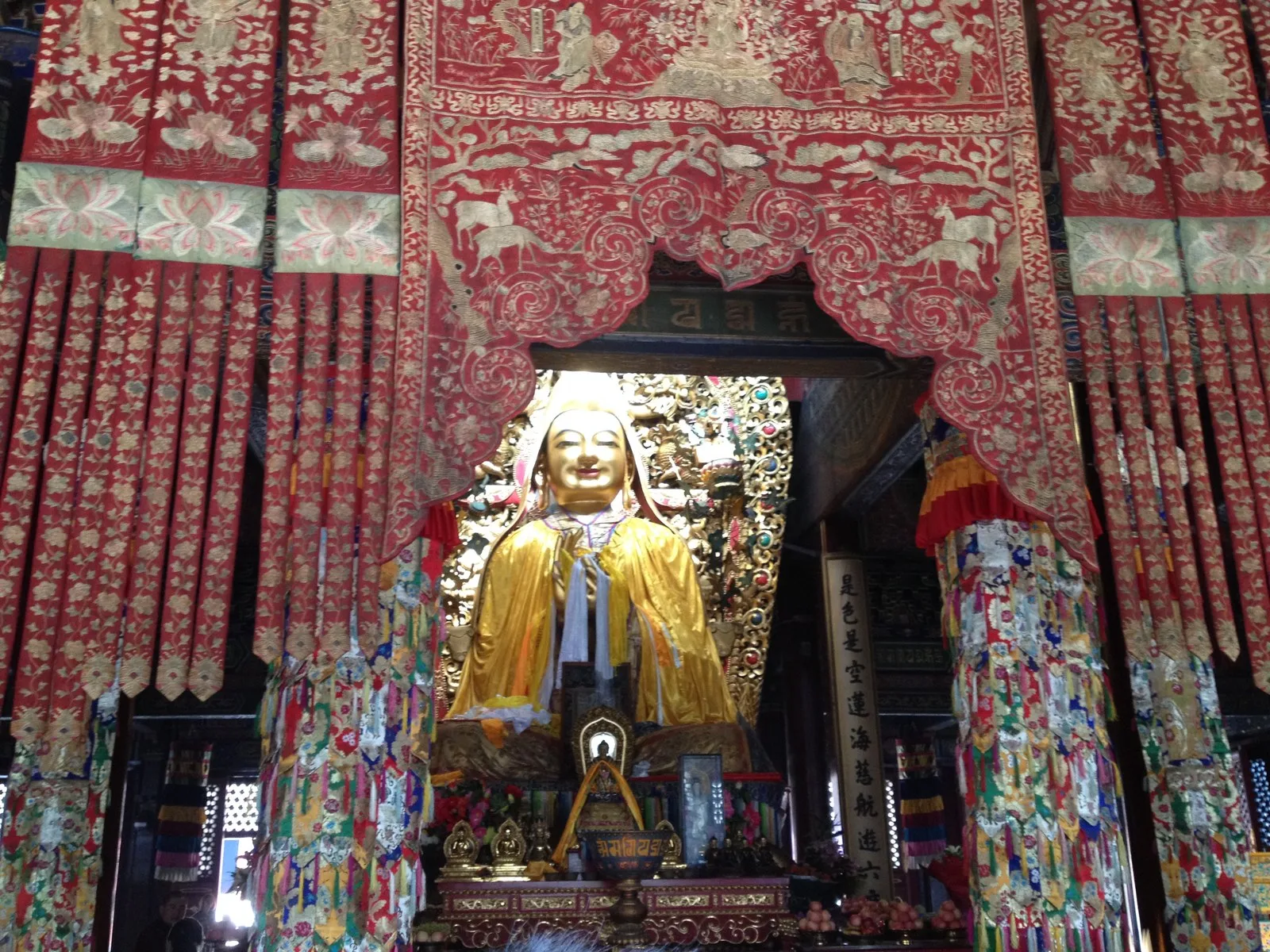
雍和宫-宗喀巴像
Photo: Rewindat (Pan Xuan) · 2013-09-15 11:30:49 · Source · CC BY-SA 3.0

Start with the official ticket channel
The current Yonghe Temple homepage provides an official online ticket entry point and publishes reopening or temporary-closure notices. An official historical page lists summer and autumn hours, 1 April to 31 October, as 09:00–17:00 with tickets stopping at 16:30. It lists winter and spring hours, 1 November to 31 March, as 09:00–16:30 with tickets stopping at 16:00. Another historical official page lists a 25-yuan ticket and a 12-yuan half-price ticket and directs online purchases to the official “Yonghe Temple Visitor and Believer Service” WeChat account.
Because these specific time and price pages are old, this archive marks them for rechecking. Reopen the current ticket page and latest notice before travel. Do not treat an old page's price, release schedule or identification rules as permanently valid. Current opening status, remaining tickets and entry procedure follow the official channel.
A courtyard-by-courtyard order
Once admitted, follow the central axis from the entrance toward the rear courtyards, using the route open that day. Read each courtyard as a whole before looking at doors, plaques, roofs and worship arrangements. Rather than rushing through every hall, choose a few places to pause and understand how the former residence structure changes into a temple environment.
If the rear courtyards are open, observe how halls and courtyards connect, but do not cross barriers to get closer to statues or architectural details. Photography and incense rules are set on site. The official page advises that three sticks of incense are appropriate for worship, says not to burn incense or take photographs inside halls, and notes that incense may stop in strong winds.
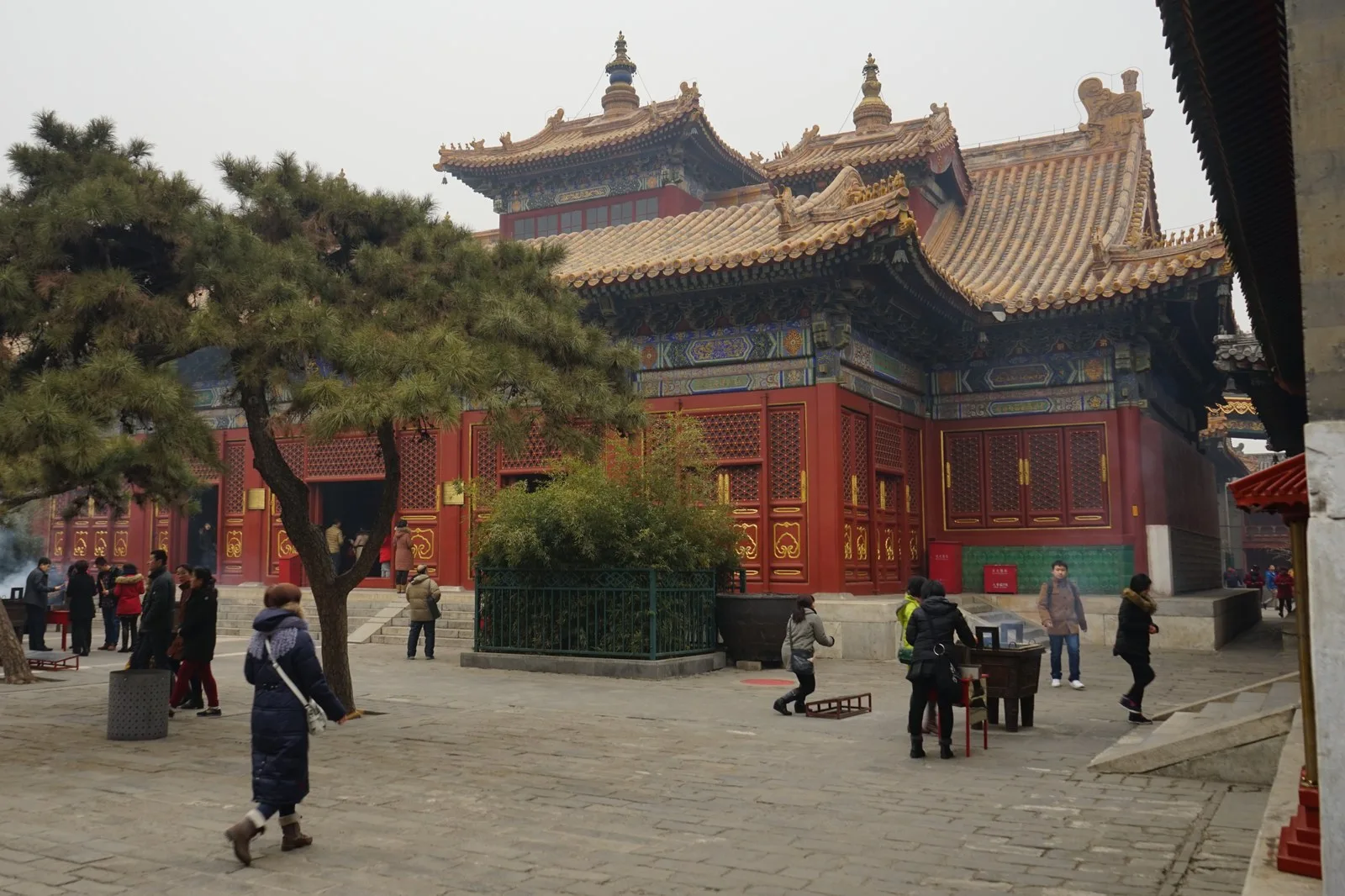
Yonghe Temple
Photo: Jan Bockaert · 2015-01-14 05:53:40 · Source · CC BY-SA 2.0

Etiquette and photography
Dress appropriately and keep your phone silent. Before taking a photograph, check signs and ask staff when necessary, especially around worshippers. Do not photograph people at close range without permission. Do not touch statues, ritual objects or architectural elements; do not smoke in the courtyards; and do not bring incense or paper offerings into areas where they are not permitted. Children can visit, but explain in advance that running and touching are not appropriate.
The route includes hard paving and steps, so wear comfortable shoes. Festivals and temporary activities may change the movement pattern, and old guides cannot predict today's queue. If an area is closed, follow staff instructions instead of looking for a side entrance.
Combining the neighbourhood
Confucius Temple and the Imperial Academy, Ditan Park or a hutong walk can be separate additions. Each has its own opening, ticket and booking rules. For a half-day, make Yonghe Temple the main line and keep the neighbourhood walk flexible. Confirm the temple reservation before committing to the rest of the day.
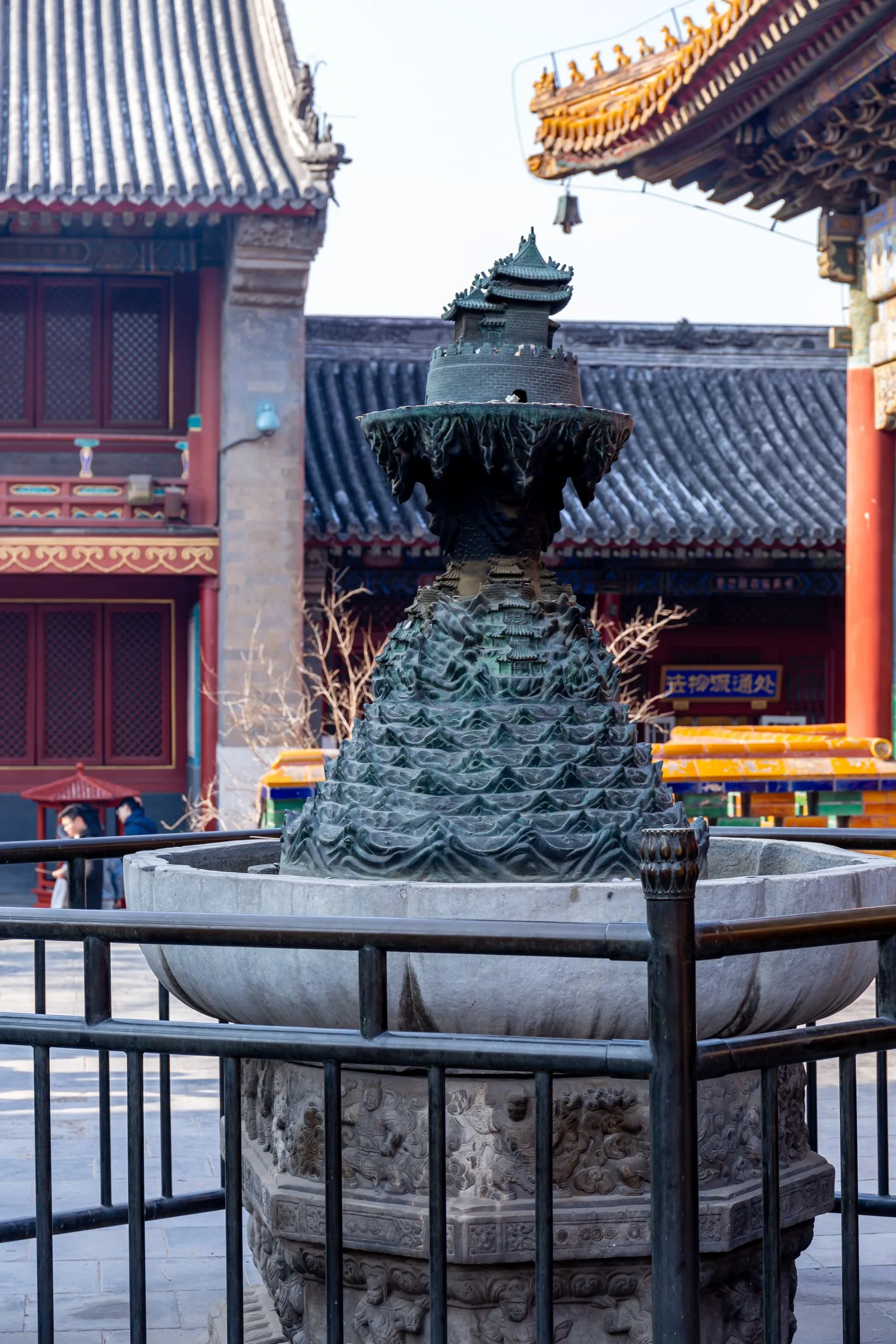
A fountain at the Yonghe Temple in Beijing.
Photo: Balon Greyjoy · 2020-01-09 12:36 · Source · CC0

Sources and image notes
The official entry point, historical pages and facts requiring rechecking are in sources.json. Commons candidates and licences are in photos-candidates.json; attribution must be preserved. No image has been downloaded, embedded or hotlinked. After checking that each file shows the correct part of Yonghe Temple and uploading approved images to the site's media library, replace the four placeholders.
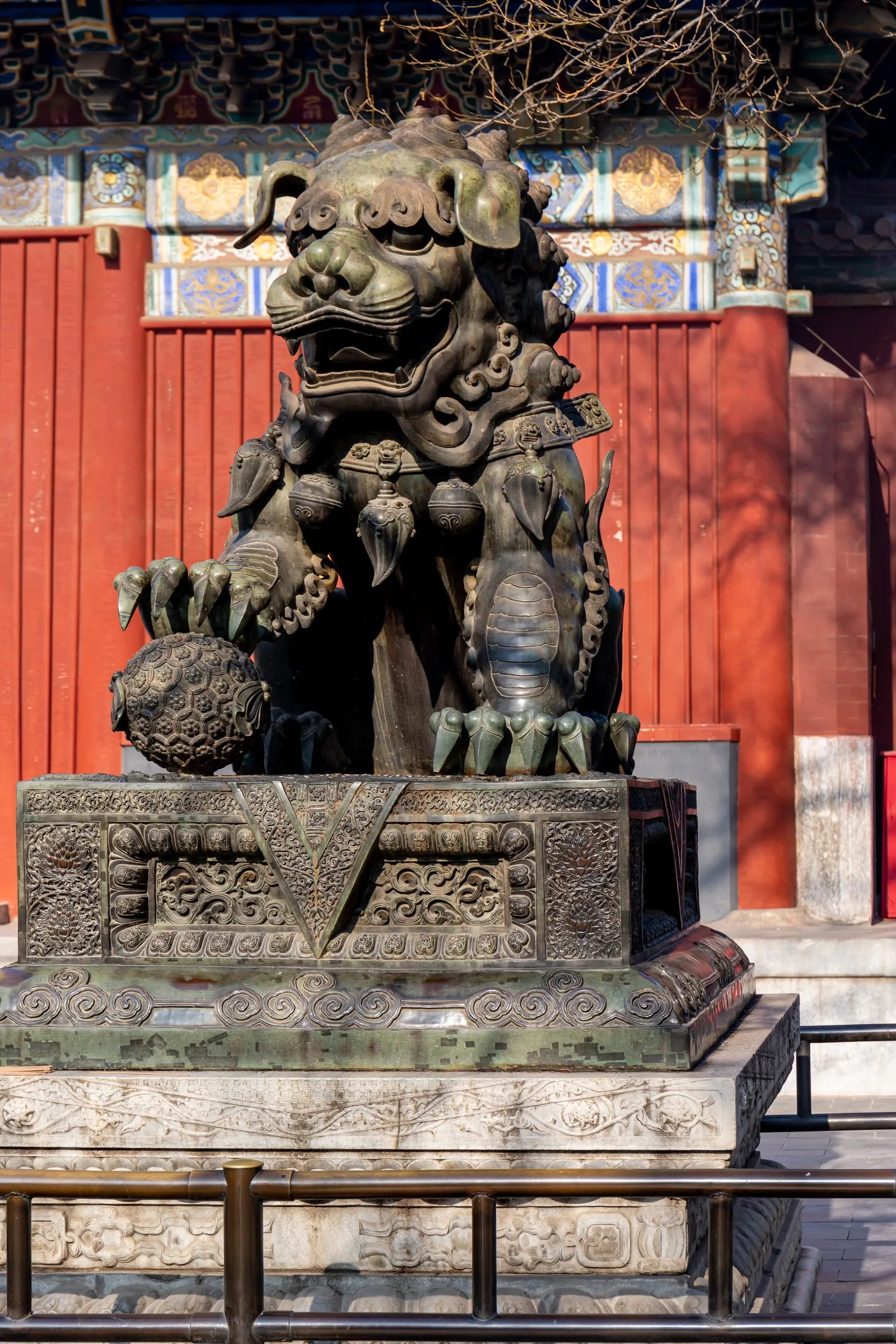
A guardian lion statue at the Yonghe Temple in Beijing.
