Tianshuimian and Dandan Noodles: Chengdu's Two Faces of Noodles
World Travel 编辑部 · 2026-09-10 · 7 min read
Tianshuimian and Dandan Noodles: Chengdu's Two Faces of Noodles
Chengdu has two bowls of noodles that pull in opposite directions. One is tianshuimian — noodles as thick as a chopstick, tossed in a sweet-and-hot sauce that rewards chewing. The other is dandanmian — thin and silky, carried by a spoonful of crisp fried pork crumbs. Both are called noodles; neither tastes remotely like the other.
Tianshuimian: thick as a chopstick
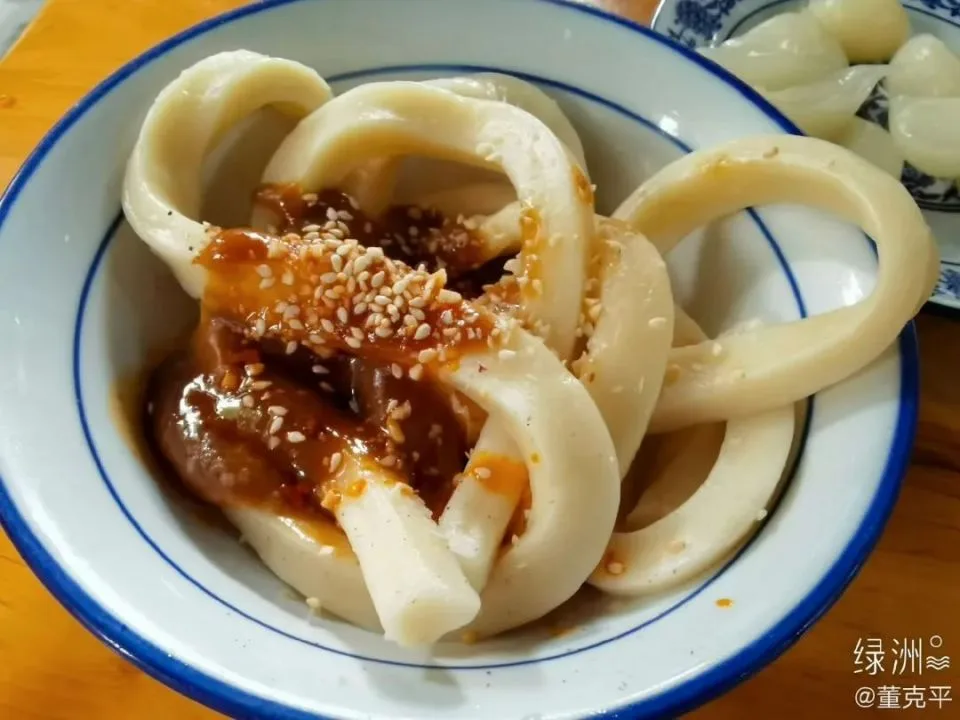
Tianshuimian is a traditional Chengdu snack, and its name comes from its seasoning. It leans on double-brewed soy sauce, so the first taste is sweet and the chilli only arrives afterwards — hence "sweet water".
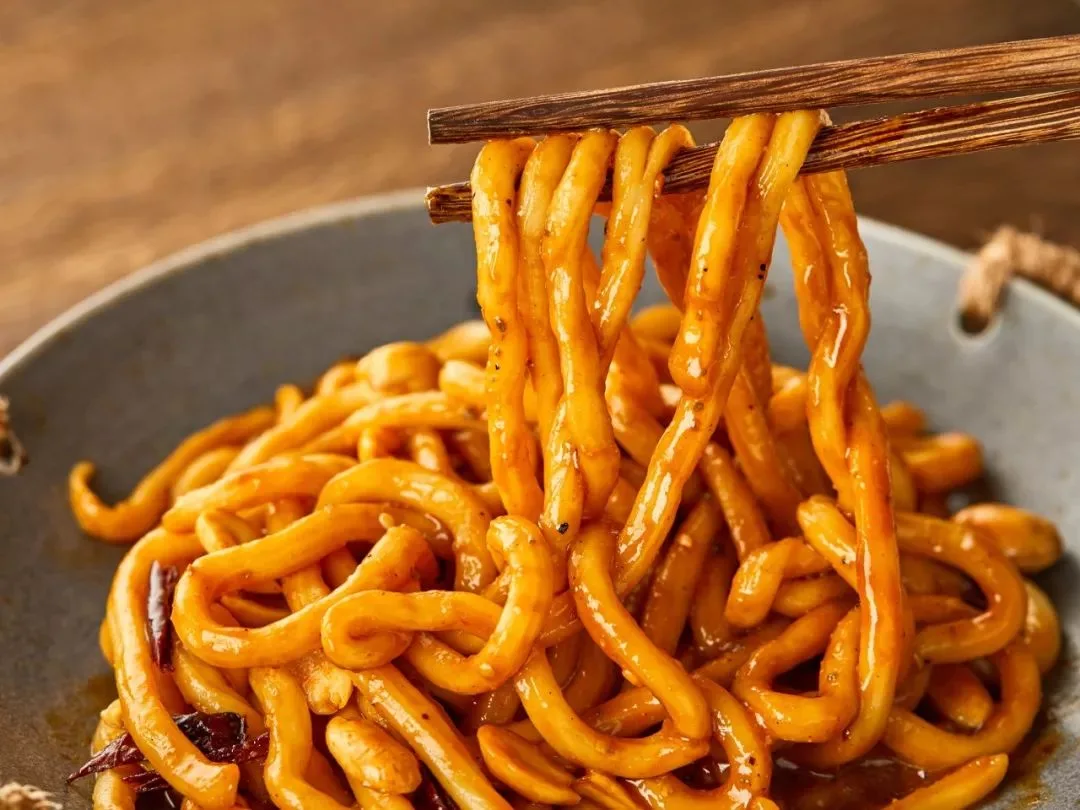
The noodles are unusual too: flour and salt are kneaded, rested, rolled, cut and then pulled, ending up as thick as a chopstick — chewy and firm, nicknamed locally "a real man's noodles". The dressing is built on that double-brewed soy sauce with chilli oil, sesame paste and minced garlic, folding sweet, hot, numbing and fragrant into one compound flavour. It is usually served cold-tossed, glossy red, and nowadays mostly made to order in old shops.
Historically it first appears as the tianshuimian street stalls of Chengdu's Huangchengba in the late Qing. In the 1940s the "dandan tianshuimian" of Baiyun Temple was well known. In 1992 the Chengdu municipal government named it a "Chengdu Famous Snack". In Leshan, the Yu family's Laojiazhou tianshuimian still follows a method from the Xianfeng era and was listed as a district-level intangible cultural heritage in 2021.
Dandanmian: born on a shoulder pole
Dandanmian comes from Zigong in Sichuan and takes its name from the pole-borne pedlars who sold it. Origin stories differ: one credits an old man named Xu in Chengdu during the Qianlong era, another a Zigong vendor nicknamed "Chen Baobao" in 1841. The old Chengdu version carried one brass pot with two compartments — one for boiling noodles, one for stewing pork knuckle.
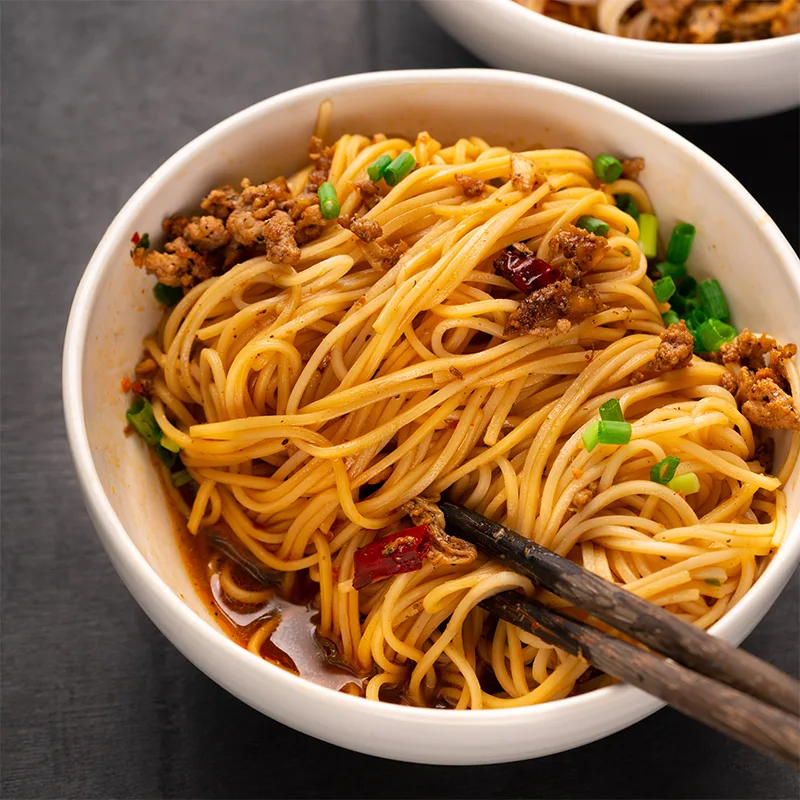
The noodles are thin and silky, and the toppings are fixed: chilli oil, sesame paste, minced pork, Sichuan preserved vegetable, crushed peanut, ground Sichuan pepper, red soy sauce, garlic and spring onion. The crisp-fried pork crumbs are the soul of it, clinging to every strand. The dish later spread to Chengdu and Chongqing, and in 2013 it was named one of China's "Top Ten Noodles" by the Ministry of Commerce and the China Hotel Association.
It has also travelled: Hong Kong dandanmian adds peanut butter and serves it in soup; Japanese tantanmen uses alkaline noodles with minced pork and miso paste, also as a soup.
What each bowl is really about
- Tianshuimian: cold-tossed, thick, sweet and hot — all about the sauce and the chew
- Dandanmian: silky noodles, with the crisp pork crumbs and chilli oil doing the work
- Both come in small portions; ordering one of each in a single meal is normal in Chengdu
Practical notes
- Texture keywords: tianshuimian "thick as a chopstick, firm and chewy"; dandanmian "silky noodles, crisp pork crumbs"
- Styles: tianshuimian is usually cold-tossed; dandanmian has dry-tossed and soupy versions, with Hong Kong and Japanese variants in soup
- Honours: tianshuimian named a "Chengdu Famous Snack" in 1992; dandanmian a "Top Ten Noodle" in 2013
- Worth knowing: dandanmian originated in Zigong — Chengdu is simply where it spread widest
Related
- Dongzikou Zhang Lao Er Liangfen: Sweet Water Noodles and Three Kinds of Liangfen
- Sandapao and Danhonggao: Chengdu's Sweet and Chewy Street Snacks
Photos
Sources
- Baidu Baike: Tianshuimian
- Wikipedia: Dandanmian, Chengdu snacks