West Lake North Line: Lingyin, Quiet Hills and Contemporary Jiangnan Dining
World Travel 编辑部 · 2026-09-10 · 16 min read
The northern shore of West Lake is the quieter half. From the gates of Lingyin Temple to the plane trees of Beishan Street, temples, cliff carvings, Republican-era villas and tea gardens alternate along the way — and almost every one of Hangzhou's most expensive and hardest-to-book restaurants now hides in these hills. If you want ancient Buddhism and contemporary Jiangnan cooking in one day, this is the most efficient way to do it.
At a glance
- Area: Lingyin Temple and Feilai Peak, Beishan Street, Broken Bridge, Baoshi Hill, Hangzhou Botanical Garden
- Suggested time: a full day — mountains in the morning, lakeside in the afternoon, dinner in the hills
- Best time: enter Lingyin at 7:30am to beat the crowds; Beishan Street is best cycled at dawn or dusk
- Getting there: bus or taxi to Lingyin; buses run along Beishan Street
Lingyin Temple and Feilai Peak
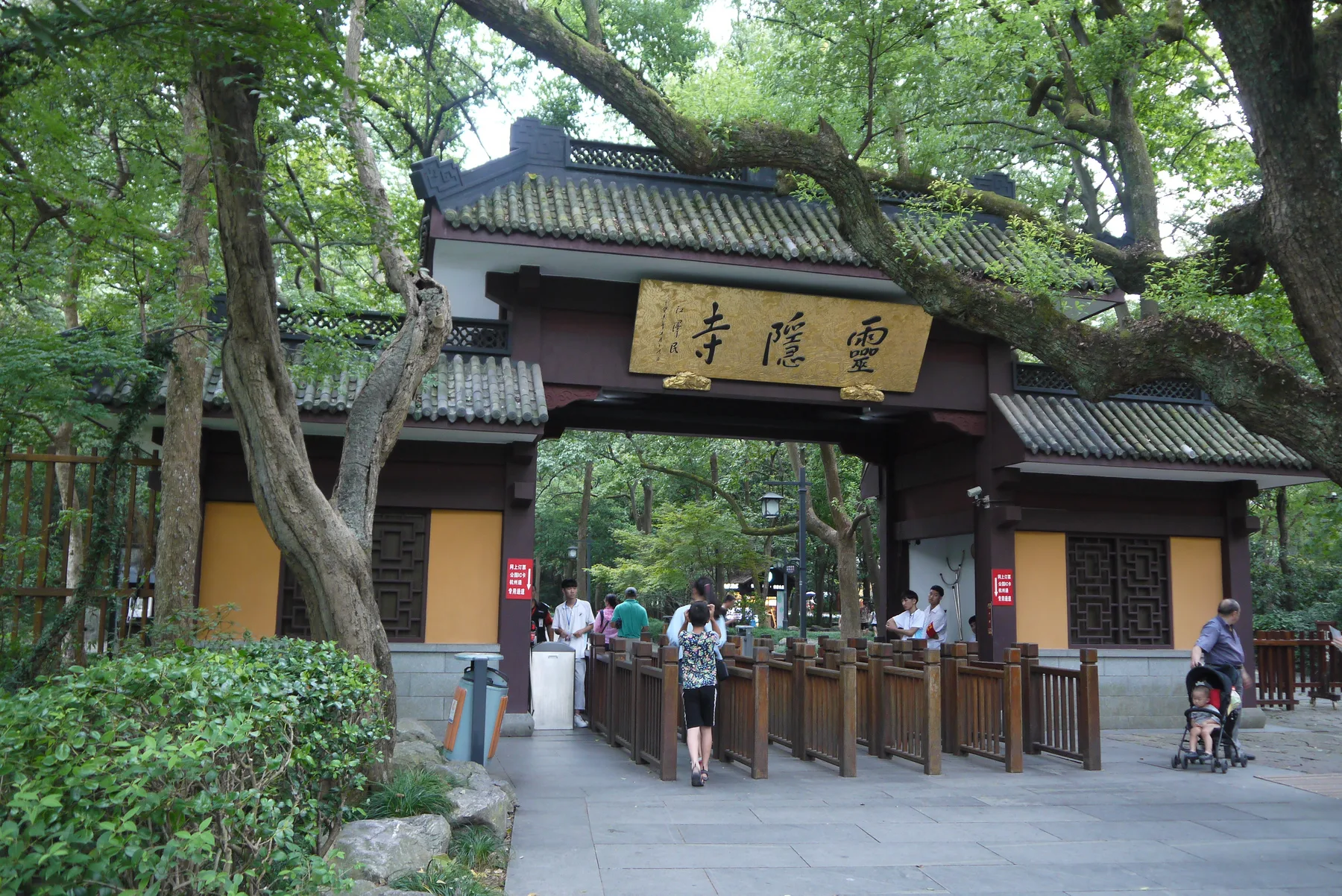
Lingyin Temple, also known as Yunlin Chan Temple, sits northwest of West Lake at the foot of Lingyin Hill, between Feilai Peak and Beigao Peak. It is one of China's ten great ancient monasteries and the place where the Song monk Ji Gong practised.
It was founded in 326 (the first year of the Eastern Jin's Xianhe era), more than 1,690 years ago. The Indian monk Hui Li came to China to preach and, struck by the landscape, believed it was "where immortals hide" (xian ling suo yin) — hence the name. Under the Wuyue king Qian Chu in the Five Dynasties, the temple grew to nine halls, eighteen pavilions, seventy-seven shrines and three thousand monks. The Song monk Puji compiled the Wudeng Huiyuan, a Chan classic, here.
The name "Yunlin" came from the Kangxi emperor, who is said to have climbed the hill behind the temple on a southern tour and, seeing the buildings wrapped in cloud and forest, bestowed it. Locals never adopted it.
Feilai Peak, beside the temple, is a 168-metre limestone hill also called Lingjiu Peak. A stream separates it from the temple, and the cliff faces along that stream hold 345 Buddhist sculptures carved over more than 500 years from the Five Dynasties to the Yuan, listed as a national priority protected site in 1982. Three date from the Five Dynasties, 232 from the Song, and 116 across 67 niches from the Yuan — the largest surviving group of Yuan carving in China.
Tip: enter at 7:30am, collect your three sticks of incense, then follow the hillside path to Yixiantian ("A Thread of Sky") and the cliff carvings. It is far better than jostling in front of the main hall.
(For booking and a full route, see our Lingyin Temple half-day guide.)
Beishan Street: three kilometres of history
Beishan Street runs along the northern shore of West Lake, from Huancheng West Road in the east to Lingyin Road in the west, a total of 3,098 metres. It is often called Hangzhou's most culturally dense street — "every step is history". Temples, celebrity residences, tombs and villas cluster here, with architecture drawing on both Chinese and European traditions.
Look for Qiushui Villa, Guyun Cottage, Jianpao Villa, Baoqing Villa, Jingyi Villa, Sui Lu, the Agate Temple, and the group of Sino-Western modern buildings including the Shangri-La and the Xinxin Hotel. Broken Bridge, Quyuan Fenghe and the tomb of General Yue Fei are all on or just off this road.
Cycling tip: dawn or dusk is best — lake on one side, Republican villas on the other. Looking west you get Baoshi Hill with the Baochu Pagoda on top, the best photo angle in the area.
Broken Bridge and Baochu Pagoda
Broken Bridge stands at the eastern end of the Bai Causeway, linking Beishan Road to Pinghu Qiuyue and Gushan Island. In the Southern Song it was called Baoyou Bridge or Duanjia Bridge; the current structure dates from 1921. Beside it are the "Yunshui Guangzhong" waterside pavilion and the Broken Bridge Snow stele.
The name is literal: after snow, standing on Baoshi Hill and looking south, the exposed arch melts first while both ends stay white — from a distance the bridge seems broken. It is also where Xu Xian and the White Lady first meet in the Legend of the White Snake.
Baoshi Hill rises about 200 metres. Its rhyolite and tuff contain iron oxide, giving the rock a reddish cast that is strongest at sunrise and sunset — hence "precious stone", and the "Baoshi Liuxia" (Rosy Clouds over Precious Stone Hill) scene among the New Ten Views. The Baochu Pagoda on its summit, a solid brick tower, is a landmark of West Lake: a provincial protected site from 2005 and a national one from 2013.
It is generally held to date from 968–976: when the Wuyue king Qian Hongchu was summoned to Bianjing by the Song emperor, his maternal uncle Wu Yanshuang vowed to build a nine-storey pagoda for his safe return — which is what "Baochu" means. It was rebuilt in 1924 after leaning, as an eight-sided, seven-storey tower 45.3 metres high.
Where to eat
Ru Yuan (Michelin two stars)
Hangzhou's first two-Michelin-star restaurant, set inside the Hangzhou Botanical Garden (11 Yuquan Road, Jinghua Ridge). It was created by chef Fu Yueliang, operations lead Tan Huifang and designer Liu Ronglu. Fu trained under the noted chef Dong Shunxiang and reworks classic Hangzhou dishes; his ideas often come from the market rather than the kitchen — Dongshannong market is where he hunts for seasonal ingredients.
The building is a three-storey timber-toned house in Southern Song style, designed by Taiwanese designer Liu Ronglu as his first restaurant, and reads more like an art space. Reservations are required, made through the official WeChat mini-program; drivers must register their plate number in advance. In May 2024, less than a year after opening, Ru Yuan was listed in the Hangzhou Michelin Guide.
Order the gold-medal braised pork (built into a pagoda shape), drunken crab in Xiangxue wine, and hand-peeled Longjing shrimp.
Jin Sha (Four Seasons Hotel Hangzhou, Michelin one star)
Among the most rarefied Chinese restaurants in the country, built around a water garden courtyard, with top-tier setting and consistency. Order braised pork with abalone, crispy chicken, Song Sister's fish soup, and Longjing-infused steamed milk. Book several weeks ahead.
Note: no authoritative encyclopaedia entry could be cited for this restaurant; please confirm hours and reservations through official channels.
Lan Xuan Village Kitchen (Amanfayun, Michelin one star)
Tucked among an old village, tea groves and temples, serving refined Jiangnan cooking built on seasonal produce. Order drunken chicken, hand-peeled river shrimp, and pork braised with seasonal bamboo shoots.
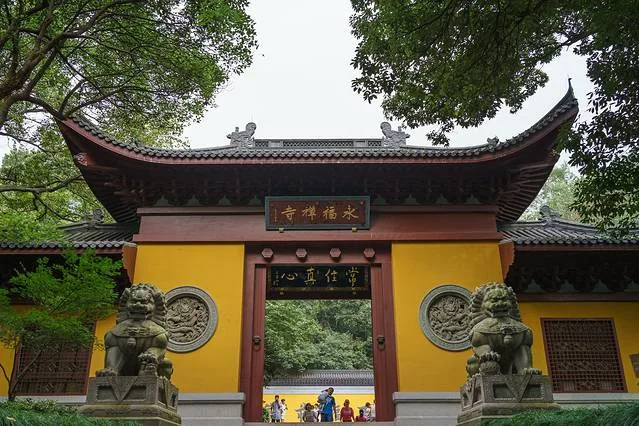
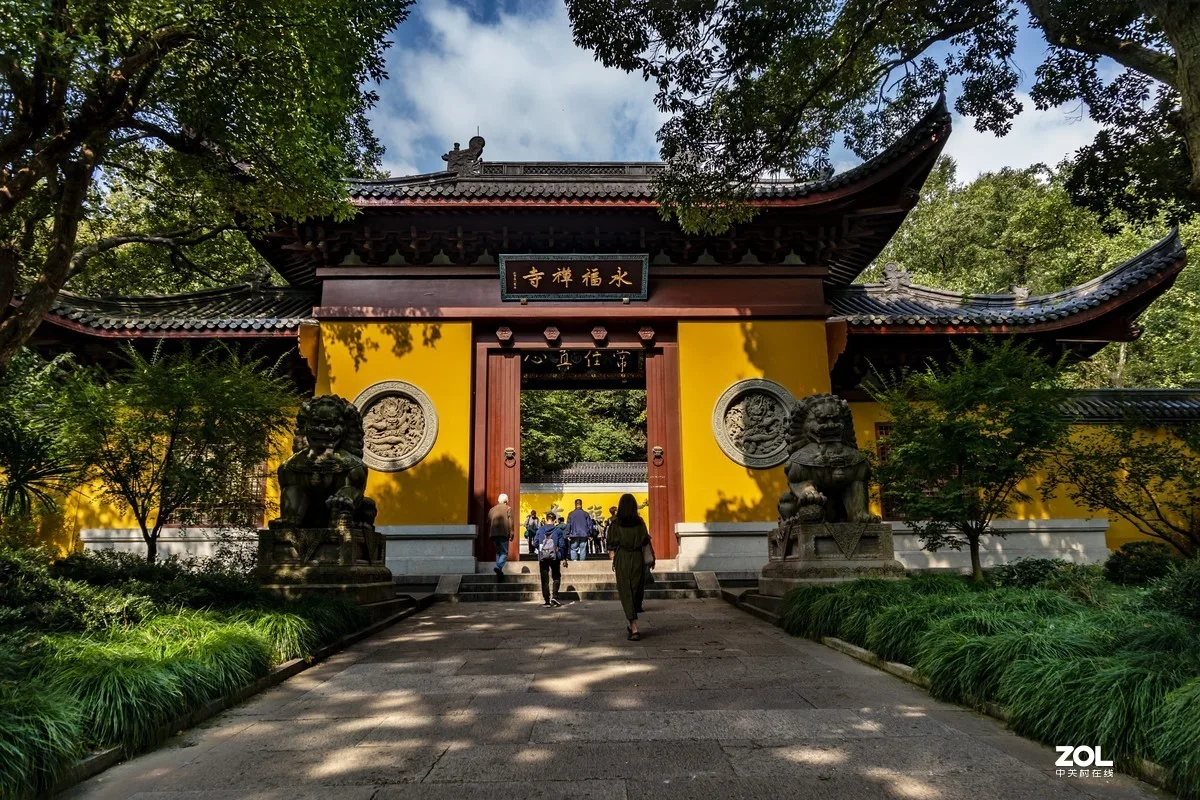
The setting is the point: Amanfayun sits in a valley west of the lake at the foot of Beigao Peak, surrounded by bamboo. Its 14-hectare grounds adjoin Lingyin and Yongfu temples and preserve 47 dwellings dating to the Tang dynasty, designed around the concept of "an 18th-century Chinese village", with brick walls, tiled roofs and stone floors. Even if you do not eat here, the area is worth a walk.
Lou Wai Lou (Gushan Road flagship)
Founded in 1848, one of Hangzhou's oldest restaurant brands and a recognised "China Time-honoured Brand", famous for Hangzhou cuisine. It has hosted Premier Zhou Enlai and heads of state, and handled the spouses' lunch during the 2016 G20 Hangzhou summit.
Order West Lake vinegar fish, beggar's chicken, Song Sister's fish soup, Dongpo pork, and Longjing shrimp.
Suggested plan
Enter Lingyin at 7:30, worship first, then see the Feilai Peak carvings. Come down around ten and cycle or walk east along Beishan Street, taking in the Republican villas and Broken Bridge. Climb Baoshi Hill for the pagoda around midday (allow an hour). Have a proper Hangzhou lunch or dinner at Lou Wai Lou; for contemporary Jiangnan cooking, book Ru Yuan through its mini-program, or reserve Jin Sha weeks ahead.
Practical notes
- Lingyin Temple and Feilai Peak both charge admission; check official notices
- Ru Yuan is reservation-only (WeChat mini-program); register your car plate if driving
- For top-tier Jiangnan restaurants (Ru Yuan, Jin Sha and similar), book private rooms or holiday tables 2–4 weeks ahead
- ⚠️ On West Lake vinegar fish: the traditional version uses grass carp, which is bony and can taste muddy — it is a demanding dish with an acquired following. If it is your first try, order the sunkelp fish or Kaihua clean-water fish version at a high-end Hangzhou restaurant; the flesh is smoother and more delicate
- Beishan Street is a public road, open all day; dawn and dusk are best
Photos
Sources
- Wikipedia: Lingyin Temple, Feilai Peak sculptures, Beishan Street, Broken Bridge, Baochu Pagoda, Baoshi Hill
- Baidu Baike: Ru Yuan, Lou Wai Lou, Amanfayun
- Editorial listing (no encyclopaedia source): Jin Sha