The Bund and East Nanjing Road: A One-Day Guide
World Travel 编辑部 · 2026-09-10 · 12 min read
The Bund and East Nanjing Road are two faces of the same stretch of city: on one side, a row of historic riverfront buildings known as the "Gallery of World Architecture"; on the other, a shopping street running west to Middle Xizang Road. Most visitors treat it as a half-hour photo stop. Stay from late afternoon into the evening instead — that is when this part of Shanghai actually comes alive.
At a glance
- The Bund: roughly 1.5 km, from East Yan'an Road in the south to the Waibaidu (Garden) Bridge in the north
- East Nanjing Road: from Zhongshan East No.1 Road (the Bund) in the east to Middle Xizang Road in the west
- Suggested time: half to a full day; stay past 19:00 for the night view
- Metro: Lines 2 / 10, East Nanjing Road
The Bund: how a mudflat became "Wall Street of the East"
Before 1843 this was a muddy bank on the Huangpu River. The section near the old walled city was called waitan ("outer beach"); south of it was litan ("inner beach"). From 1844 the northern stretch became the British settlement. The word Bund comes from Hindustani, meaning an embankment or quay — and it is still what most languages call this street.
What turned an embankment into a financial centre was the flood of foreign trading houses in the second half of the 19th century. Jardine Matheson at No. 27, Dent & Co. at No. 14, David Sassoon & Sons at No. 24, Russell & Co. at No. 9 — those house numbers are still on the buildings. In 1864 the Bund held 61 foreign firms; eleven years later, 157. In 1897 the Imperial Bank of China, the first Chinese-funded bank, opened here.
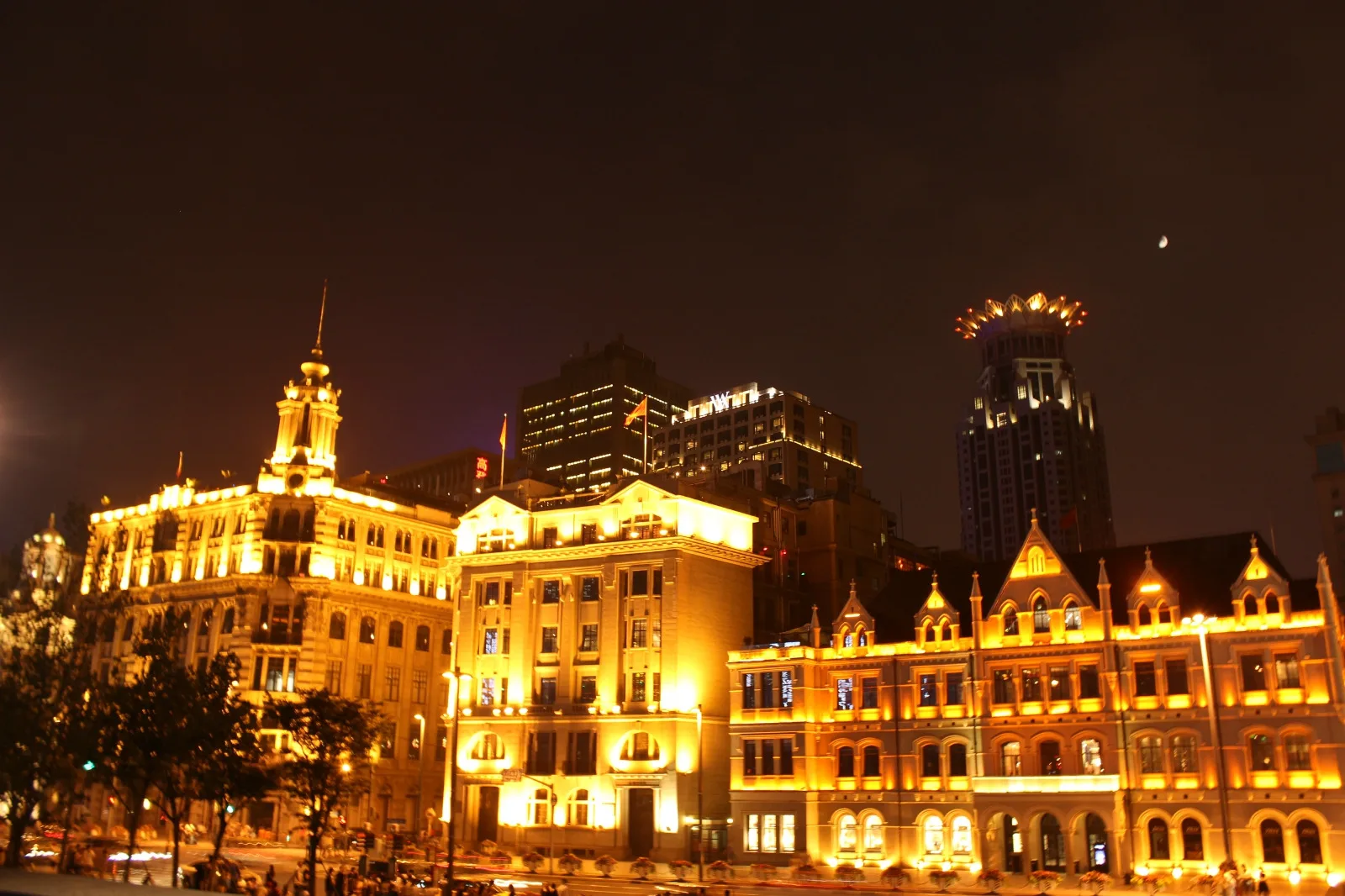
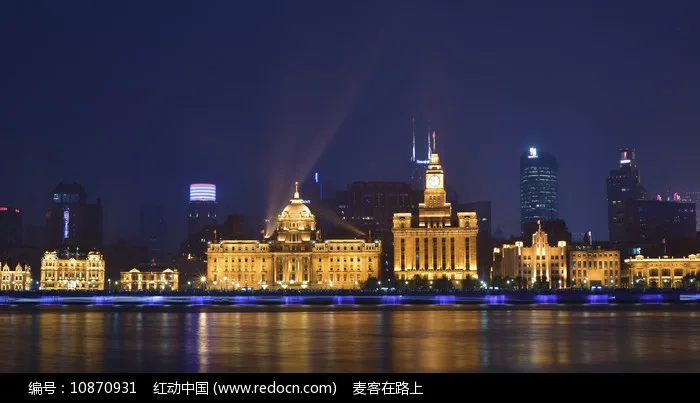
More than twenty historic buildings line the road in eclectic, Renaissance Revival and early modern styles — hence "Gallery of World Architecture". Walking from East Yan'an Road north to the Garden Bridge takes about an hour. If you are short on time, do the stretch from the Customs House clock tower to the bridge.
Night views: riverfront floodlighting usually switches on around 19:00, adjusted seasonally; the Lujiazui towers across the water light up slightly earlier. For both banks lit at once, arrive between 19:00 and 20:30.
East Nanjing Road: why Shanghainese call a road a "ma lu"
East Nanjing Road was laid out in 1851, one of the earliest roads built after the port opened, and has carried the nickname "No.1 Street in China" for over a century.
It was not built for commerce. In 1851 the Shanghai Race Club leased about 80 mu north of today's road to build the city's first racecourse, known as the Old Garden. A track ran along its south side. Locals mistook the grounds for a park and called the approach road "Garden Lane" (Park Lane); because it existed for horse racing, they also called it the "horse road" — ma lu. That is where the Chinese word for a city street comes from.
In 1865 the British consul suggested the Settlement Council rename its roads using Chinese city names. To mark the Treaty of Nanjing, the "Great Main Road" became Nanjing Road.
Today it is a pedestrian street linking the Bund to People's Square. Double-decker sightseeing buses and retro tram-style shuttles run along it, but walking is the better call — the shopfronts are the point.
Where to eat
Ultraviolet by Paul Pairet (Michelin three stars)
Opened on 18 May 2012 by French chef Paul Pairet on the 6th floor of No. 18, Zhongshan East No.1 Road. It seats just 10 guests and serves a 20-course, roughly four-hour multi-sensory dinner (UVA, UVB, UVC, UVD and a limited UV8888 menu).
The ritual is part of it: you book and pay a deposit online, then gather at Mr & Mrs Bund at Bund 18 and are driven to a undisclosed location by private car. Around 35 staff serve 10 diners, with bilingual guidance. Book months ahead.
Long Feng Tang, Peace Hotel
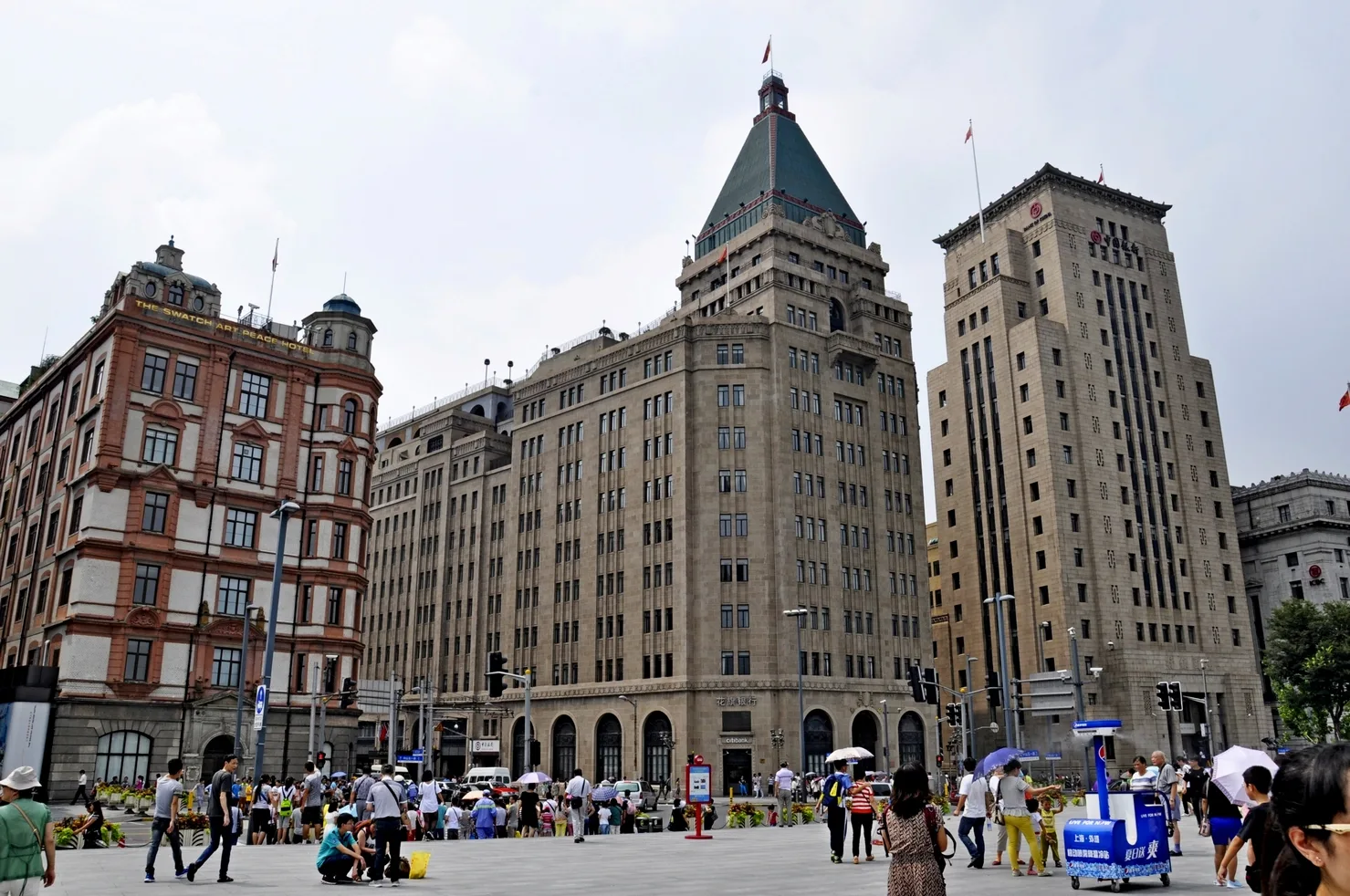
The Peace Hotel comprises two historic buildings: the north block at 20 East Nanjing Road (the former Sassoon House / Cathay Hotel) and the south block at No. 23 (the former Palace Hotel). The hotel opened in 1956 and merged the two in 1965. From 1991 to 1994 it was named one of the "World's Most Famous Hotels" for four consecutive years — still the only hotel in China to hold that distinction. The north block reopened in 2010 as the Fairmont Peace Hotel; the south block became the Swatch Art Peace Hotel.
Long Feng Tang serves classic Benbang and Huaiyang cuisine in a genuine 1930s dining room. Order Longjing shrimp, scallion oil noodles with dried shrimp, crispy duck, and yellow croaker noodles.
Wang Bao He
Founded in 1744 (the ninth year of the Qianlong reign) and known locally as the "King of Crabs, Ancestor of Wine". It began as a Shaoxing wine workshop, moved to Shanghai in 1852, and in 1936 relocated its head office to Fuzhou Road, where it pioneered serving steamed hairy crab straight from the steamer. Its crab-banquet technique was listed as Shanghai intangible cultural heritage in 2013.
Order steamed hairy crab, crab-roe soup dumplings, wine-marinated crab, and handmade crab-roe tofu, with the house taidiao or huadiao wine.
Shen Da Cheng (flagship, 636 East Nanjing Road)
Founded in 1875; the name means "bringing together the best of dim sum and snacks". Famous since the 1930s for longevity peaches and celebration cakes, with several products winning national commerce awards in the early 1990s.
Try fresh green rice balls (qing tuan, with salted egg yolk and pork floss or red bean), double-layered rice dumplings, and sweet rice strips. Qing tuan is seasonal — expect a queue in spring.
Suggested plan
Enter East Nanjing Road mid-afternoon, pick up pastries at Shen Da Cheng, then walk to the Bund for sunset. Stroll north to the Garden Bridge, and after the lights come on around 19:00, walk back for a second round of photos. For dinner, choose Wang Bao He or Long Feng Tang for classic Shanghainese, or Ultraviolet if you planned far enough ahead.
Practical notes
- The Bund promenade and the pedestrian street are free
- Reserve ahead for the Peace Hotel and Wang Bao He; expect queues at Shen Da Cheng in peak season
- Ultraviolet is online booking only
- Crowd control is common on the Bund during public holidays — follow on-site notices
Photos
Sources
- Wikipedia: The Bund, East Nanjing Road (Shanghai), Peace Hotel
- Baidu Baike: Ultraviolet by Paul Pairet, Wang Bao He, Shen Da Cheng