Huaihai Road and the Former French Concession: A Walking Guide
World Travel 编辑部 · 2026-09-10 · 13 min read
If the Bund explains how Shanghai became Shanghai, the plane-tree district west of Middle Huaihai Road is about something else: a century on, the street scale, the plane trees and the houses are largely unchanged — only the residents have turned over several times. This is the most walkable part of the city. You do not need a route; pick a street and start walking.
At a glance
- Area: Middle Huaihai Road (central to western section), Wukang Road, Hengshan Road, Xintiandi
- Suggested time: a full day — this is the city's main Citywalk territory
- Best time: weekday morning to early afternoon, for light and quiet
- Metro: Lines 10 / 11 Jiaotong University; Lines 1 / 10 / 12 South Shaanxi Road; Lines 10 / 13 Xintiandi
Wukang Mansion: a ship parked at an intersection
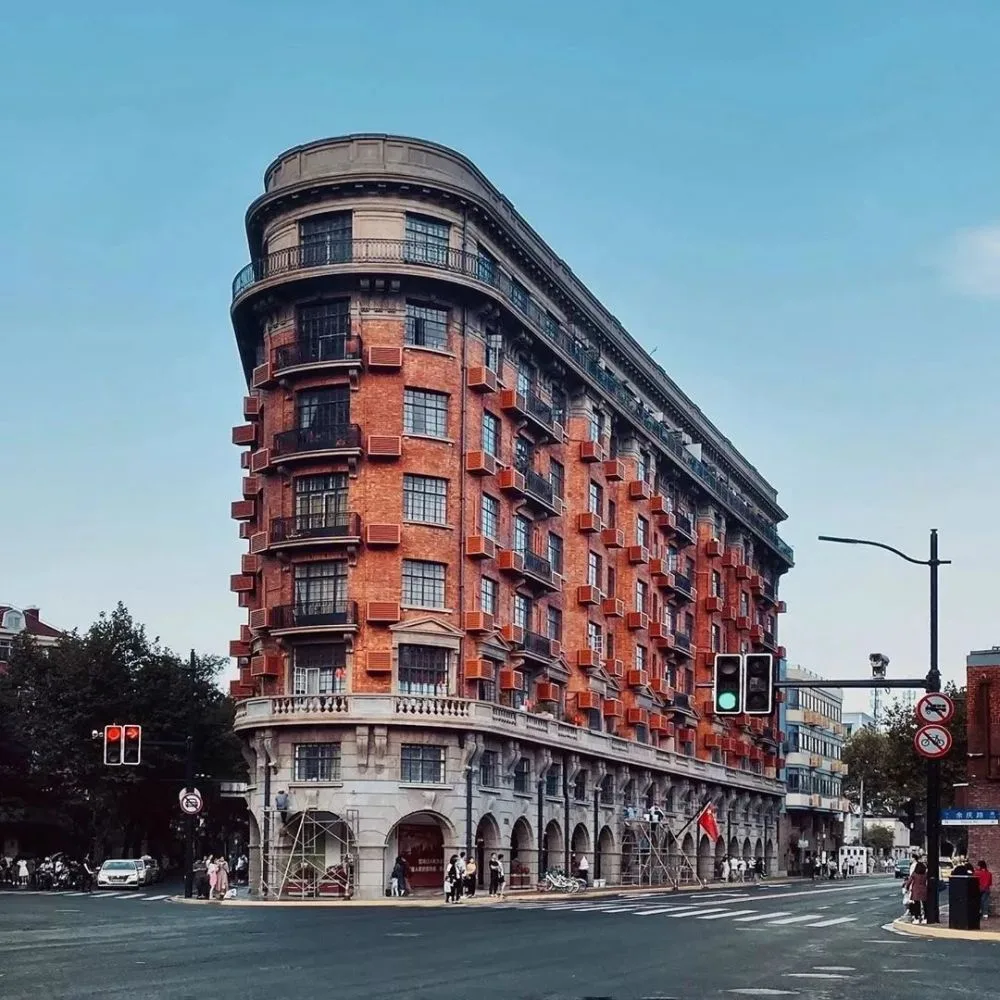
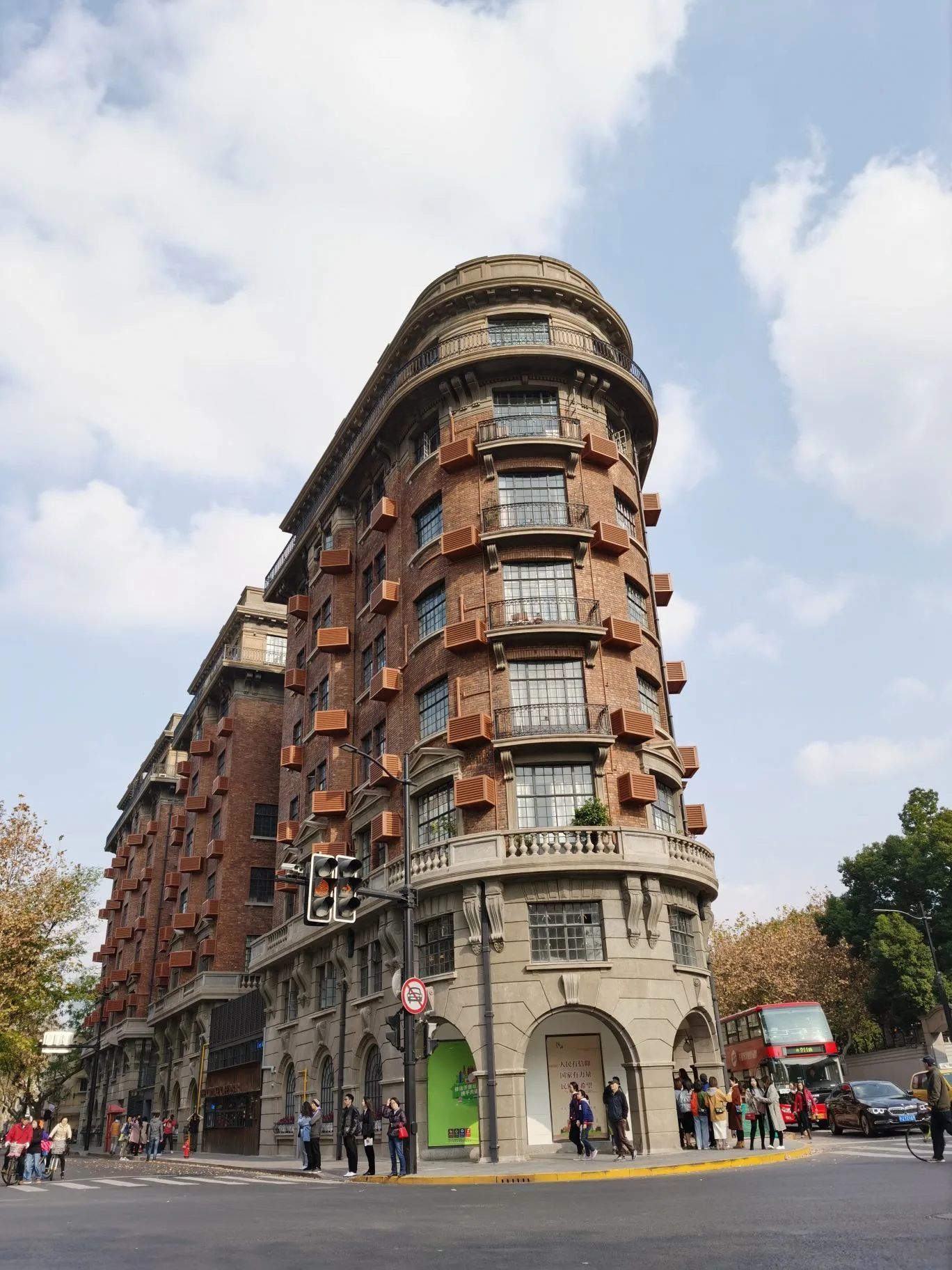
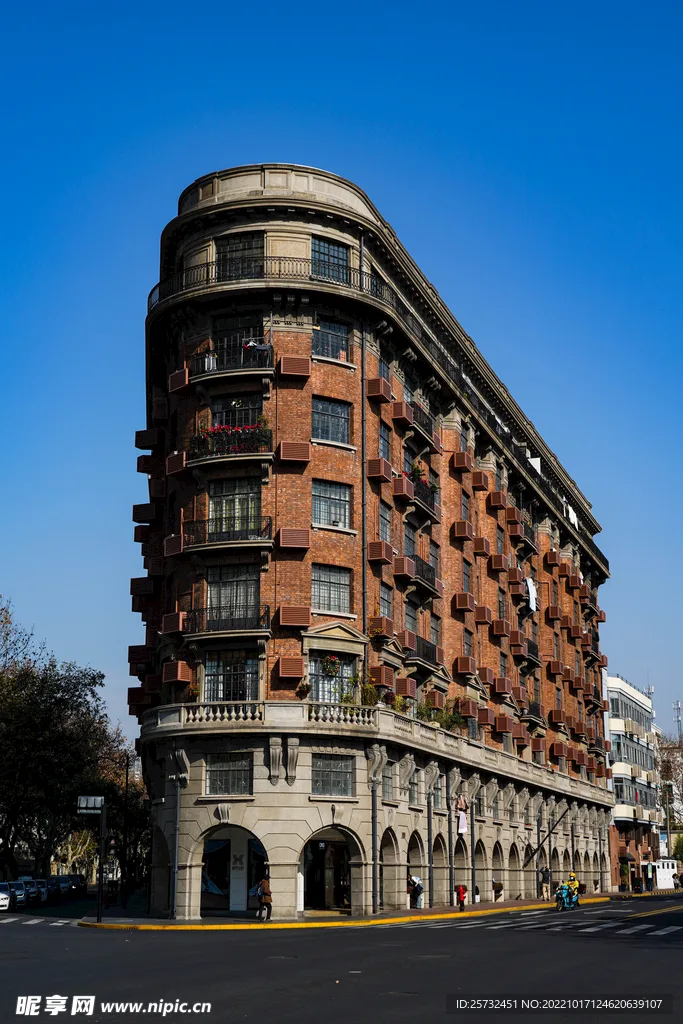
Wukang Mansion stands at 1842–1858 Middle Huaihai Road. Built in 1924 with funding from the International Savings Society and designed by the Hungarian architect Laszlo Hudec of Curry & Co., it was Shanghai's first veranda-style apartment building. Because Huaihai Road meets Wukang Road at a sharp 30-degree angle, the building was shaped into a wedge — seen from the crossing it looks like a ship about to set off, which is exactly why it became Shanghai's most photographed building.
It was originally named Normandie Apartments after the French peninsula, and early tenants were mostly upper-class expatriates: the 1937 China Directory lists sales agents for oil companies, the Shanghai manager of an American insurance firm, and the manager of Siemens China among its residents. After the Pacific War began, many British, American and French residents were interned or deported; occupancy fell to about a third by 1945. In 1953 the building was taken over by the municipal government and renamed Wukang Mansion. It was listed as a Shanghai Excellent Historic Building in 1994.
Photo tip: the classic angle is from the footbridge and pavement diagonally opposite the crossing, but it gets very crowded. For a clean shot, arrive before 8am.
Hengshan Road: plane trees over Avenue Petain
Hengshan Road runs 2,046 metres from Taojiang Road in the northeast to the junction of Huashan Road and Zhaojiabang Road in the southwest, and was one of the main arteries of the French Concession. Plane trees line both sides, lined with European-style garden houses.
Built by the French Concession council in 1922, it was originally Avenue Petain, named after the French commander of the First World War. It was renamed Hengshan Road in 1943 after the Wang Jingwei government took over the Concession. Through the 1990s it became Shanghai's main bar street; after 2015 the bars gradually closed or moved out, and the nightlife shifted to areas like Taikang Road and Zhangyuan. Today Hengshan Road is quiet — which suits it.
Worth pausing at along the way:
| Address | Building | Note | |---|---|---| | 10 Hengshan Road | Shanghai American School | Built 1922; Shanghai Excellent Historic Building (2nd batch) | | 53 Hengshan Road | Shanghai Community Church | Completed 1925; 1st batch | | Lane 9, No. 4 | Former residence of Lin Qiaozhi | Pioneering obstetrician | | Lane 58, No. 3 | Qingyu Villa | Former residence of Chiang Wei-kuo | | Lane 300 | Libo Garden | Built 1928; 2nd batch |
The former residences of Ba Jin and Soong Ching Ling are nearby on and around Wukang Road, and pair well with a Hengshan Road walk.
Xintiandi and the shikumen
Shikumen is a uniquely Shanghainese housing form, a hybrid of traditional Jiangnan courtyard houses and British terraced row housing. The name is a folk etymology: Shanghainese call a binding band a gu, and since these doorways were framed in stone they were "stone-bound doors" — shi gu men — which drifted into shikumen.
Xintiandi is the best-known preservation-led redevelopment of a shikumen lane: the brick gateways remain, the interiors are now boutiques and cafés. The Memorial Hall of the First National Congress of the Communist Party of China next door deserves a separate hour. For a fuller reading of shikumen, see our guide to Xintiandi.
Where to eat
Xin Rong Ji (Nanyang Road / Jinxian Road)
Founded in October 1995 in Linhai, Taizhou (Zhejiang) by Zhang Yong, serving Taizhou seafood and refined Chinese cooking. Its first Shanghai restaurant opened in 2010 and became the group's first Michelin-starred restaurant in 2016; Rong Fu Yan on Nanyang Road earned two stars in 2018, and in 2019 Xin Rong Ji's Beijing location became the first Michelin three-star Chinese restaurant in mainland China.
Order braised yellow croaker, crispy squab, glass noodles with sand garlic, and Taizhou-style wontons. The seafood follows the season — ask what came in that morning.
Guang Ming Cun (588 Middle Huaihai Road)
Its predecessor, the Huaihai Canteen, opened in October 1956; it became the Guang Ming Cun Dim Sum Shop in 1960, closed in July 1990, and reopened as Guang Ming Cun Grand Restaurant on the same site in December 1993.
The ground floor sells cooked foods, dim sum, prepared dishes and fresh pork mooncakes pan-baked to order — queues stretch down the street around Mid-Autumn. The second floor is a noodle and snack hall; the third and fourth floors serve Benbang dishes in banquet rooms. Soy-marinated duck, smoked fish and crab-roe pan-fried buns travel well.
Red House Restaurant
Opened in 1935 on Avenue Joffre (today's Middle Huaihai Road) by the Italian-Jewish owner Louis Rovere as Chez Louis, it is one of Shanghai's oldest French restaurants and the benchmark for Haipai (Shanghai-style) Western cuisine; it now belongs to the New Asia Fulihua group. In 1941 Japanese forces entered the French Concession and Rovere was interned as a Jew; released in 1945, he bought No. 37 Avenue du Roi Albert (today's South Shaanxi Road) and reopened as Chez Louis.
Order Shanghai-style borscht, escargots, pork chop with Worcestershire sauce, and Portuguese-style chicken in cream. They are far from authentic French — which is exactly the point.
Lao Da Chang
Opened in 1937 as a French-owned provision store (Magasin Français d'Alimentation) selling French pastries, cream cakes, bread and confectionery. It split into two businesses in 1943; one was sold to a Chinese merchant in 1945, the other was sold in 1957, after which the two merged.
Try the butter palmier (butterfly pastry) fresh from the oven, whipped cream, rum cake and ice cream. Eat the palmier while it is warm.
Suggested plan
Start on Wukang Road and Hengshan Road in the morning — Wukang Mansion before 8am for photos, then walk south. Return to Middle Huaihai Road for a Guang Ming Cun mooncake at midday. Spend the afternoon at Xintiandi and the Party memorial hall. Dinner at Xin Rong Ji, or Red House for old-school Shanghai Western food, and finish with Lao Da Chang pastries.
Practical notes
- Wukang Road and Hengshan Road are open streets and free to walk
- The CPC First Congress Memorial Hall requires advance booking
- Guang Ming Cun queues peak around Mid-Autumn; reserve Xin Rong Ji well ahead
- These are residential streets — please do not disturb residents when photographing
Photos
Sources
- Wikipedia: Wukang Mansion, Hengshan Road, Red House Restaurant, Lao Da Chang, Shikumen, Guang Ming Cun
- Baidu Baike: Xin Rong Ji, Shanghai French Concession