Yu Garden Half-Day Guide: From Sansui Hall to the Mid-Lake Pavilion
World Travel 编辑部 · 2026-09-09 · 11 min read
Yu Garden (Yuyuan) is the best-preserved classical Jiangnan garden in Shanghai's old town. It was first built in the 38th year of the Jiajing reign (1559) and is a national key cultural relic and a 4A-rated scenic area. The name "Yu" carries the meaning of "peace" and "well-being", reflecting a wish to bring comfort to one's elders. With more than forty pavilions, halls and towers arranged in classic Ming-Qing style, it has long been praised as "the finest garden in the southeast". This guide is for first-time visitors who want to see the essence of Shanghai's old town in a single afternoon.
Itinerary summary
- Suggested time: Half a day (2–3.5 hours). Allow 3–4 hours if you also want to wander the free Chenghuang Miao (City God Temple) and Nine-Turn Bridge area outside the garden.
- Suggested route: Enter by the North Gate → Sansui Hall → Great Rockery → Wanhua Tower → Dianchun Hall → Exquisite Jade Rock → Inner Garden → exit by the South Gate, then continue to the Nine-Turn Bridge, Mid-Lake Pavilion and Yuyuan Old Street.
- Best for: Visitors interested in classical gardens, Ming-Qing architecture and old Shanghai, as well as families with children.
Getting ready
Opening hours: Daily 9:00–16:30. Last entry 16:00, garden closes 16:30. Closed every Monday (except statutory holidays; hours during Chinese New Year follow the official notice).
Tickets: Peak season (1 Apr–30 Jun and 1 Sep–30 Nov) adult 40 CNY; low season (1 Jul–31 Aug and 1 Dec–31 Mar) adult 30 CNY. Students and visitors aged 60 and above with valid ID receive a half-price ticket. Children under 1.3 m or under 6, plus active military, firefighters and other eligible groups, enter free as per the notice. Please check the latest notice and buy via the official "Shanghai Yu Garden" mini-program or at the on-site ticket windows.
Entrances:
- North Gate: 168 Fuyou Road, Huangpu District (for groups and individual visitors)
- South Gate: 279 Yuyuan Old Street, Huangpu District (at the foot of the Nine-Turn Bridge; individual visitors only)
Getting there: Take Metro Line 10 or Line 14 to Yuyuan Garden Station, then walk a few minutes to the North Gate. Buses to "Xinbeimen" or "Chenghuangmiao" also stop within walking distance.
Highlights
Sansui Hall — the starting point of the garden's central axis, where you can get your bearings and learn the meaning behind the name "Yu" (a wish for comfort and peace for one's parents and elders).
Great Rockery (Dajia Shan) — designed by the Ming dynasty garden master Zhang Nanyang and built from Wukang stone. Climbing it gives a fine overview of the garden. (Note: the rockery paths are uneven and have many steps — watch the safety signs.)
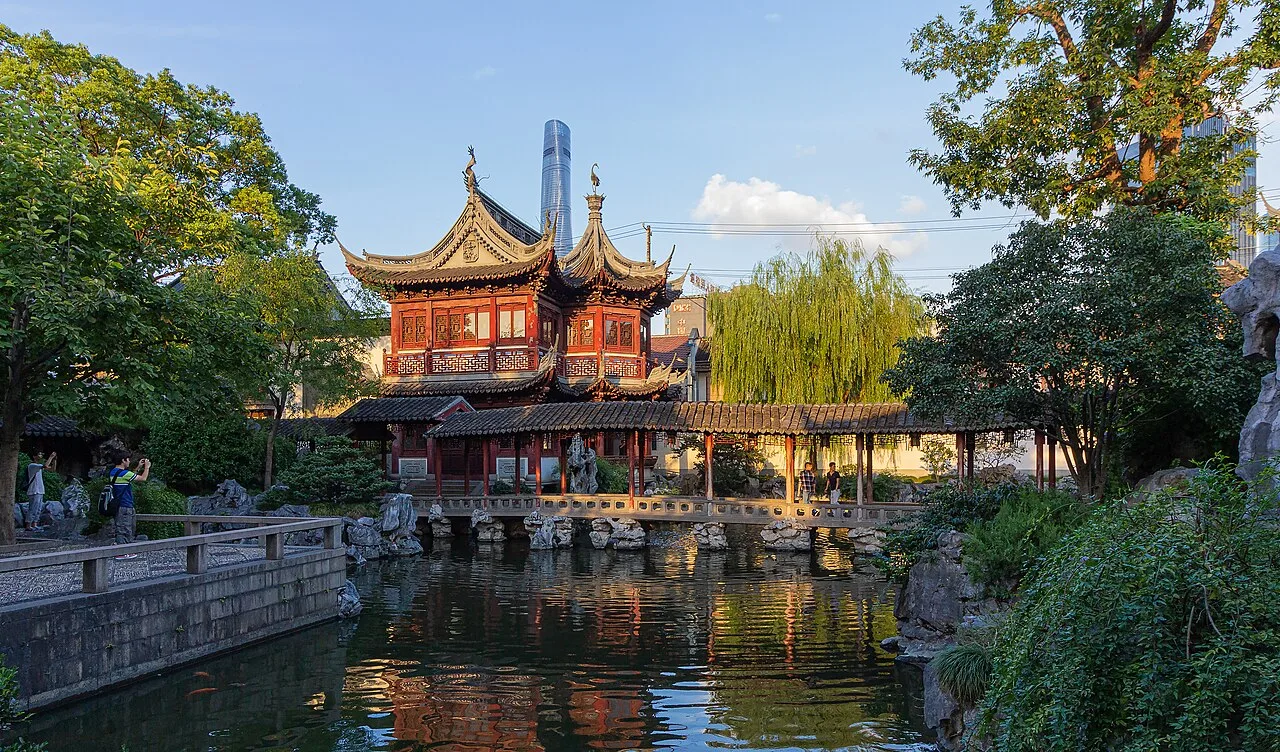
Yu Garden interior
Photo: Stefan Fussan · 2016-09-20 · Source · CC BY-SA 3.0

Wanhua Tower and Yule Pavilion area — winding corridors, flowers and water that best capture the "a new view at every step" quality of a Jiangnan garden.
Dianchun Hall — a historic building linked to the Small Swords Society uprising, with related displays. Worth a short stop if you're interested in modern Chinese history.
Exquisite Jade Rock (Yulinglong) — the garden's most treasured stone, often ranked with the Ruiyun peak in Suzhou and the Zhouyun peak in Hangzhou as one of the three great Jiangnan rocks.
Inner Garden — a compact, refined garden in the southeast corner with halls, rockeries and corridors; worth finishing before you leave.
Nine-Turn Bridge and Mid-Lake Pavilion (Huxinting) — outside the paid garden (free to visit). The bridge zigzags across the pond, and the Mid-Lake Pavilion is one of the oldest surviving teahouses in Shanghai, sitting over the water — arguably the most iconic view of the old town and a great spot for photos or a rest.
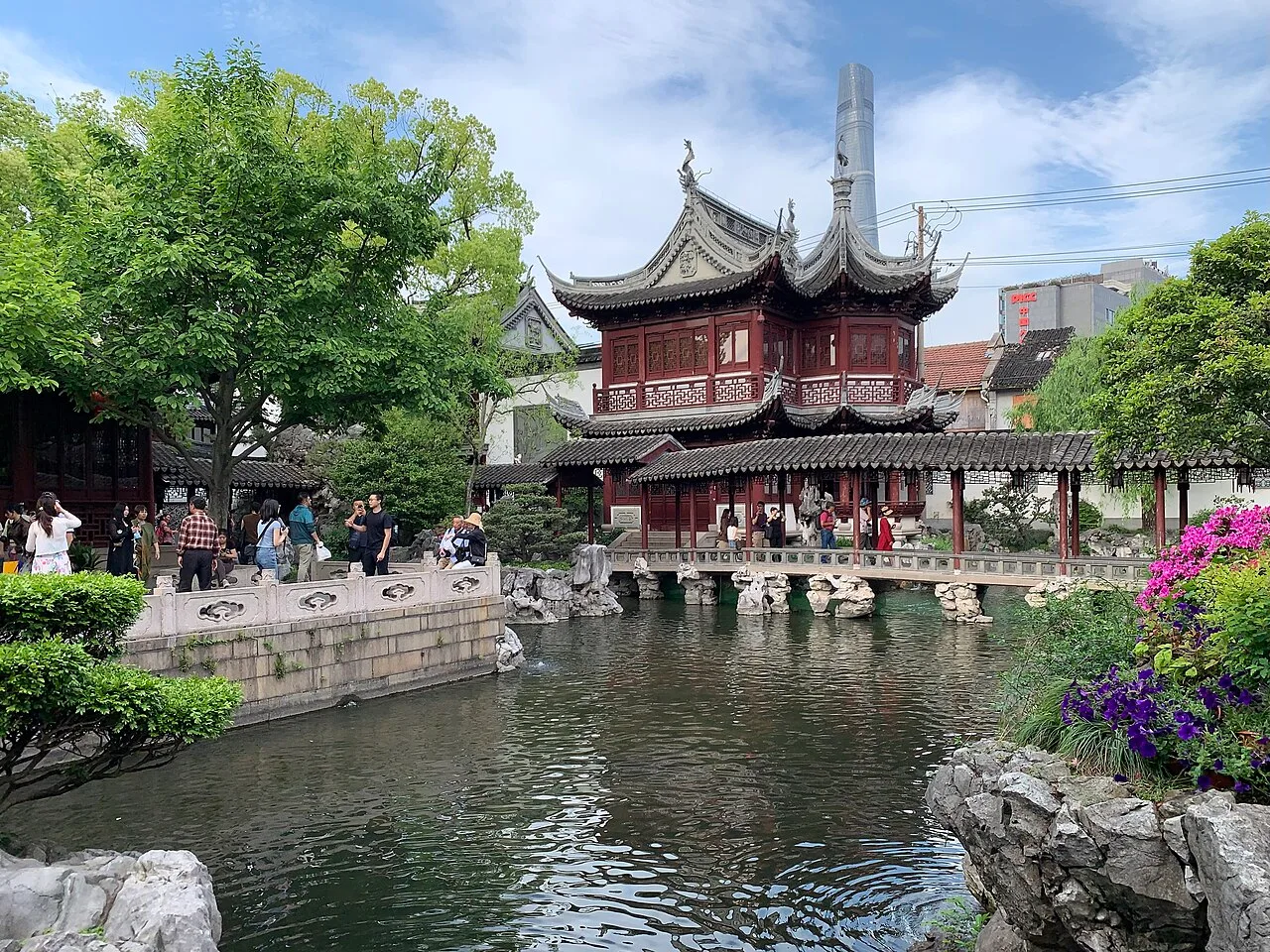
Panorama of the Mid-Lake Pavilion and Nine-Turn Bridge
Photo: Chainwit. · 2024-04-24 · Source · CC BY 4.0

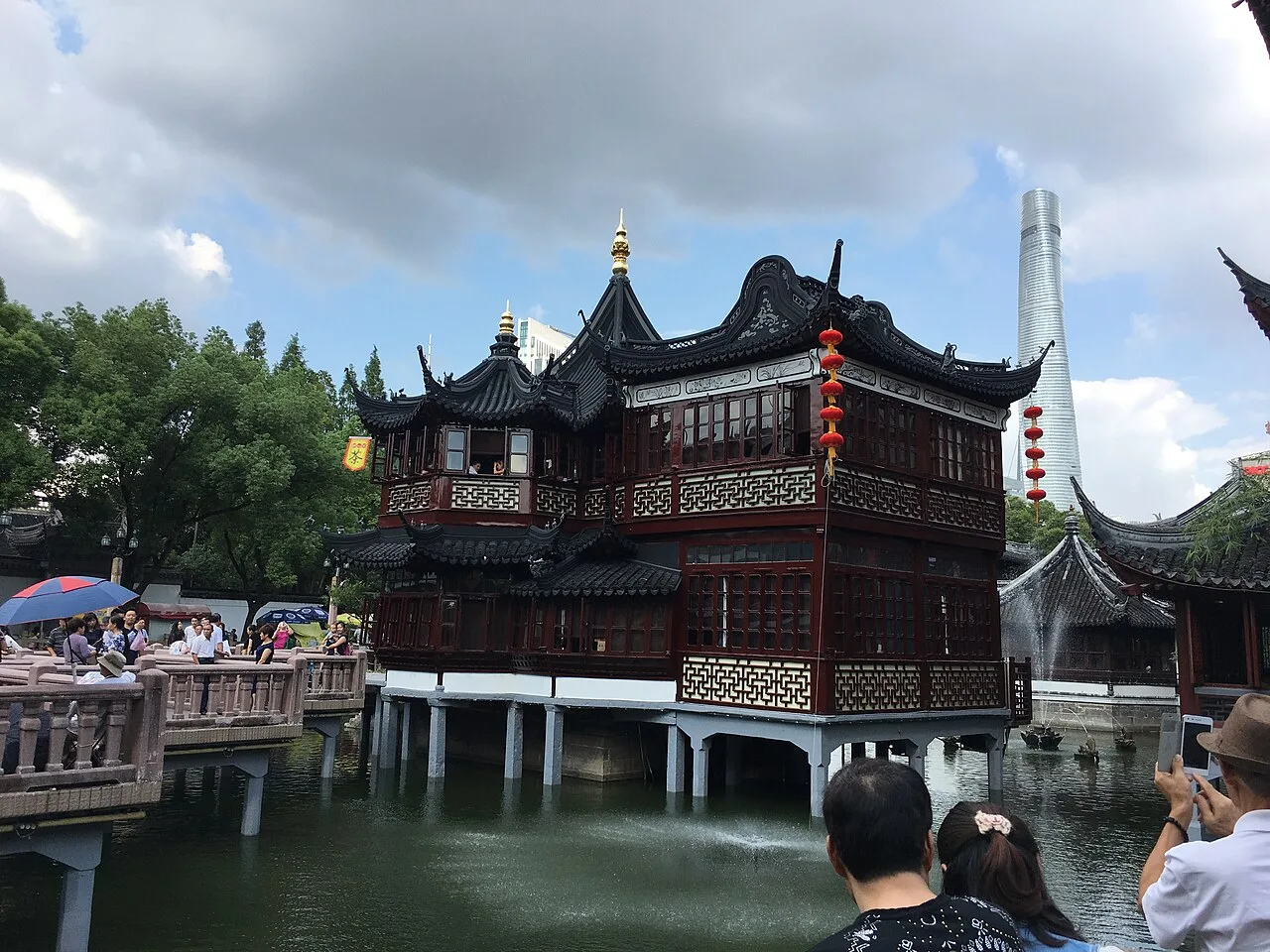
Mid-Lake Pavilion teahouse by the water
Photo: Fredlyfish4 · 2016-09-20 · Source · CC BY-SA 4.0

Dragon Wall — the garden's distinctive wall decoration, with cloud-dragon forms coiling along the ridgeline. A highly recognisable detail.
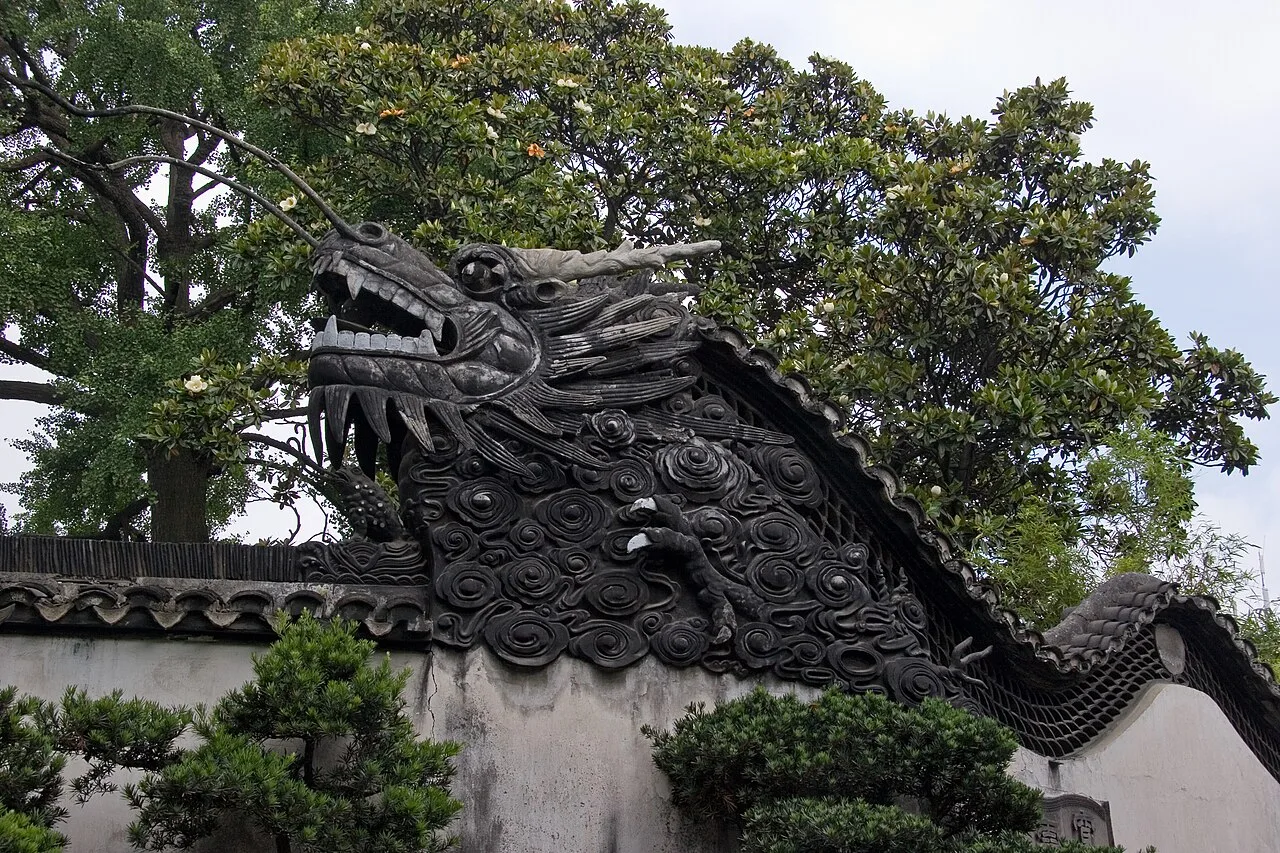
Dragon wall of Yu Garden
Photo: KimonBerlin · 2007-06-09 · Source · CC BY-SA 2.0
.jpg)
Practical tips
- With many stone paths, bridges, slopes and rockeries inside, wear flat, non-slip shoes; a stroller will be awkward — prefer a baby carrier or a light pushchair.
- Shade is limited in a classical garden; use sun protection in summer, and in thunderstorms stay away from trees and eaves.
- No luggage storage is provided; keep valuables with you. Pets are not allowed (except guide dogs).
- The garden is closed on Mondays — plan around it. On national holidays and during Chinese New Year, arriving early in the morning helps you avoid the crowds.
About prices and times
The opening times and ticket prices above come from the official Yu Garden website and the Shanghai Huangpu District government's public information. Please confirm against the garden's latest notice before you travel. The suggested durations are editorial recommendations, not official commitments. The Nine-Turn Bridge, Mid-Lake Pavilion and the area around the City God Temple are free and open, so you can extend your visit as you like.
Images have been resized and converted to WebP. The Yu Garden photographs are from Wikimedia Commons under CC BY / CC BY-SA licences; each image in the article credits the photographer, date and licence.