Yu Garden and the Old City: Four Historic Shanghainese Kitchens
World Travel 编辑部 · 2026-09-10 · 9 min read
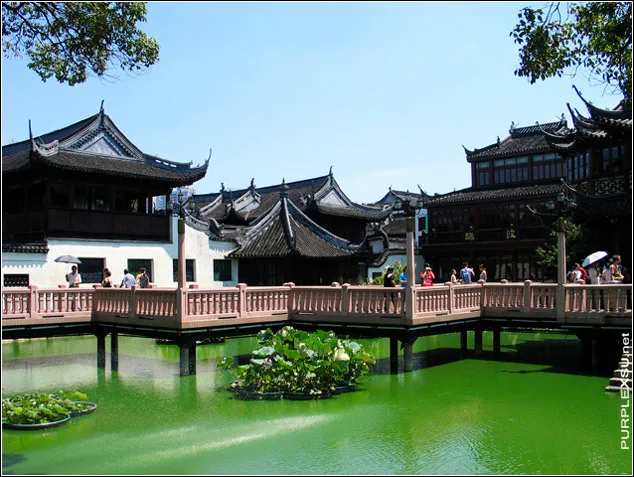
Yu Garden is the least "Shanghai" corner of Shanghai — upturned eaves, rockeries and a zigzag bridge, all standard Jiangnan garden vocabulary, with the noise of the City God Temple bazaar right outside the wall. It is also where the city's oldest food brands cluster: three restaurants founded in the 19th century sit within a few minutes' walk of each other.
At a glance
- Area: Yu Garden + the City God Temple bazaar (Fuyou Road, Middle Fangbang Road) + the old-brand strip on Guangdong Road
- Suggested time: half a day; come early for quiet
- Best time: enter the garden at opening — before 9am. Tour groups arrive after 10am
- Metro: Lines 10 / 14, Yu Garden
Yu Garden and the bazaar
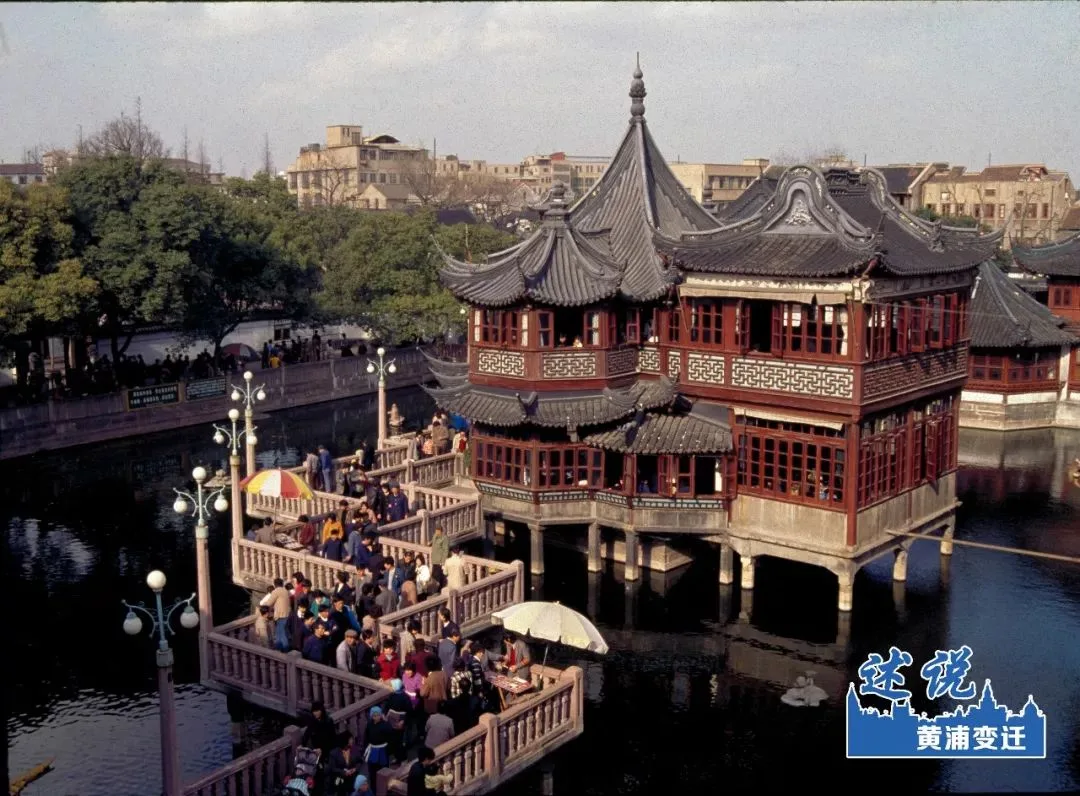
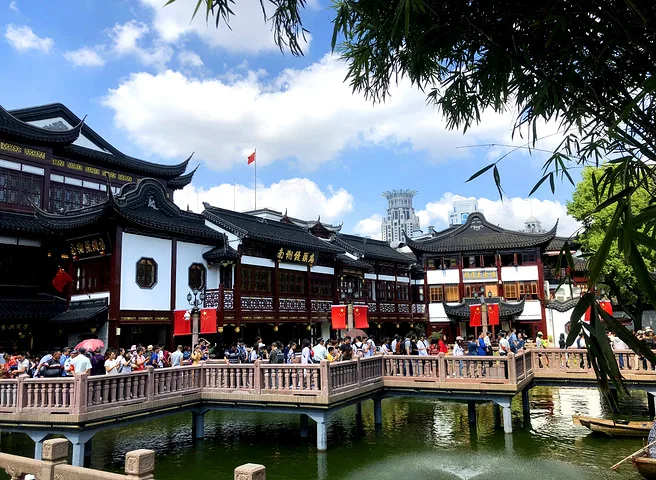
Yu Garden is a classic Ming-dynasty Jiangnan garden with pavilions, rockeries and fish ponds. Its two best-known features are the Great Rockery — one of the largest surviving Ming stone constructions of its kind — and the Exquisite Jade Rock, one of the legendary three great rocks of Jiangnan. The Zigzag Bridge and the Mid-Lake Pavilion are outside the garden walls, in the free bazaar area, and are the most crowded part.
There is only one way to beat the crowds: go early. Do the garden first, then breakfast, and hand the bridge over to the tour groups by 10:30.
Four old houses, four versions of Shanghai
Lu Bo Lang
Its history reaches back to the Ming Jiajing era — the building was originally a pavilion in the west garden of Yu Garden, converted to a restaurant in 1978 and expanded in 1991. The three-storey Ming-Qing style building stands beside the Zigzag Bridge and is known for its boat-shaped dim sum. It has hosted more than forty foreign heads of state, including Queen Elizabeth II and US President Bill Clinton.
Order eyebrow-shaped pastry, crab-roe soup dumplings, osmanthus rice cake, and squirrel-shaped mandarin fish.
Shanghai Lao Fan Dian (242 Fuyou Road)
Founded in 1875 as Rongshun Guan, moved to its present site in 1965 and renamed. A five-storey Ming-Qing style building with around 30 private rooms and a banquet hall seating 66 tables, run by fifth-generation chef Luo Yulin.
It is the national-level intangible cultural heritage custodian for Shanghai Benbang cooking techniques (listed 2014), which makes it the reference point for understanding Shanghainese cuisine. Order crisp fried river shrimp, eight-treasure duck, "three shreds" soup, and fish slices in rice-wine sauce. The three-shreds soup is a knife-skill showcase.
Nanxiang Steamed Bun House (Yu Garden)
Opened in 1900 by Wu Xiangsheng from Nanxiang town in Jiading, originally named Changxing Lou. Its xiaolong technique was listed as Shanghai intangible cultural heritage in 2007 and as a national-level item in 2014; the sixth-generation inheritor is You Yumin. It has repeatedly received the Shanghai Michelin Bib Gourmand, and queuing is normal.
Order pork xiaolong, crab-roe soup buns, and shrimp xiaolong. In July 2024 the Yu Garden flagship revived its Shanghainese-style morning tea service — the calmest time to eat here.
De Xing Guan (471 Guangdong Road; also Fujian Middle Road)
Founded in 1878 and described as the birthplace of Shanghai Benbang cuisine; its main branch is at 471 Guangdong Road and it was recognised as a "China Time-honoured Brand" in 2011. The cooking leans on braising and stewing: shrimp-roe sea cucumber, "zao bo tou" (wine-lees casserole), and black carp lung.
Its signature braised pork knuckle uses the front leg, simmered in master stock, then deboned and set — a technique now on the intangible heritage list. A line in a 2025 TV drama sent sales soaring and brought a wave of young customers to a 147-year-old dining room, which is a rather Shanghai story in itself.
Order braised pork knuckle noodles, stir-fried eel noodles, wine-lees casserole, and eight-treasure spicy sauce noodles.
Suggested plan
Enter the garden before 9am and see the Great Rockery and Exquisite Jade Rock; leave around 10:30. Have lunch at Nanxiang (aim for the morning-tea window) or Lu Bo Lang for boat dim sum. In the afternoon take a short ride to Guangdong Road for a bowl of De Xing Guan noodles, and save Shanghai Lao Fan Dian for dinner — both are full Benbang meals and one sitting will not cover both.
Practical notes
- Yu Garden is ticketed (check on-site notices); the bazaar and Zigzag Bridge are free
- Lu Bo Lang and Nanxiang queue heavily at mealtimes — go off-peak
- Opening hours for these old houses vary; confirm via official channels, especially on public holidays
- The area is densely crowded — watch your belongings
Photos
Sources
- Baidu Baike: Lu Bo Lang, Shanghai Lao Fan Dian, Nanxiang Steamed Bun House, De Xing Guan
- Wikipedia: Shanghai cuisine