The Muslim Quarter: Xi'an's Hui Neighbourhood Inside the Walls
World Travel 编辑部 · 2026-09-16 · 6 min read
In the northwest of Xi'an's walled city lies a district bounded roughly by West Main Street to the south, Beiyuanmen to the west, Hongbu Street to the north and Zaoci Lane to the east. It is the Hui quarter. In Tang times this was the site of the Department of State Affairs; from the Tang onward Arab Muslim merchants arrived in Chang'an along the Silk Road — and the quarter's story begins there.
From government office to Hui neighbourhood
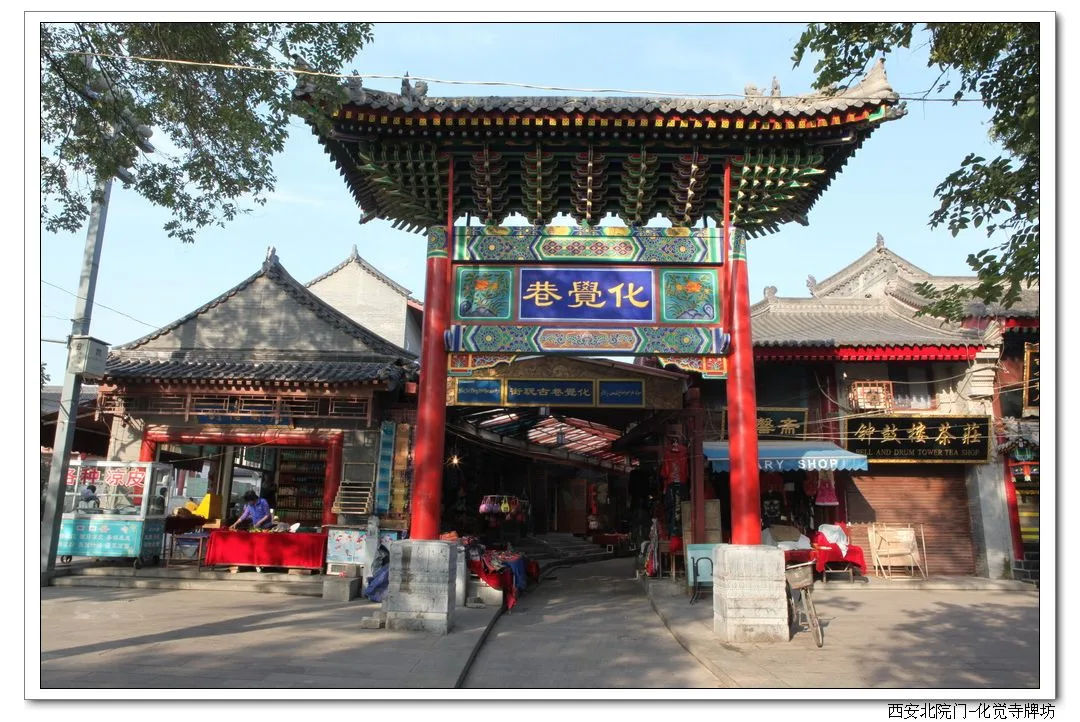
Today's Hui quarter was in Tang times the seat of the Department of State Affairs. From the Tang, Muslim merchants from Arabia came to Chang'an along the Silk Road, and between the Five Dynasties and the Northern Song, Hui residents began settling around the Daxuexixiang Mosque and the Great Mosque of Huajuexiang.
In the Ming the prefectural office stood north and south of the Drum Tower, wealthy merchants gathered nearby, and a district of Hui trade and daily life gradually formed.
Seven mosques, thirteen wards
Before the Qianlong era of the Qing there were seven mosques in the city, governing residents across thirteen wards — hence the phrase "seven mosques, thirteen wards" among Xi'an's Hui. The seven were the Huajuexiang Great Mosque, Daxuexixiang, Dapiyuan, Xiaopiyuan, Xiaoxuexixiang Yingli, North Guangji Street and Sajinqiao Ancient Mosque; the names of the thirteen wards vary between tradition and record given their age.
In the Republican period the spread of the Ikhwani movement led to the founding of the Sajinqiao West Mosque and the Xiaoxuexixiang Central Mosque, producing a pattern of nine. After 1982 closed or requisitioned mosques reopened one by one and more were added, forming a pattern of twelve.
The quarter today
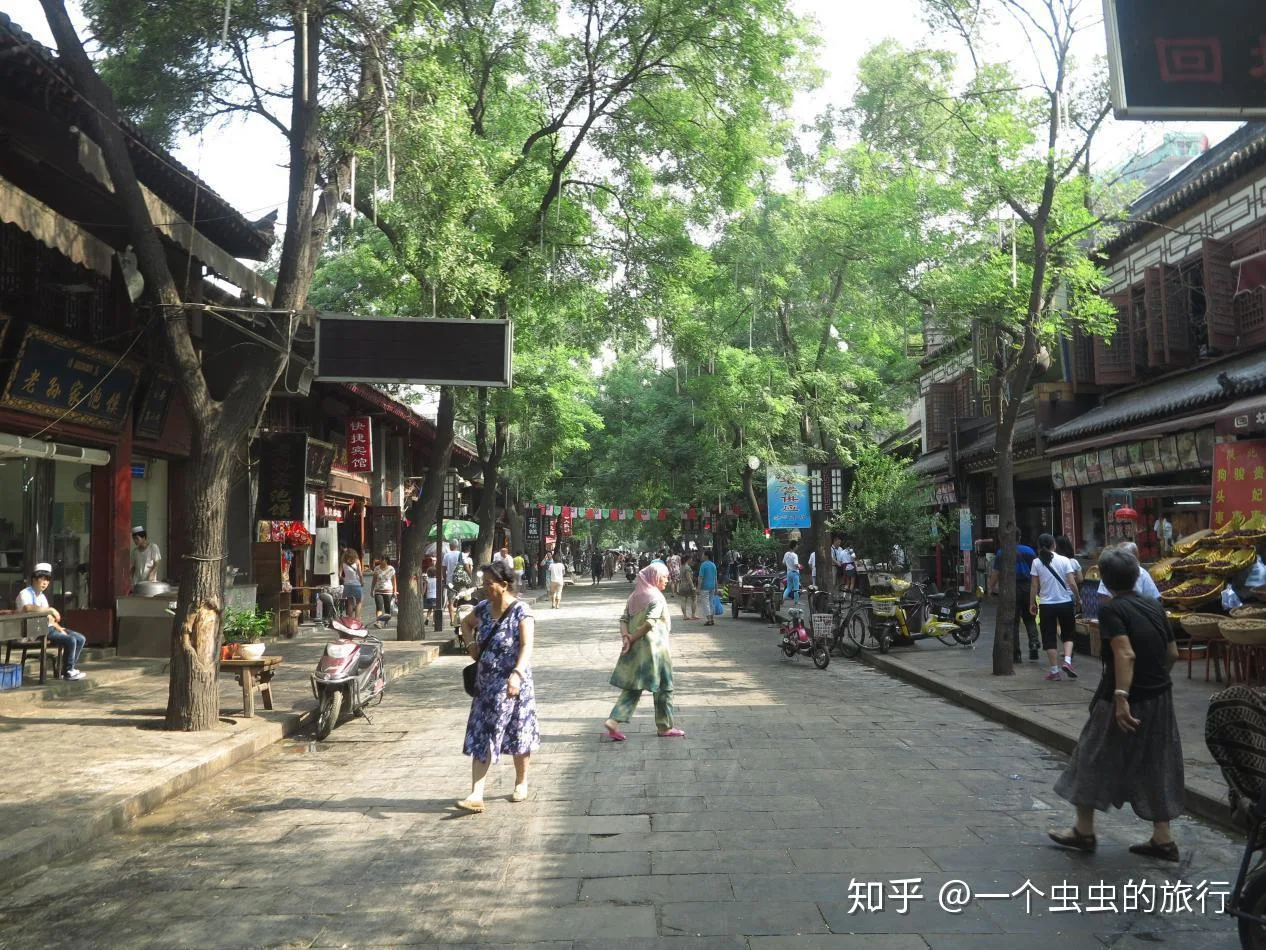
Most of the quarter is made up of narrow lanes that jam easily. A 2003 count put its Muslim population of all ethnicities at 32,361, some 49.8 percent of Xi'an's Muslim total.
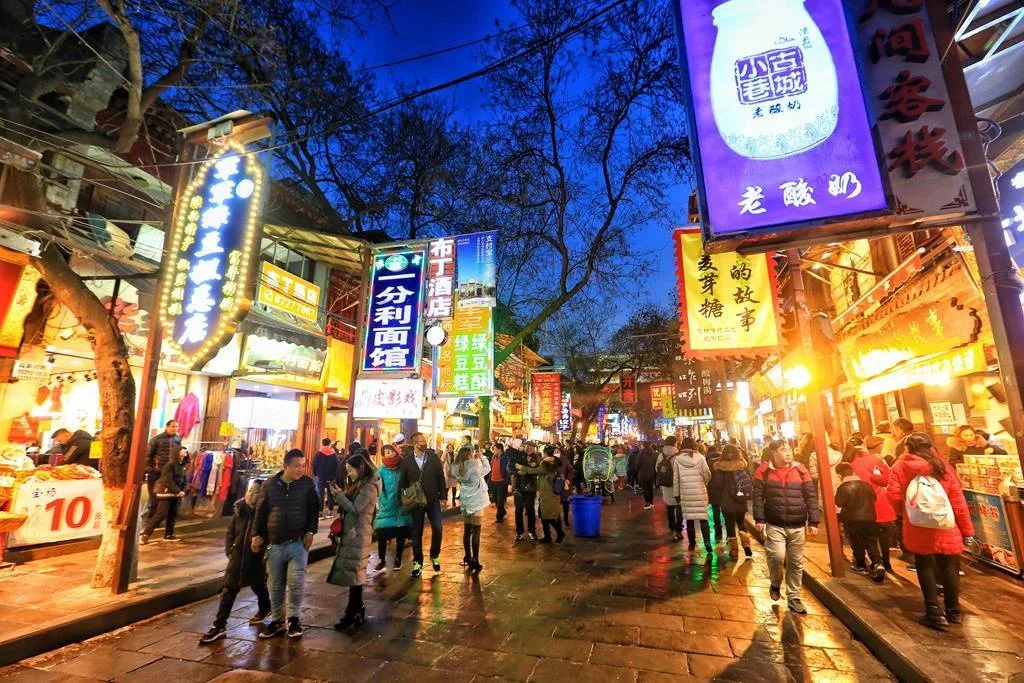
For visitors the most immediate thing is the bustle and food around Beiyuanmen. But remember: this is a neighbourhood where people actually live, not simply a commercial attraction.
Practical Notes
- The main Beiyuanmen street is the most commercialised; the everyday character is in the lanes behind it.
- Respect local custom and ask before photographing people.
- It shares an area with the Bell and Drum Towers and the Great Mosque — link them in the evening.
Related
- The Great Mosque of Xi'an: Islamic Worship in a Chinese Compound
- The Bell and Drum Towers: Two Timekeepers Above the Four Great Streets
- Xi'an City Wall Half-Day Guide: From Yongning Gate to Hanguang Gate
Photos
Sources
- Wikipedia: Xi'an Muslim Quarter (Huifang)
- Wikipedia: Great Mosque of Xi'an