Chengdu Hotpot: A City's Character in One Red Broth
World Travel 编辑部 · 2026-09-10 · 8 min read
Chengdu Hotpot: A City's Character in One Red Broth
Dropping chillies, Sichuan pepper and beef tallow into one pot is how Sichuan and Chongqing cope with damp cold — and it is also the most extroverted way this city sits down together. Chengdu hotpot belongs to the Sichuan branch, known for its mala heat and fragrance, and against Chongqing's it runs mellower, with a different approach to the dipping bowl.
From the wharves to the streets
Mala hotpot comes from the Sichuan-Chongqing region, and in Sichuan dialect it is simply "huoguo" — hotpot. By one account it began in the late Ming and early Qing, when slaughterhouses thrived along the Jialing River near Chaotianmen and dockworkers could get cheap, even discarded, beef tallow and offal. They fried chillies and Sichuan pepper in the tallow, then cooked tripes and vegetables in it. Another account puts the first "tripe hotpot" at Chongqing banquets in the Daoguang era, after an earlier wharf snack called "shui ba kuai" — thin slices of beef offal blanched at the table in a clay pot of spicy tallow broth, paid for by counting empty plates.
In Chengdu the trail goes back at least to a 1909 city survey, the Chengdu Tonglan, and probably earlier. Chongqing, Zigong and Luzhou each have their own origin story; the two cities still argue about whose hotpot is the real one.
Chengdu versus Chongqing
The differences come down to the broth and the dip.
The broth: Chongqing traditionally fries its base in beef tallow; for cost and for fat content, a rapeseed-oil version is now common too. Chengdu's style is mellower, with a touch of sweetness behind the spice.
The dip: this is the clearest dividing line. A Chongqing oil dip is usually just sesame oil, coriander and spring onion; a Chengdu dip adds oyster sauce, crushed peanut, fermented black bean and minced ginger. That is why coriander, oyster sauce and fish mint are standard on a Chengdu table.
What goes into one red pot
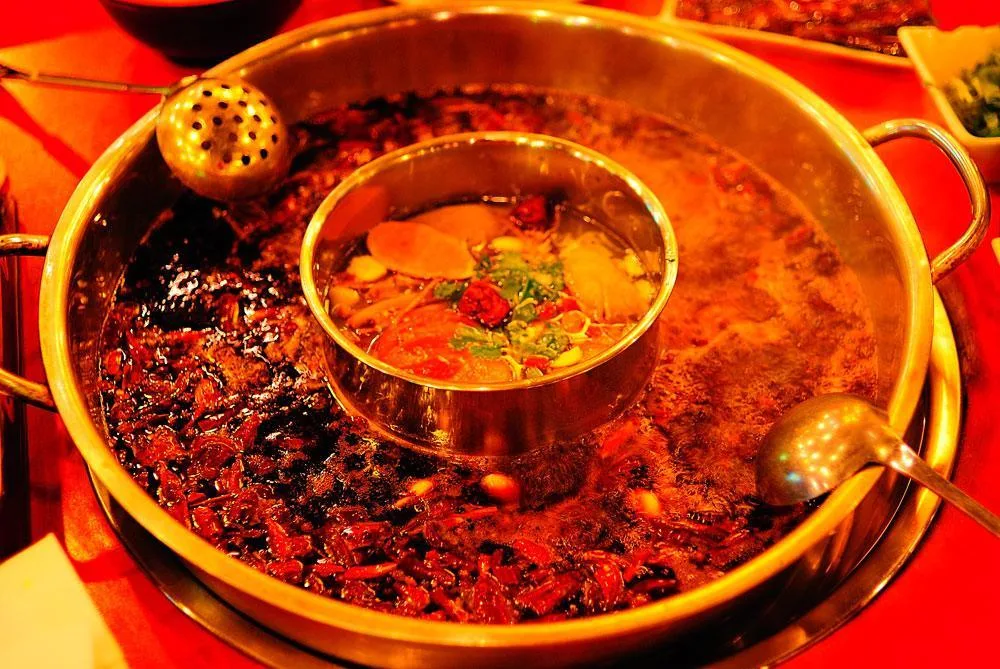
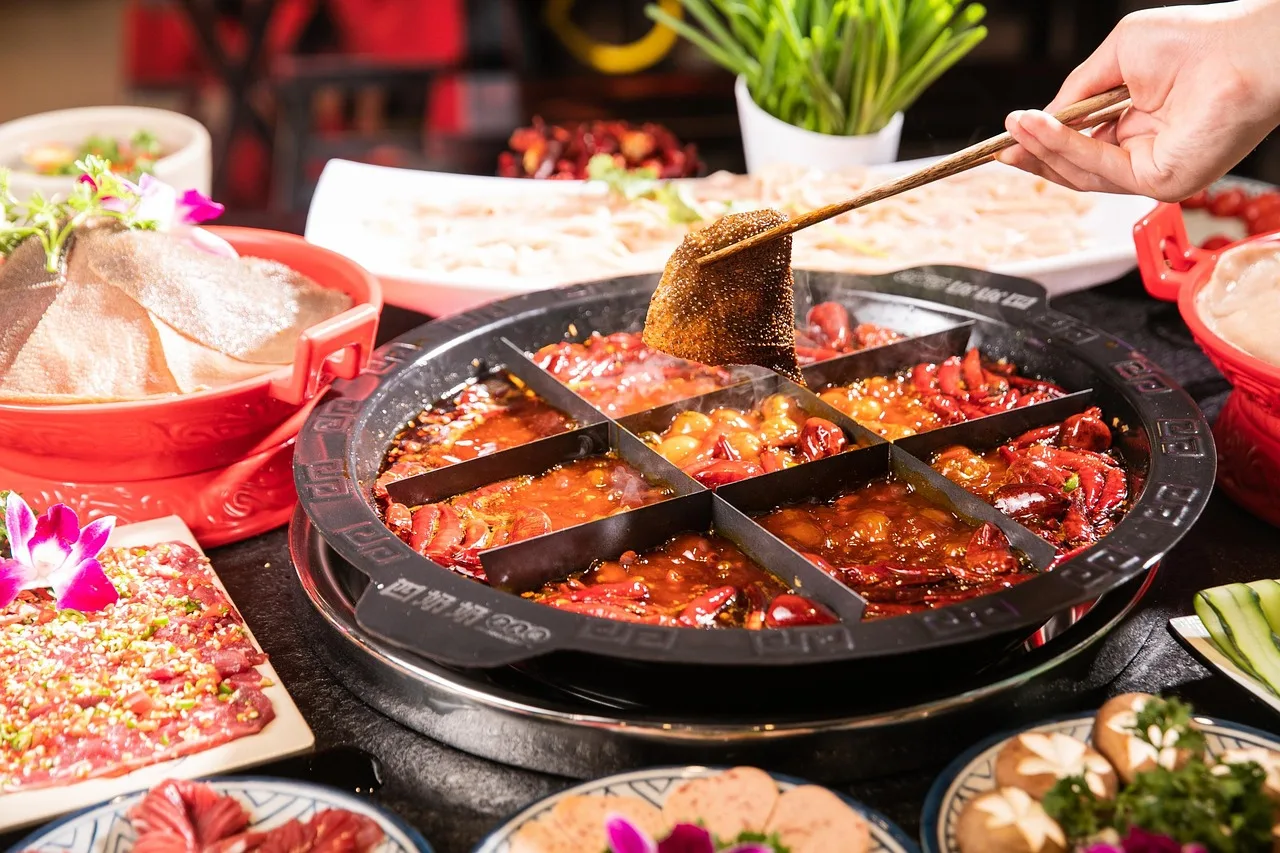
A red broth is not only chilli. A traditional base uses Pixian broad bean paste, fermented black bean, dried chillies, Sichuan pepper, old ginger, garlic, fermented glutinous rice, salt, rock sugar and cooking wine. Pixian paste is the most important of them, giving the broth its savour, warmth, deep chilli heat and glossy red colour. Dried chillies add fragrance and heat, Sichuan pepper the numbing tingle, while the fermented rice and rock sugar bring a sweet finish that softens the burn.
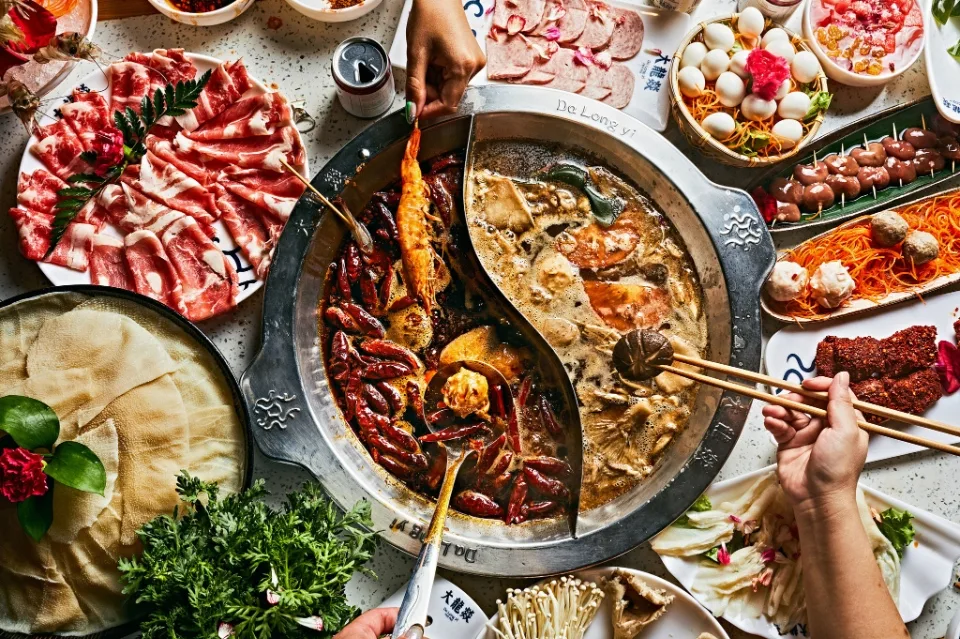
Sides go in by cooking time: first offal — tripe, aorta, duck intestine, duck blood — then meats such as mala beef, tender beef, crisp pork and lamb, and last vegetables like celtuce stem and pea shoots, with wide noodles and potato slices as the starchy finish.
How to eat
- Offal first, meat next, vegetables after, noodles last — order by cooking time and the textures work
- The oil dip cools: swish a piece through sesame oil before eating to cool it, blunt the heat and add fragrance
- Try a dry dip: chilli powder, crushed peanut and sesame, best with offal
- Chengdu has a serious number of hotpot restaurants: nearly 80,000 by mid-2023, and it is where chains such as Dalongyi (founded 2013) and Shudaxia (2015) began
Practical notes
- Status: a signature food and cultural symbol of Chengdu; a leading representative of Sichuan-school hotpot
- Character: mala and fragrant, mellower than Chongqing's; usually served with coriander, oyster sauce and fish mint
- Base essentials: Pixian broad bean paste, fermented black bean, dried chilli, Sichuan pepper, old ginger, garlic, fermented rice, rock sugar
- Cooking order: offal, then meat, then vegetables, then starches
- Dips: oil dip (oyster sauce, crushed peanut, black bean, ginger) or dry dip
Related
- Pixian Broad Bean Paste: The Soul of Sichuan Cooking
- Maocai, Bobo Chicken and Rabbit Head: Chengdu's Mala Street Food
Photos
Sources
- Baidu Baike: Chengdu hotpot, Sichuan hotpot
- Wikipedia: Mala hotpot