Chengdu Panda Base: From Six Bears to Two Hundred and Sixty
World Travel 编辑部 · 2026-09-10 · 7 min read
Chengdu Panda Base: From Six Bears to Two Hundred and Sixty
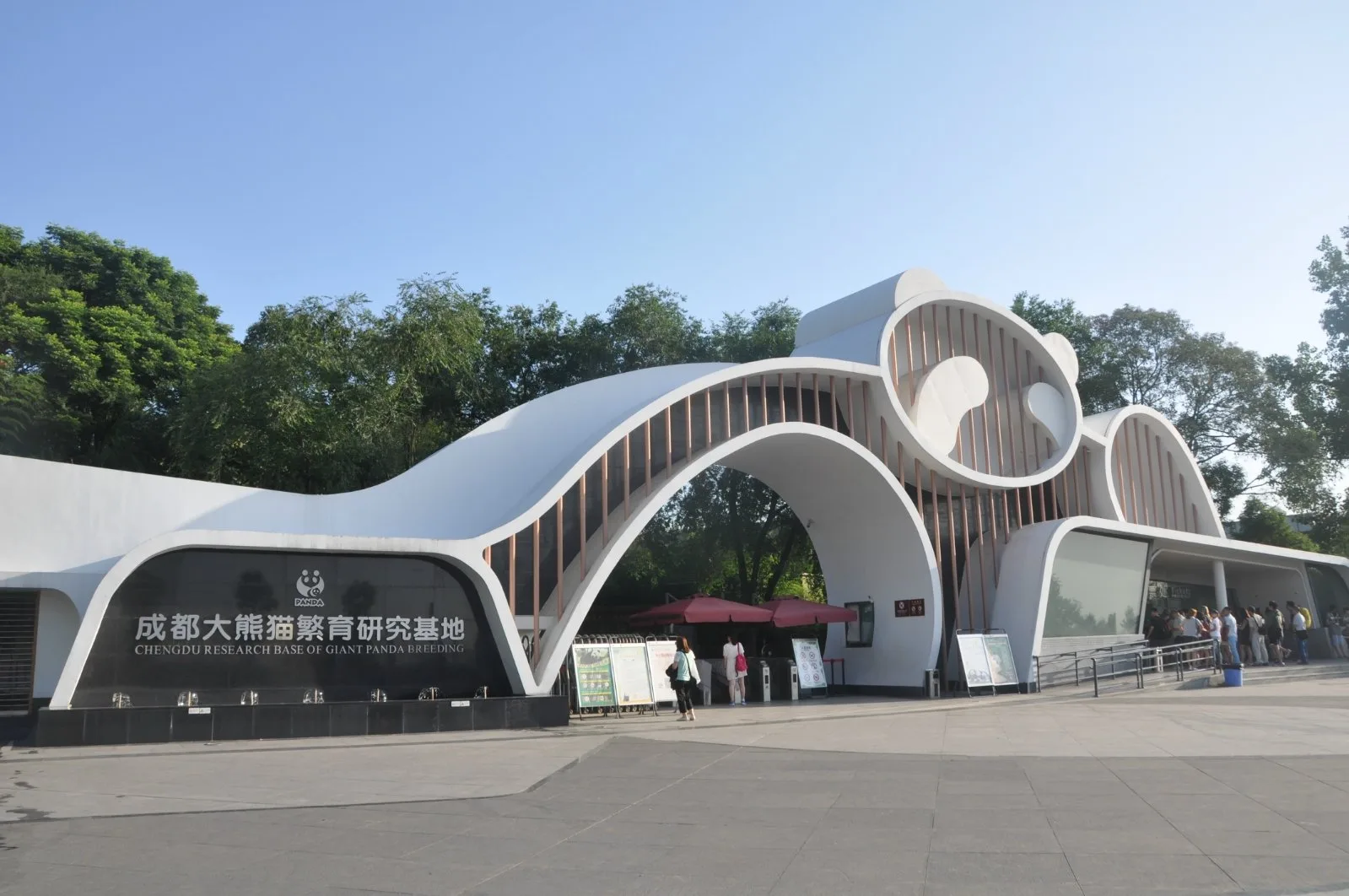
On the low hills by Futou Mountain in Chenghua district, at 1375 Panda Avenue in northern Chengdu, sits the Chengdu Research Base of Giant Panda Breeding. Part research institute, part visitor destination, it is a non-profit body devoted to the study, breeding and conservation education of endangered wildlife. It also runs a wild-release and breeding centre in Dujiangyan, known as Panda Valley.
From six bears to 260
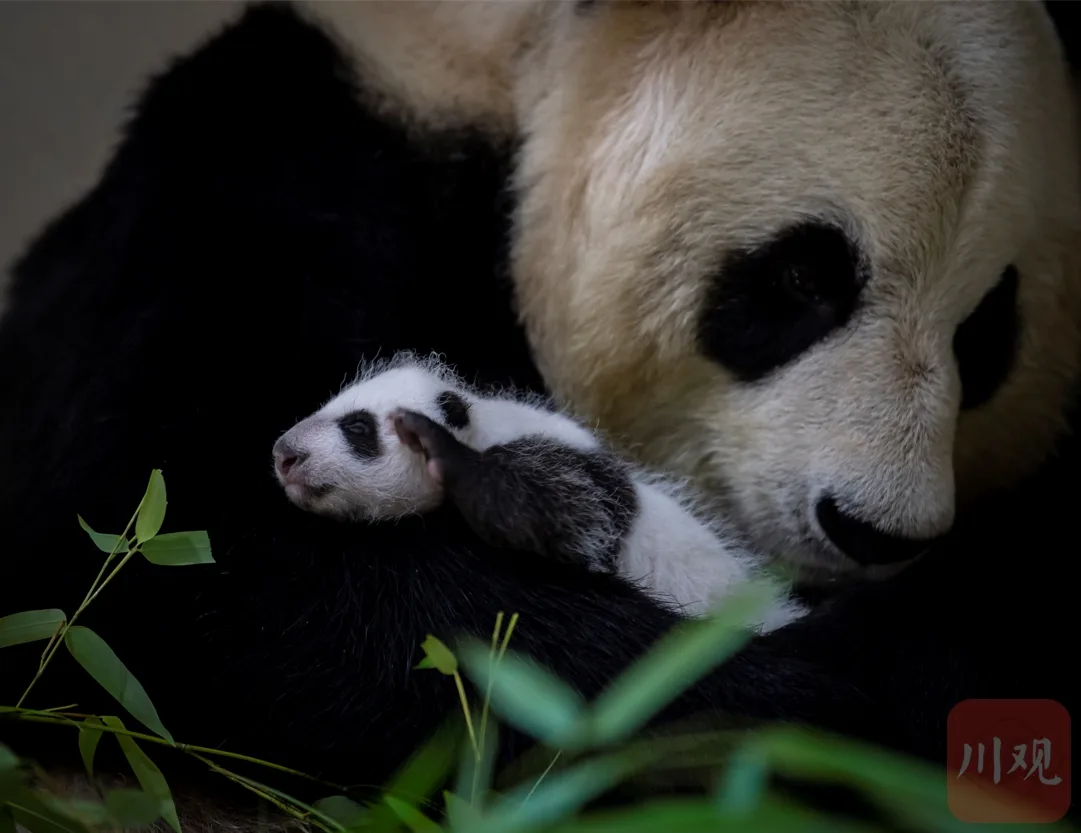
The base began very small: six giant pandas rescued from the wild in its founding period. By the end of 2024 it held 260 giant pandas; by the end of 2025 it also had 201 red pandas, plus golden snub-nosed monkeys and other endangered species.
It was born out of a crisis. In 1983 the arrow bamboo that pandas depend on flowered and died en masse across the Qionglai and Min ranges. Bamboo dies after flowering, and the pandas lose their food. Sichuan's forestry department surveyed the mountains that May, the reports ran in July, and the story drew wide attention. The same year the China Conservation and Research Centre for the Giant Panda opened at Wolong, but breeding work there remained limited.
In 1985 the Chinese Association of Zoological Gardens was founded to raise private funds for a breeding base. In 1986 the rescue centre originally planned for Chengdu was abandoned after its investor absconded; the city government then worked with the association to build the panda base at the same site, under the Chengdu Gardens Bureau. The foundation stone was laid in March 1987, the opening ceremony held on 10 October, and the base went into use that November.
The new grounds: Infinite Hills and Adventure Valley
On 1 January 2022 the expansion opened for trial operation. With it, the base grew from 1,035 mu to 3,570 mu.
The grounds are divided into Adventure Valley, Infinite Hills, the Treasure Lake area (the old park), Exploring Forest, Hero Farm and the research offices:
- Infinite Hills holds four giant-panda houses: Xuri, Yingri, Yunri and Shengri
- Adventure Valley holds seven: Shanyue, Yunyue, Qiuyue, Wangyue, Mingyue, Jiangyue and Lanyue
- The expansion also adds the Panda Tower, a landmark with a view over Chengdu, and a broad west-gate viewing platform
Come at 7:30 for breakfast
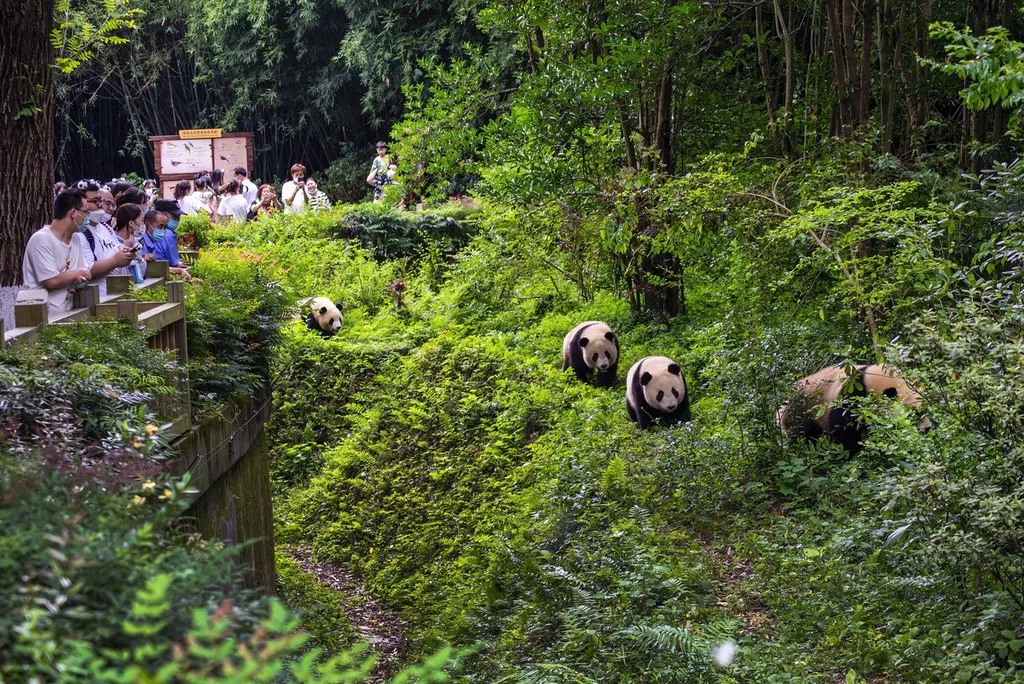
Pandas are most active when they feed in the morning — which is why arriving early matters. Get in around 7:30, head straight for the panda houses and watch breakfast while the crowds are thin and the animals awake. By afternoon most have gone indoors or settled down to sleep.
The grounds are large and the walking is real. Prioritise the houses in Infinite Hills and Adventure Valley, then spend what energy is left in the old park.
Practical (getting there)
- Metro: Line 3 to Panda Avenue station, exit A, then shuttle 408 to the south gate; or Line 3 to Military General Hospital station, exit B, then shuttle 409 to the west gate
- Tourist bus: direct shuttles run from Chunxi Road and other major sights
- Timing: aim to enter around 7:30, for the morning feeding
- Tickets and opening hours: check the base's notice for the day
Related
- Mount Qingcheng: Front and Back Slopes of a Daoist Cradle
- Kuanzhai Alley: Old Chengdu in Three Lanes
Photos
Sources
- Wikipedia: Chengdu Research Base of Giant Panda Breeding