Mount Qingcheng: Front and Back Slopes of a Daoist Cradle
World Travel 编辑部 · 2026-09-10 · 8 min read
Mount Qingcheng: Front and Back Slopes of a Daoist Cradle
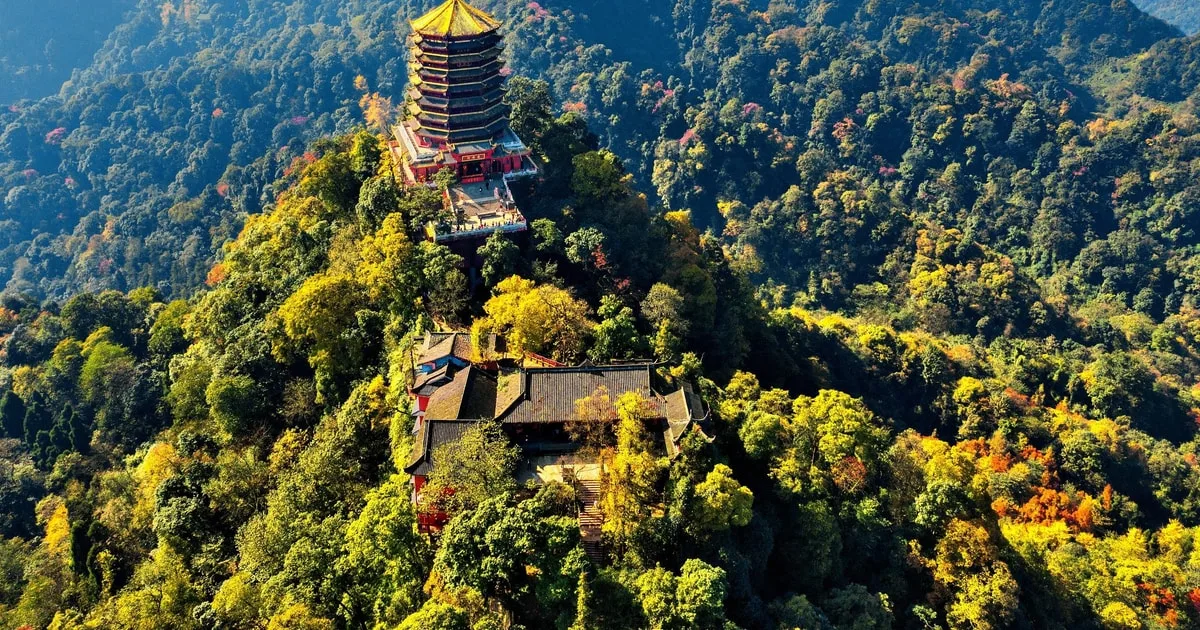
About 10 km southwest of the Dujiangyan headworks lies another World Heritage site: Mount Qingcheng. It sits southwest of Dujiangyan city in Chengdu, was known in older times as Zhangren Mountain, and its main peak, Laoxiao Ding, rises to 1,600 m, some 68 km from central Chengdu. Among Sichuan's famous mountains it is ranked with the peril of Jianmen, the grace of Emei and the grandeur of Kuimen — and carries the title "Qingcheng, the most secluded under heaven".
In 2000 it was inscribed as a World Heritage site together with Dujiangyan.
Two slopes, two different visits
The mountain divides into a front and a back slope:
- The front slope is the main scenic area, some 15 sq km, and holds most of the cultural relics, with the Daoist temples and historic buildings concentrated here.
- The back slope, harder to reach and steeper, keeps its natural scenery intact, and is best for streams, plank paths and mountain water.
With time for only one, take the front for temples and history, the back for quiet landscape.
Two stories behind the name
There are two explanations for "Qingcheng":
- Thirty-six peaks, yin and yang, ring the mountain; with sheer cliffs and green on every side, it is "shaped like a city wall" — hence qing cheng, the green city.
- It was originally Qingcheng written with a different first character, qing meaning "pure", after the mythic dwelling of the gods. In the Tang, Buddhism grew fast and the two faiths fought over the mountain, the dispute going all the way to the emperor. Emperor Xuanzong, a Daoist, ruled that the temples return to the Daoists — but the edict wrote "green city" instead of "pure city", and the name stuck. The stele with the full edict still stands on the mountain.
Daoism: ancestral mountain of the Celestial Masters
Mount Qingcheng is one of the birthplaces of Daoism. The first Celestial Master, Zhang Daoling, is said to have revealed the Dao here in his later years and to have ascended on the mountain. It became the ancestral mountain of the Celestial Master school, and masters from across the country came to pay respects.
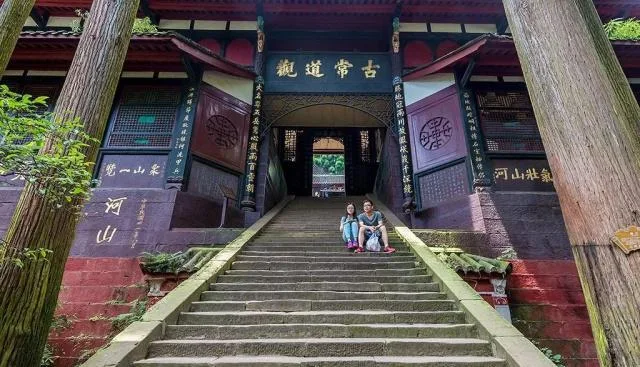
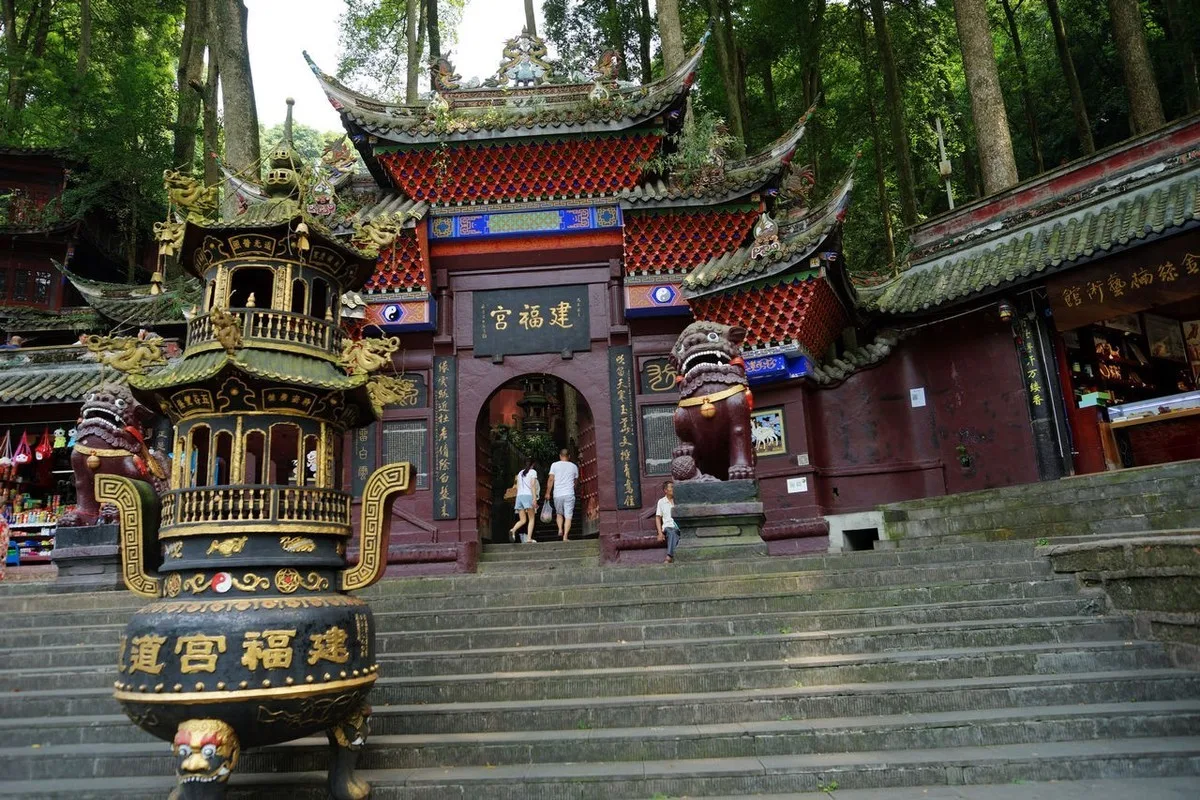
Its main Daoist buildings include the Jianfu Palace, Laojun Pavilion, Yuanming Palace, Shangqing Palace and Tianshi Cave. After the World Heritage listing, the Qing-to-Republican temple complex was added to the seventh batch of Major Historical and Cultural Sites Protected at the National Level in 2013 — Tianshi Cave, Chaoyang Cave, Zhenwu Palace, Yuanming Palace, Yuqing Palace, the Five Grottoes and Jiexian Bridge, Tianran Tuhua, Shangqing Palace, Shanyin Pavilion and Cuicui Bridge among them.
Highlights of the back slope
- Tai'an Old Town, with Tai'an Temple at its centre and plenty of inns and eateries for a rest
- Wulong Valley, about 8 km, named for five dragons said to hide in it, with Jinwawa Pool, the Longyin Gorge plank path, Stone Bamboo Shoot Rock and the Echo Wall
- Youyi Village, named after Lu You's line about a village appearing beyond the willows, with some twenty farm households
- Feiquan Valley and Baizhang Bridge, a hundred-metre plank bridge that curves upstream
- Plus the Baiyun cable car, Jinli cable car, Baiyun Temple, Cuiying Lake and Baiyun Old Stockade
Practical
- Which slope: front for temples (Tianshi Cave, Shangqing Palace), back for quiet water and gorges
- Front-slope must: Tianshi Cave — most of the 2013 national heritage buildings are on this stretch
- Back-slope note: steeper and longer; allow half a day and wear grippy shoes
- Pair it with: Dujiangyan, about 10 km away and part of the same World Heritage listing
Related
- Dujiangyan: A Warring-States Irrigation System Still Running
- Chengdu Panda Base: From Six Bears to Two Hundred and Sixty
Photos
Sources
- Wikipedia: Mount Qingcheng