Shu Embroidery and Chengdu Lacquerware: Made by Hand
World Travel 编辑部 · 2026-09-10 · 10 min read
Shu Embroidery and Chengdu Lacquerware: Made by Hand
Chengdu's craft does not stop at the food stalls. A single needle of Shu embroidery can stitch the shading of an ink painting into satin; a layer of lacquer on Chengdu lacquerware can seal a colour three thousand years old. Both are national intangible cultural heritage, and both are names that went out from Chengdu.
Shu embroidery: one of China's four famous embroideries
Shu embroidery, also called Chuan embroidery, is the embroidery produced in and around Chengdu, Sichuan — a needlework with a long tradition.
Its credentials are old: as early as the Western and Eastern Jin, Chang Qu's Chronicles of Huayang already records Shu embroidery as a speciality of the Shu region. It is one of China's four famous embroideries, a piece of national intangible cultural heritage, and a Chinese geographical-indication product whose protected area is the city of Chengdu.
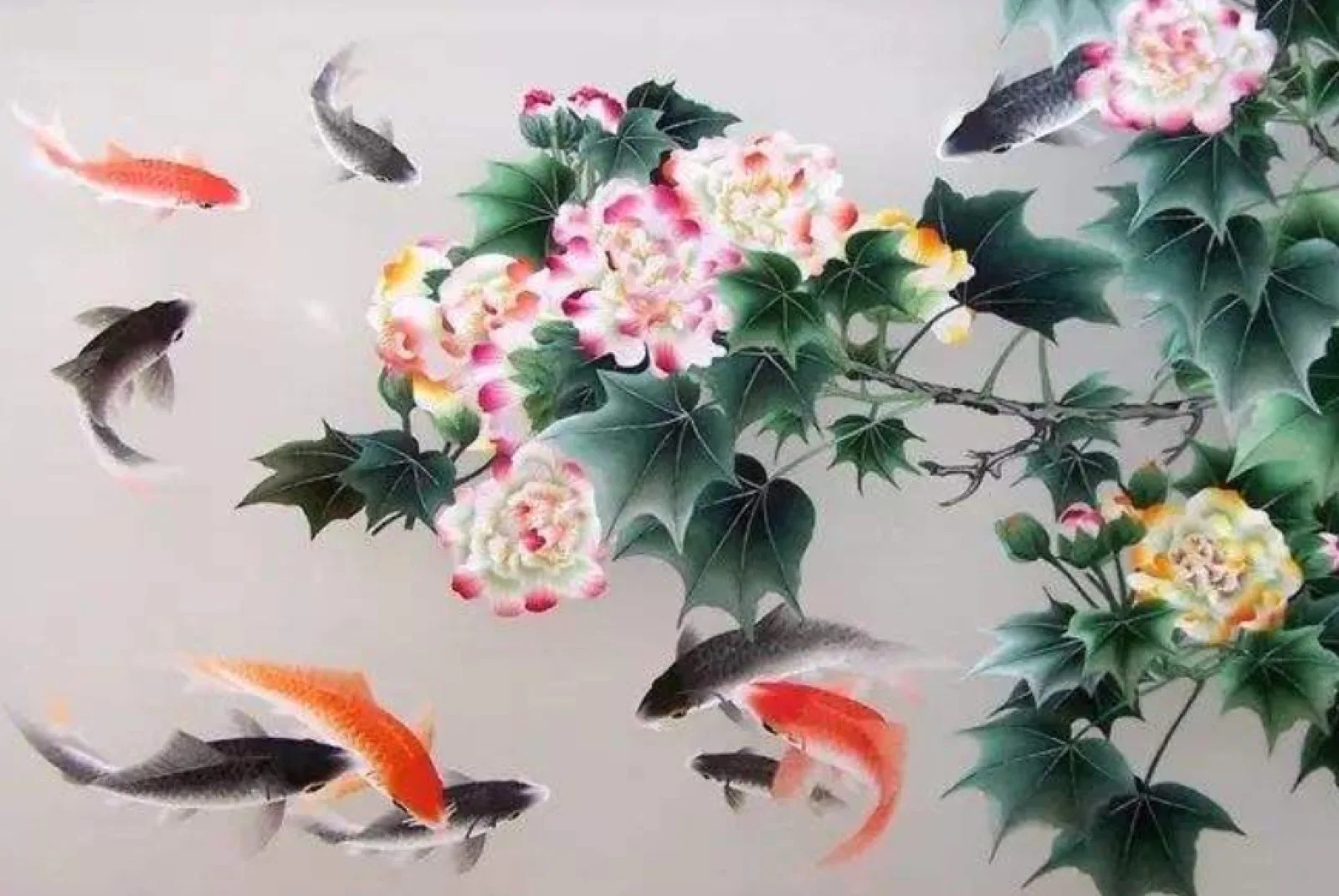
It is worked mainly in stiff satin and coloured silk, used for quilt covers, pillowcases, clothing, shoes and picture screens. The style is neatly summarised: precise and fine stitching, short dense stitches, even and level, glossy threads, quiet and elegant colour, flowing lines, the mood of Chinese ink painting — a strong, distinctive local character.
A whole grammar of stitches
What lets Shu embroidery "paint" is its system of stitches. A few of the key ones:
- Diagonal rolled stitch: one of the most basic, two threads set close to form stripes — good for flower vines, stems, leaf veins, water ripples, pine needles and cloud outlines
- Cut stitch: suited to transparent gauze, thin mist, fish fins and bubbles
- Layered spread stitch: produces a folded, shimmering effect
- Insertion stitch: highly decorative
- Zhemu stitch: creates gradation of colour
Chengdu lacquerware: three carvings and a cut
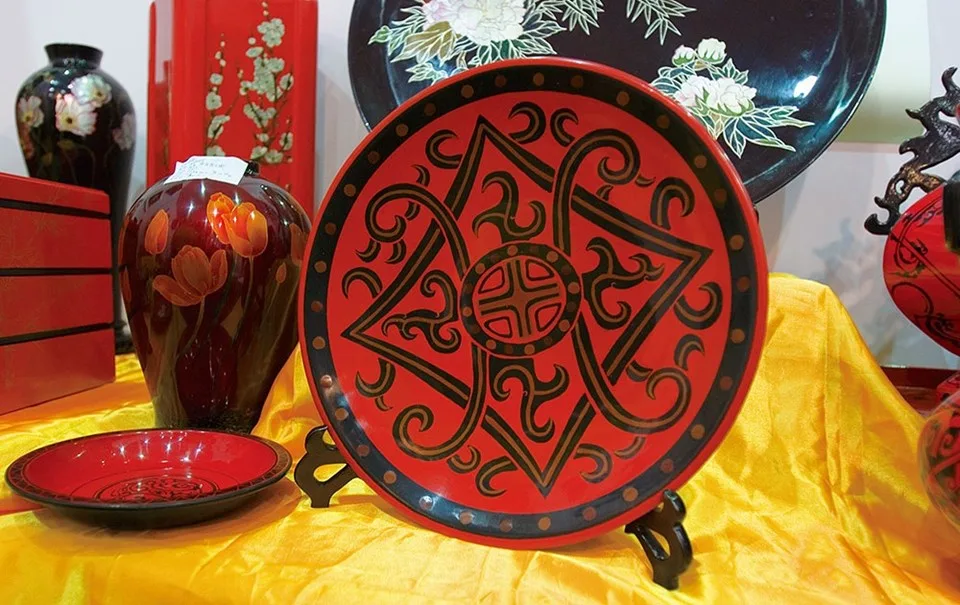
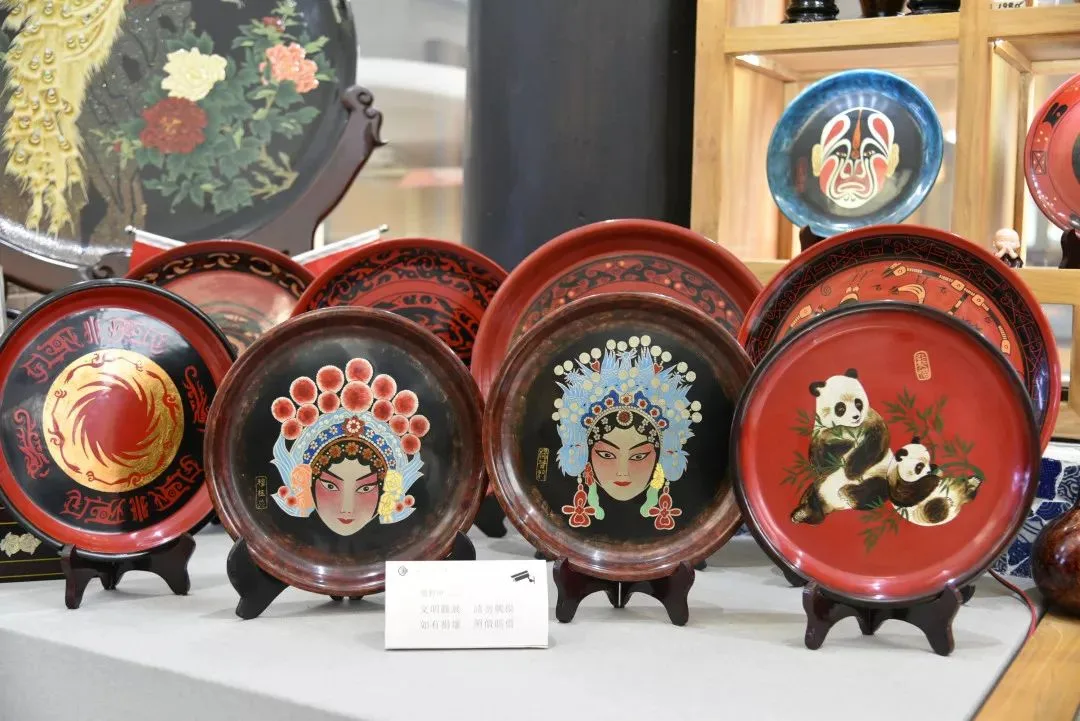
Chengdu lacquerware, also called lacquered ware, is a traditional art treasure of Sichuan and one of China's earliest lacquer crafts. It ranks alongside Beijing, Fujian, Yangzhou and Guangdong's Yangjiang as one of the country's five famous lacquerware traditions.
Its craft goes back to the Shang and Zhou, and lacquer fragments have been excavated at both Sanxingdui and Jinsha; by the Warring States period Chengdu was already a major lacquer-making centre, and under the Han it reached its peak.
Its signature is decoration — carved patterns inlaid with colour, standing apart from the rest — developing into carved-and-filled colour, carved silver-and-silk, and knife-cut needle engraving, techniques of strong regional character, summed up in folk usage as "three carvings and a cut". In 2006, Chengdu lacquer craft entered the first national list of intangible cultural heritage.
Who the four famous embroideries are
The "four famous embroideries of China" — Xiang, Shu, Yue and Su — are all national intangible cultural heritage:
- Xiang embroidery: from Hunan, famous for lion and tiger subjects worked in its distinctive "mane stitch", with its earliest surviving examples in the Mawangdui Han tomb
- Shu embroidery: centred on Chengdu, ancient in origin, with a "Brocade Officer" office already established under the Han, and a rich system of stitches
- Yue embroidery: covering Guang and Chao embroidery, from the Tang, full in composition and rich in colour, exported via the maritime Silk Road in the Ming and Qing
- Su embroidery: represented by Suzhou, known for being "fine, delicate, elegant and clean", with double-sided embroidery its supreme skill
Together, the four are outstanding representatives of traditional Chinese craft.
How to look and choose
- Shu embroidery: check that stitches are even and dense and the threads glossy; subjects are usually ink-painting flowers and birds in quiet colours
- Chengdu lacquerware: look for clearly layered carved-and-filled work and a warm, glossy surface; carved silver-and-silk and knife-cut engraving are the tells
- As a souvenir: small embroidered panels and lacquer pieces travel well and let you see the craft up close
- Both are heritage crafts — look for the region of origin and a description of the technique
Practical notes
- Shu embroidery: also called Chuan embroidery, produced in and around Chengdu; one of China's four famous embroideries, national intangible heritage, and a Chinese geographical-indication product (protected area: Chengdu)
- Shu stitches: diagonal rolled, cut, layered spread, insertion, zhemu and others
- Chengdu lacquerware: also called lacquered ware, one of China's five famous lacquerware traditions; roots in the Shang and Zhou, with fragments from Sanxingdui and Jinsha
- Chengdu lacquer craft: inscribed on the first national intangible-heritage list in 2006
Related
- Wenjiang Garlic and Pujiang Quexi Tea: Two Products of the Chengdu Plain
- Jinli Ancient Street: 550 Metres of "Western Shu's First Street"
Photos
Sources
- Wikipedia: Shu embroidery
- Baidu Baike: Chengdu lacquerware, China's four famous embroideries