Chengdu Teahouses and Gaiwan Tea: A Slower Way to Drink
World Travel 编辑部 · 2026-09-10 · 8 min read
Chengdu Teahouses and Gaiwan Tea: A Slower Way to Drink
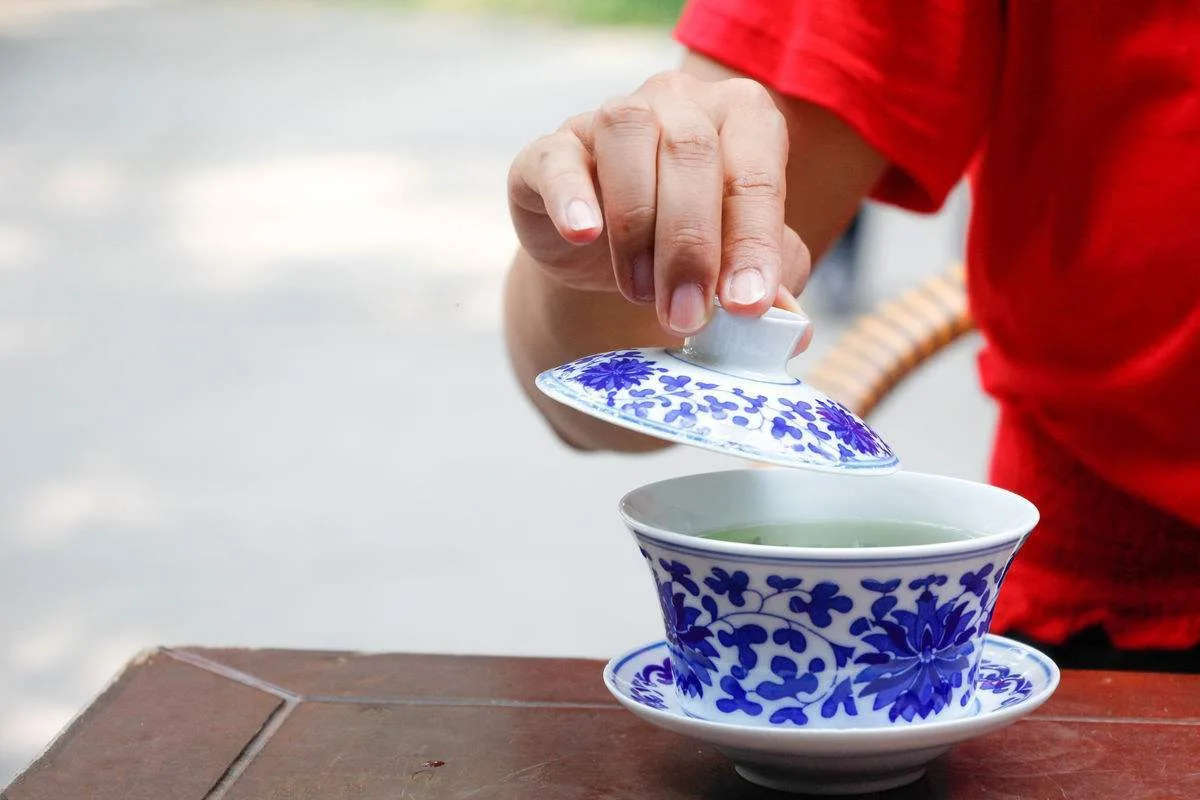
In Chengdu, tea is not an errand but an afternoon. The gaiwan — lid, bowl and saucer — is the prop for that slower life, and the most familiar sight in a Chengdu teahouse.
The three-talent bowl
The gaiwan is also called the "three-talent bowl": lid, bowl and saucer, standing for heaven, humanity and earth. It is both a piece of equipment and a set of drinking customs, common across the Han and Hui communities of Sichuan and Gansu.
Its form has a neat origin story: in the Jianzhong era of the Tang (780-783), the daughter of Cui Ning, military governor of western Sichuan, invented the saucer. From then on the gaiwan kept tea warm and stayed practical, and it became widespread in the Qing. Materials range from porcelain and glass to lacquer and jade; in Chengdu teahouses the saucer was once made of lacquer.
In 2023 the gaiwan was added to Chenghua district's intangible cultural heritage list.
Two small rituals
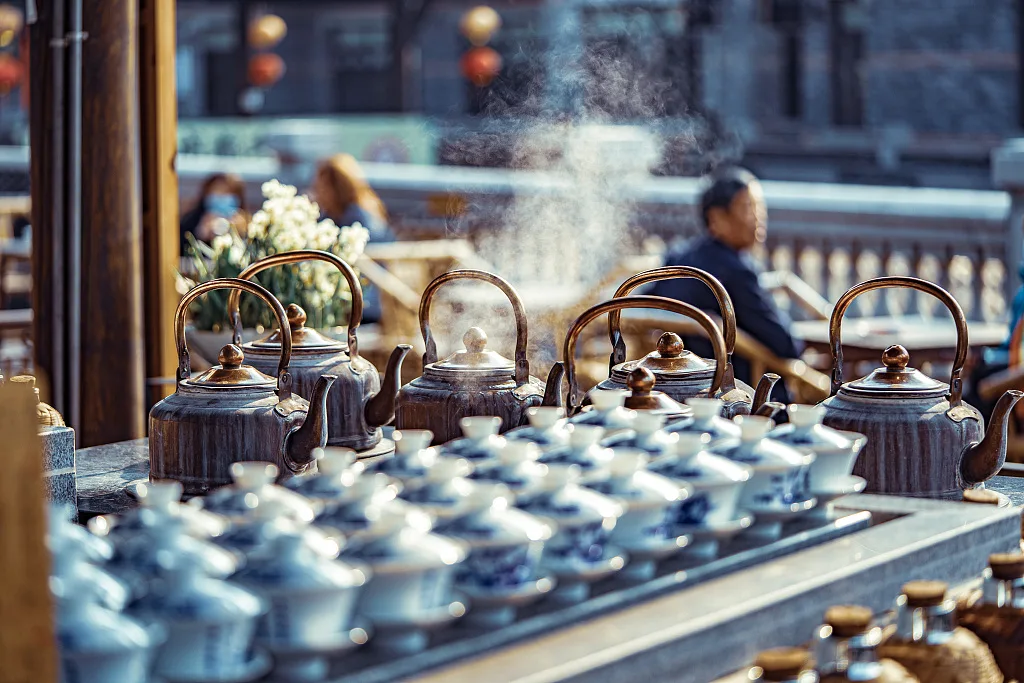
The refill signal: with a gaiwan, a drinker shifts the lid to signal that more water is wanted — a regular never has to speak, and the server reads it at a glance. Chengdu teahouses are known for pouring jasmine or tuo tea from a long-spouted copper kettle.
Ear cleaning: among the sideline services of a Chengdu teahouse, ear cleaning is the signature one; together with tea-pouring performances it makes up the deliberate slowness of the place.
Heming Teahouse: a century in People's Park
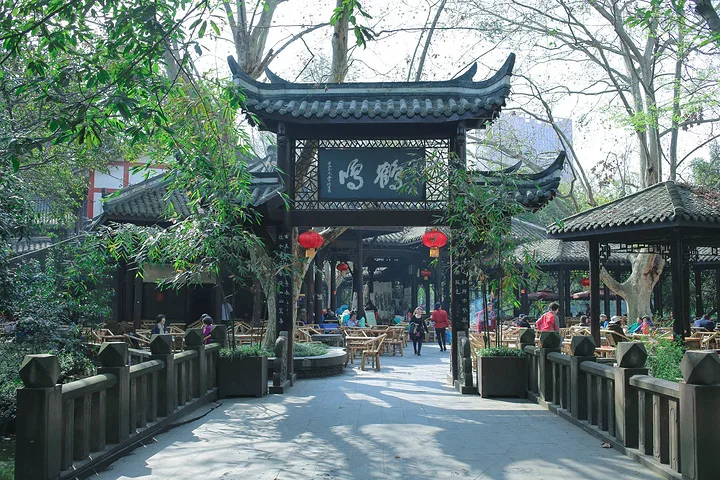
For a single spot that stands for Chengdu tea, Heming Teahouse in People's Park is the one. Founded in 1923 by a merchant surnamed Gong from Dayi, it is among the oldest teahouses still standing in Chengdu.
The name comes from a white crane seen in the founder's dream, and from a line in the Book of Songs: "the crane calls in the nine marshes, its voice heard in heaven." The surviving two-storey mock-timber building, its three corridors and the open-air seating cover about 1,100 sq m and can hold up to 3,000 people, the architecture still classical Chinese.
Its record reads like a slice of modern Chengdu: taken over by Xiong Chuoyun in 1940, expanded with a plaque by the calligrapher Wang Jiazhen until seats passed 500; scholars including Zhu Ziqing, Chen Yinke and Ma Shitu spent time here; the old lintel was destroyed in 1952 and re-lettered by Wang in 1988; night tea began in 2011 and 8 million yuan went into renovations in 2019; in 2012 it was listed among Chengdu's first protected historic buildings; and in 2023 it held a centenary celebration.
The teahouse keeps the traditional gaiwan service along with ear cleaning and tea performances, and has added winter stove-side tea, summer iced stove tea and a six-compartment tea-snack set — bringing in Chengdu institutions such as Zhong dumplings.
How to drink
- Choose your tea: jasmine and tuo tea are the Chengdu staples, poured from a copper kettle
- Mind the set: only lid, bowl and saucer together make a "three-talent bowl"
- Signal with the lid: tilt or lift it rather than calling out
- Give it time: the point is sitting, not drinking — budget a whole afternoon
Practical notes
- Gaiwan: the "three-talent bowl"; lid, bowl and saucer for heaven, humanity and earth; the saucer credited to Cui Ning's daughter in the Tang; listed as Chenghua district heritage in 2023
- Heming Teahouse: founded 1923 in People's Park; about 1,100 sq m, up to 3,000 people; among Chengdu's first protected historic buildings in 2012
- Services: ear cleaning, tea performances; winter stove tea, summer iced stove tea, six-compartment snack set
- Snacks: Chengdu institutions such as Zhong dumplings served on site
- Brewing: jasmine and tuo tea poured from a copper kettle
Related
- Wangjiang Tower Park and Xue Tao: Bamboo on the Jin River
- Kuanzhai Alley: Old Chengdu in Three Lanes
Photos
Sources
- Baidu Baike: Gaiwan tea, Heming Teahouse