Wuhou Shrine: China's Only Temple to Ruler and Minister Together
World Travel 编辑部 · 2026-09-10 · 7 min read
Wuhou Shrine: China's Only Temple to Ruler and Minister Together
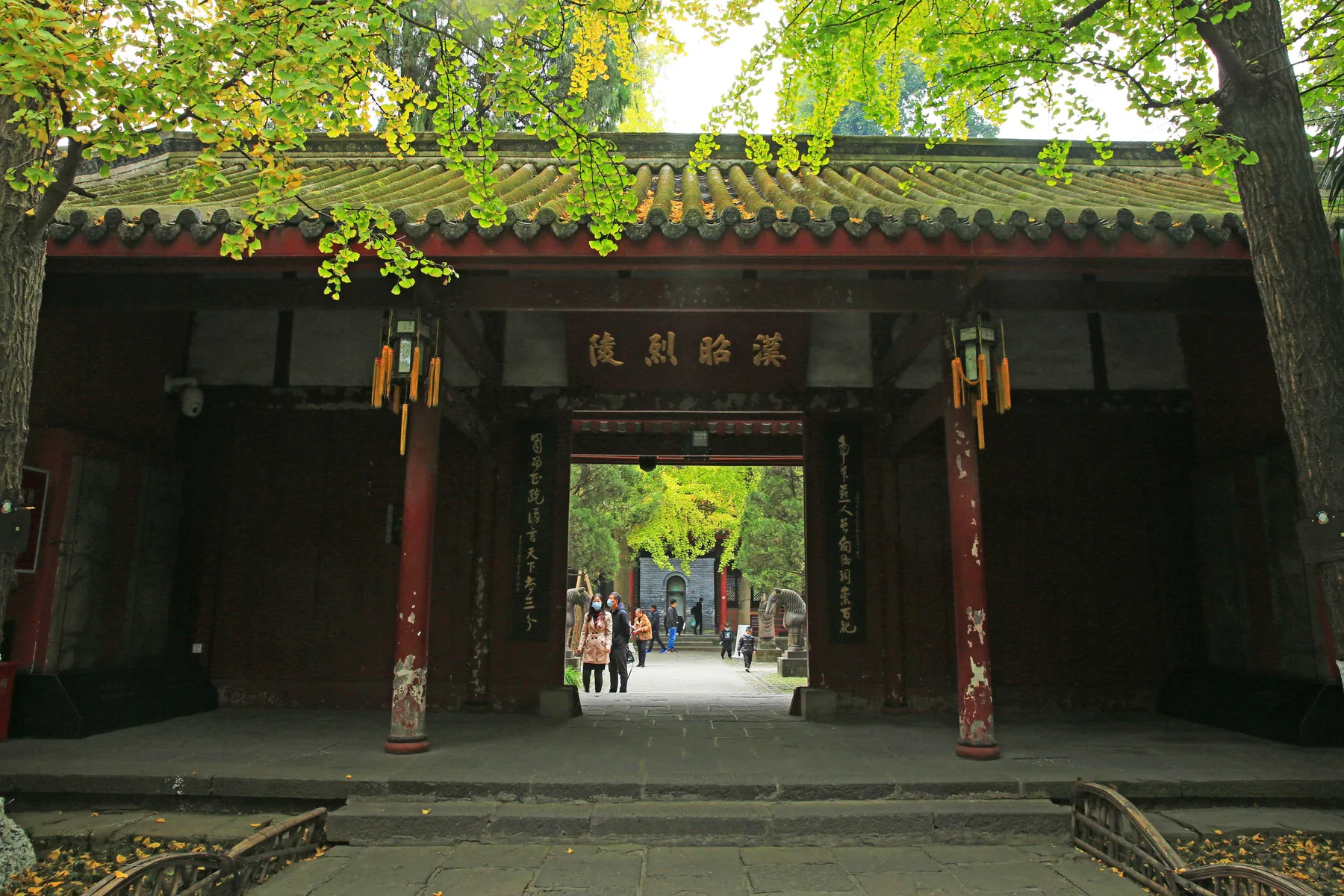
On Wuhou Shrine Avenue in Chengdu's Wuhou district stands an unusual group of buildings: Wuhou Shrine, the only temple in China where a ruler and his minister are worshipped together. It is made up of the Shrine of Marquis Wu, the Han Zhaolie Temple and Hui Ling, and locals simply call the three by one name.
From AD 223 to 1672
Hui Ling and the Han Zhaolie Temple were begun in AD 223, the third year of Shu Han — Hui Ling being the tomb of Liu Bei. The shrine to Zhuge Liang, Marquis Wu, was built before the Tang and stood next to the temple to Liu Bei. In the early Ming, rebuilding merged the two, creating the arrangement of ruler and minister worshipped in one hall, temple and tomb as one.
Its fortunes then turned: when Zhang Xianzhong held Chengdu in the late Ming, he tore the shrine down. What stands today was rebuilt in 1672, the eleventh year of the Kangxi reign.
It opened to visitors after repairs in 1952; on 4 March 1961 the State Council named it a Major Historical and Cultural Site Protected at the National Level (first batch); a relics office became the Chengdu Wuhou Shrine Museum in 1984; the Sanyi Temple was moved here whole in 1998; the southern Suburb Park was merged in 2003; and in September 2016 the National Three Kingdoms Culture Research Centre was established here. In 2008 the museum was named among the first batch of national first-grade museums.
One hall, one temple, one tomb
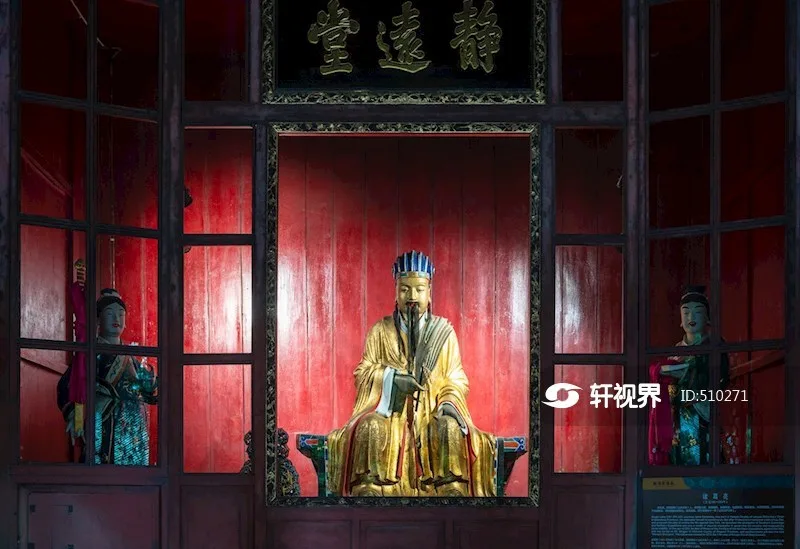
The complex has two main halls: the Zhaolie Temple to Liu Bei in front, the shrine to Zhuge Liang behind, the front higher than the rear — the ruler above, the minister below.
- Side halls hold statues of Guan Yu and Zhang Fei
- The east and west corridors house 28 statues of civil and military officials
- Above all the tablets and couplets, the best known is the Qing official Zhao Fan's "attack the heart" couplet
- Among the cypresses behind the gate stand six steles inscribed by the Tang chancellor Pei Du, written by Liu Gongchuo and cut by the mason Lu Jian — known ever after as the "Stele of Three Excellences"
Cypresses fill the grounds, and the mood is solemn.
Three zones, one route
The museum covers 150,000 sq m in three parts:
- The Three Kingdoms historic zone: the Han Zhaolie Temple, the shrine, Hui Ling and the Sanyi Temple — the heart of the visit
- The west zone: built around the tomb park of Liu Xiang
- The Jinli folk zone: the old commercial street next door
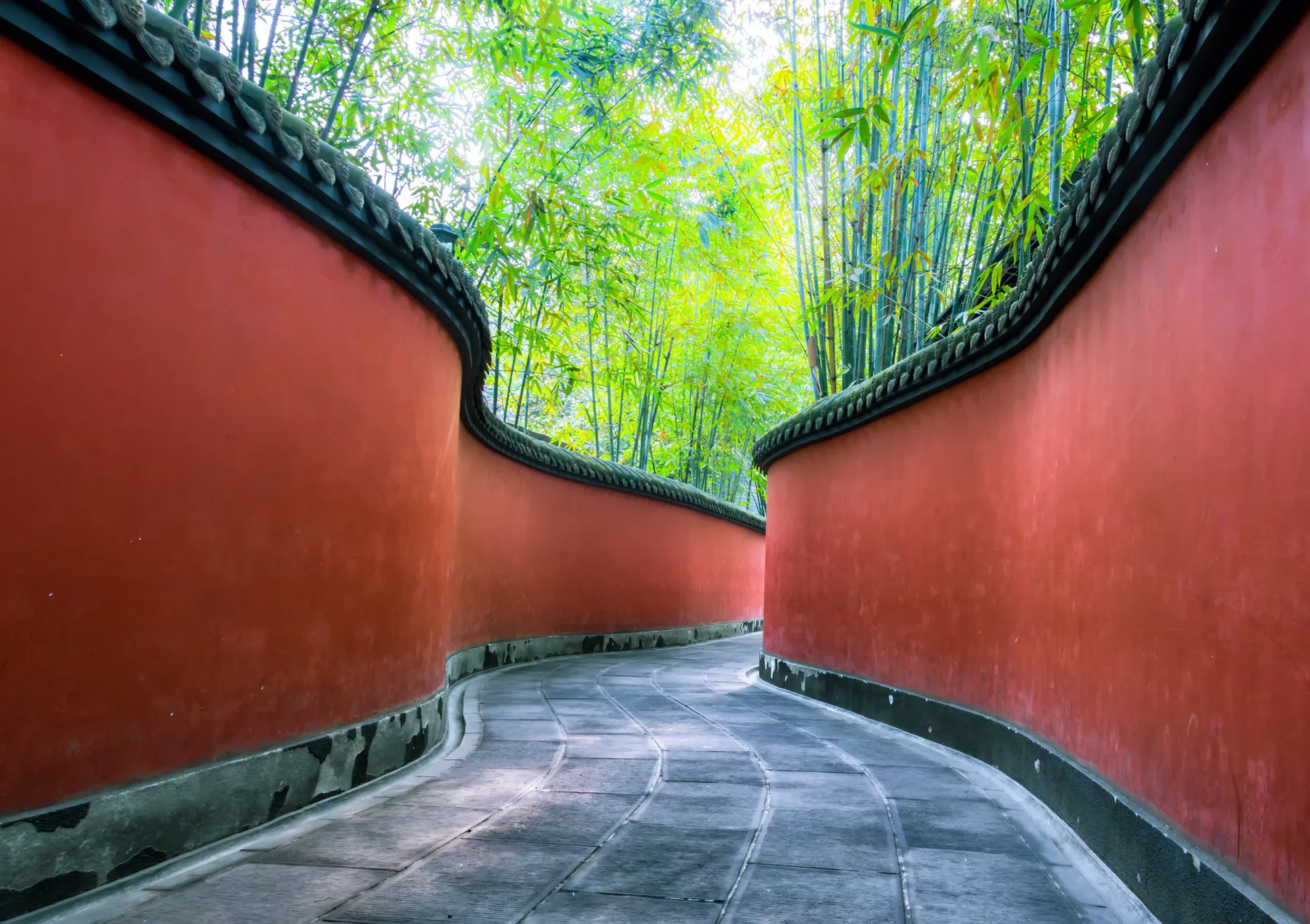
In 2006 the shrine was rated a national AAAA scenic area, and it is the most influential Three Kingdoms museum in China. For the classic photograph, the red wall and bamboo corridor inside the grounds is the spot.
Practical
- Start: enter at the gate and follow the axis — Zhaolie Temple, then the shrine, then across to Hui Ling
- Don't miss: the Stele of Three Excellences and Zhao Fan's couplet
- For photos: the red wall and bamboo corridor; go early, it draws a crowd
- Pair it with: Jinli Ancient Street, straight out the gate, in the same half-day
- Tickets and hours: check the museum's notice for the day
Related
- Jinli Ancient Street: 550 Metres of "Western Shu's First Street"
- Du Fu's Thatched Cottage: One Hut and Two Hundred and Forty Poems
Photos
Sources
- Wikipedia: Chengdu Wuhou Shrine