Mount Hua: The Western Great Mountain and the Way Up
World Travel 编辑部 · 2026-09-16 · 5 min read
Mount Hua was known in antiquity as the Western Great Mountain and is one of China's five sacred peaks. It stands near Huayin in Weinan, between Tongguan to the east, Hua County to the west, the main Qinling ridge to the south and the Wei River plain to the north, across 148.4 sq km — but what it is famous for is not its size. It is the steepness.
One block of granite, 2.7 billion years
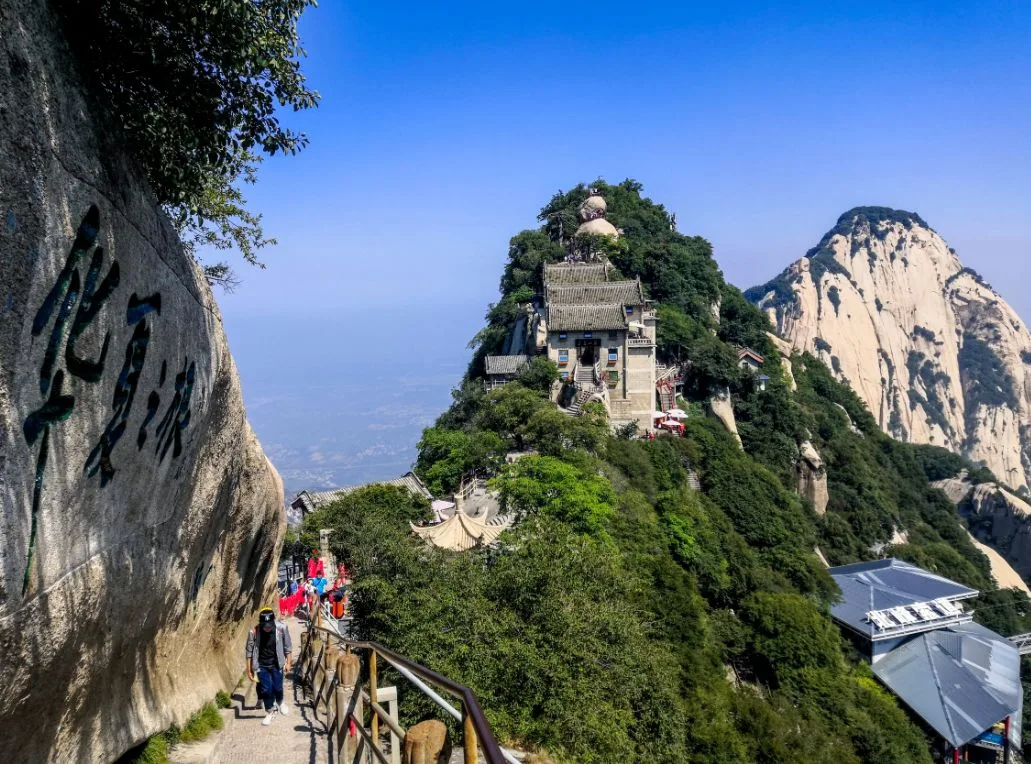
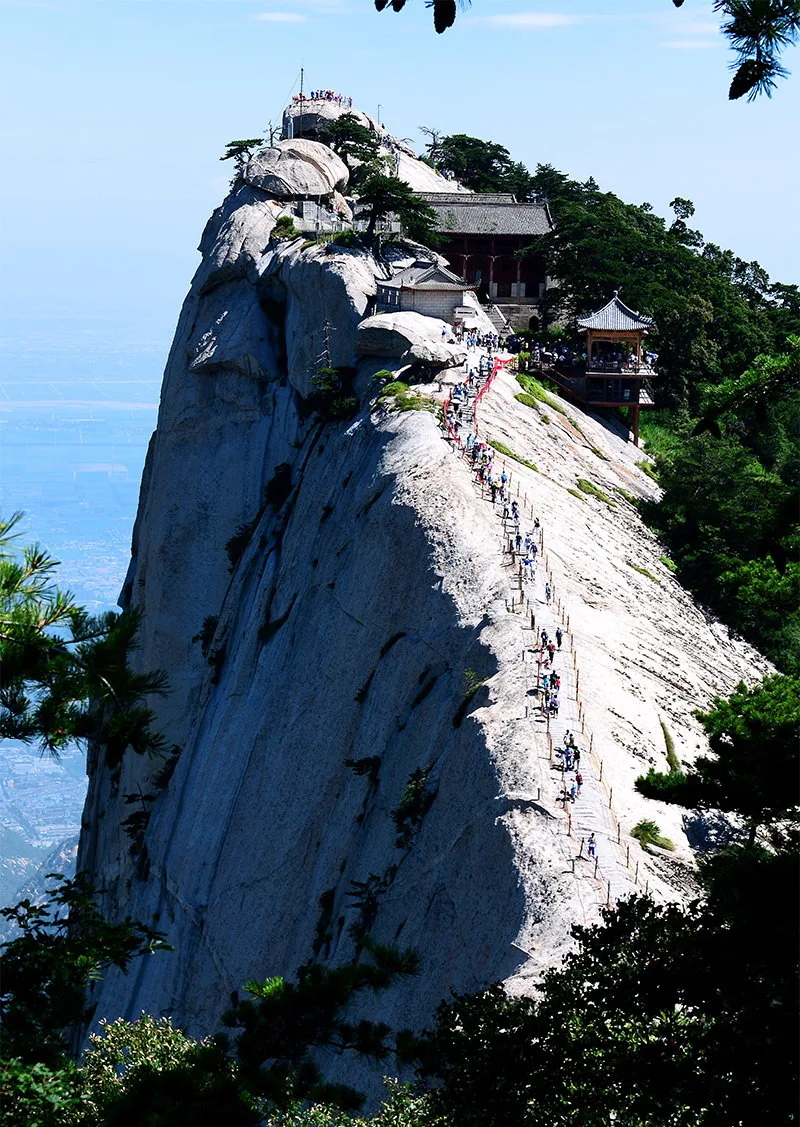
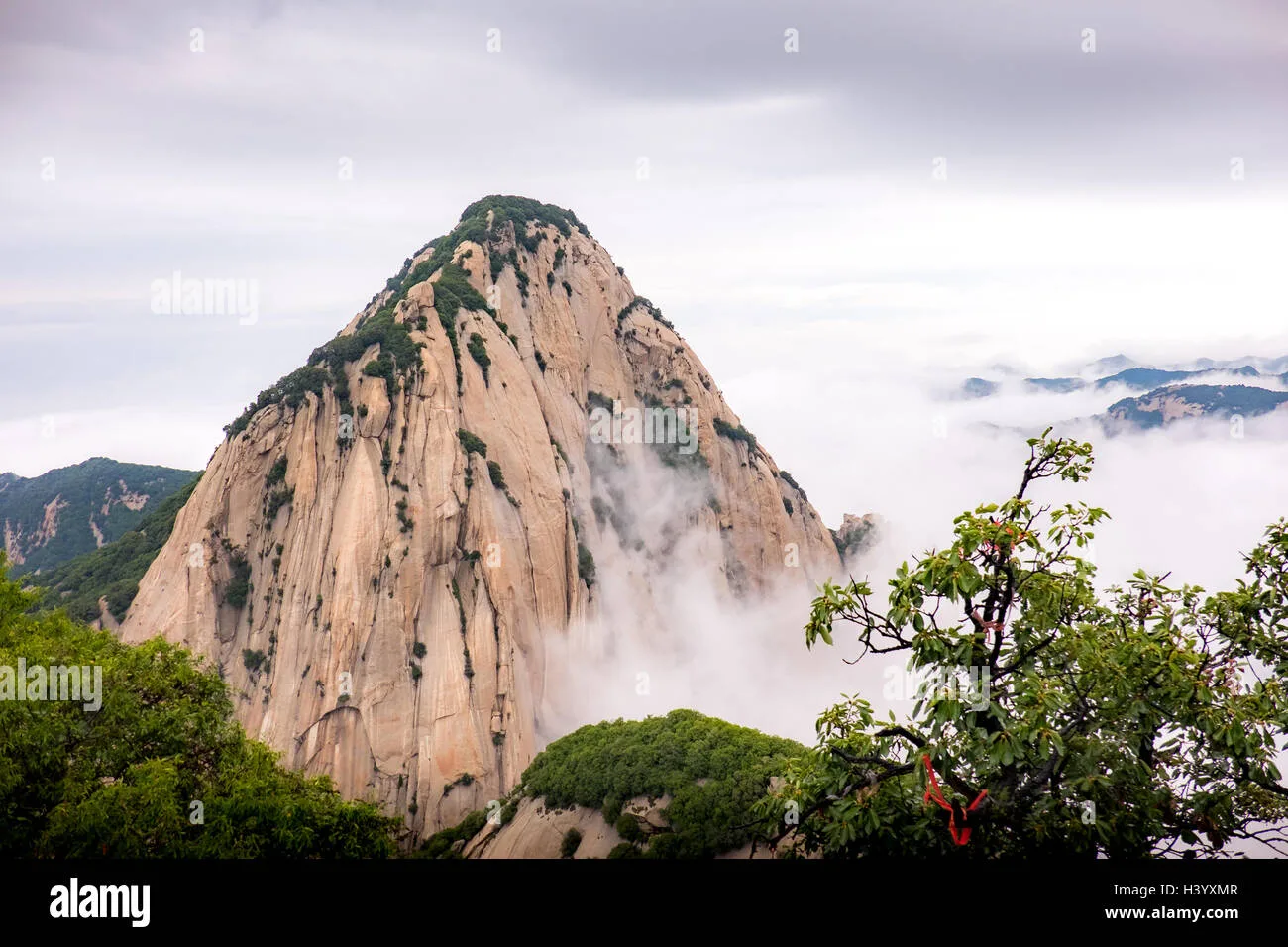
Mount Hua is a fault-block mountain in the Qinling orogenic belt, formed from a single mass of granite into a landscape of sheer cliffs, dating back to the Archean some 2.7 billion years ago. Sitting where the Shaanxi, Shanxi and Henan reaches of the Yellow River meet, it guards the gateway between the northwest and the central plains, and has long been called the most precipitous mountain under heaven.
The massif takes in the east, west, south, north and central peaks plus more than seventy ridges and three gorges; only two rivers, the Changjian and Liuye, run on it, under a warm-temperate, semi-humid monsoon climate.
Six areas, more than two hundred sites
Its sights fall into six areas — Hualu, Huashan Valley, the main peaks, Huangfu Valley, Weng Valley and Xian Valley — with over 210 sites including the Changkong Plank Road, the Pigeon Turn and the Thousand-Foot Precipice. The plank road and the Pigeon Turn are the best known of the exposed routes, and for many they define the mountain.
The slopes also hold 123 protected animal species and six endemic plant species.
Choosing a way up
Mount Hua is a national 5A scenic area and part of the birthplace of Chinese civilisation — the "Hua" in Zhonghua and Huaxia is tied to it. There are broadly two approaches: walking up, or taking the cable car. The first costs time and effort but shows more of the mountain; the second saves the legs and skips the lower scenery. Most people combine a cable car up with a walk or cable car down, depending on conditions and fitness.
Practical Notes
- From Xi'an it is roughly a two-hour trip each way; a same-day return is tight, two days is calmer.
- The summit is windy with a wide temperature range — bring a jacket even in summer.
- The exposed routes have long queues and some have age and health restrictions; check before you go.
Related
- Huaqing Palace: The Imperial Hot Springs Below Mount Li
- Mount Li: A Fault-Block Ridge West of the Wei River
- Xi'an City Wall Half-Day Guide: From Yongning Gate to Hanguang Gate
Photos
Sources
- Baidu Baike: Mount Hua