Huaqing Palace: The Imperial Hot Springs Below Mount Li
World Travel 编辑部 · 2026-09-16 · 6 min read
In 644 Emperor Taizong had a hot-spring palace built at Mount Li, supervised by Yan Lide; in 747 Emperor Xuanzong renamed it Huaqing Palace and expanded it into a substantial imperial retreat. Its lifeblood was the hot water at the foot of the mountain — and through it, a famous historical narrative.
A palace before, a garden behind
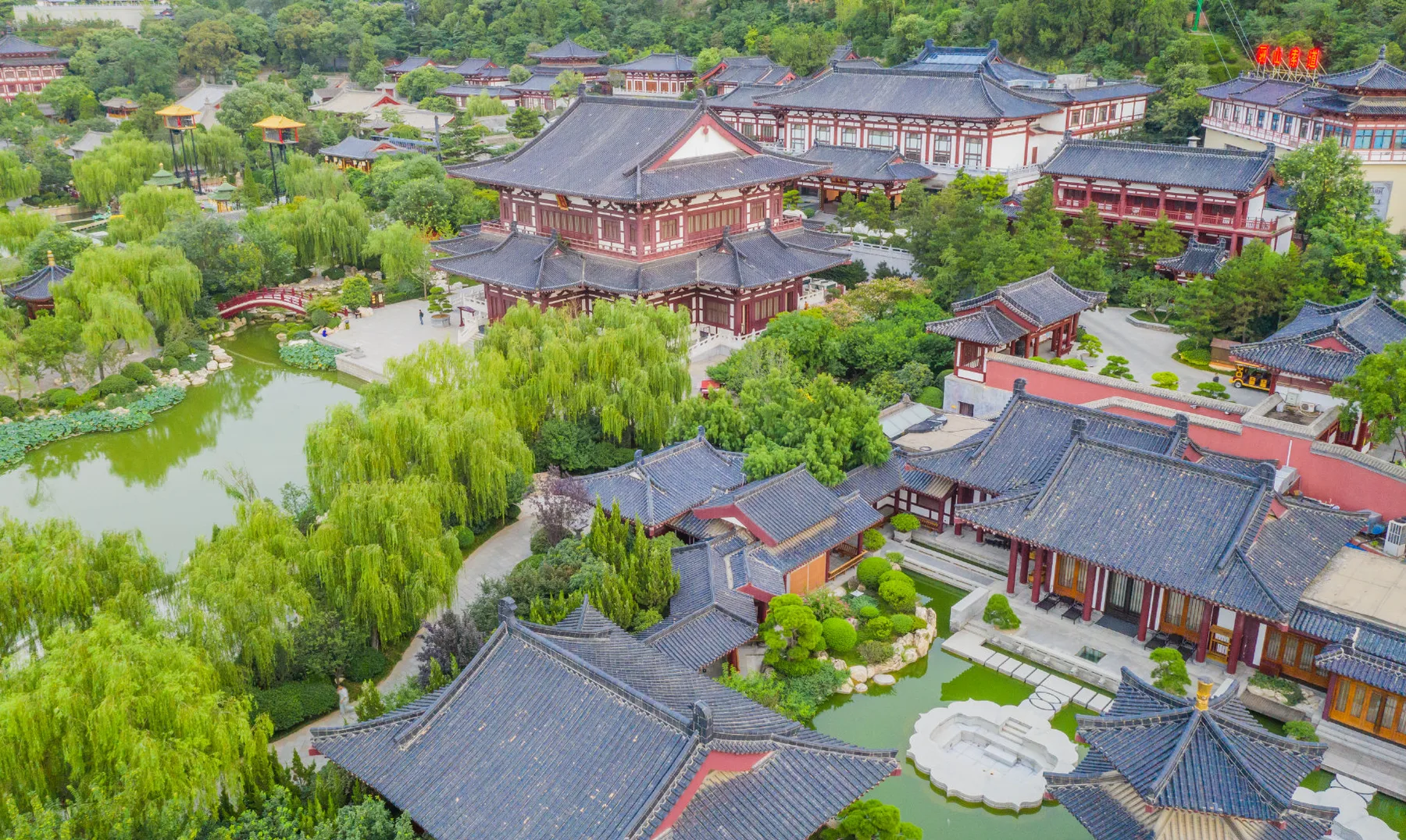
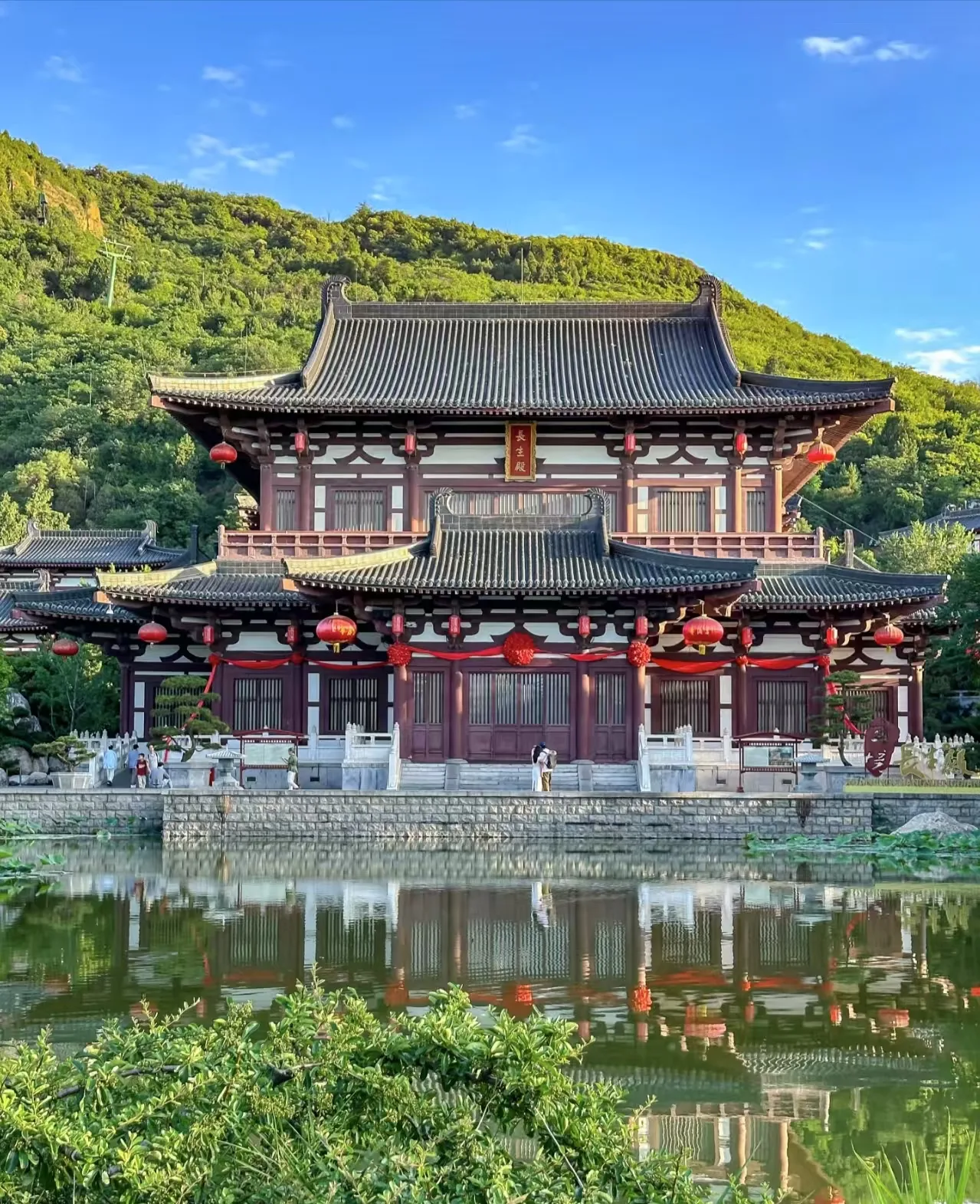
The Huaqing Palace site lies at the northern foot of Mount Li in Lintong District, Xi'an — a Tang imperial secondary palace. It drew on the hot springs to build halls, baths and gardens across about 1,300 mu, laid out along the slope, with the court enclosed by an outer wall and divided internally into courtyards.
The court precinct is trapezoidal, with the palace city at the centre and administrative, service and noble residences to east and west. To the south lies the garden zone, giving the complex its palace-in-front, garden-behind arrangement; to the north were polo, horse-racing and drill grounds, including the Jiangwu Hall, the horse-dancing terrace and the large and small ball courts.
Eight baths
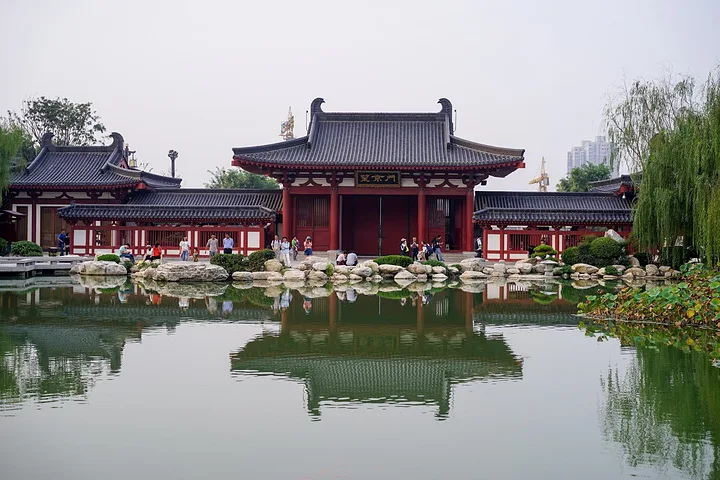
The palace city is a neat rectangle facing north, within two rings of wall: Jinyang Gate to the north, Kaiyang Gate east, Wangjing Gate west and Zhaoyang Gate south, with the avenue up into the Mount Li gardens beyond Zhaoyang Gate. The northern half divides into central, east and west routes, with the Hongwen and Xiuwen halls flanking Jinyang Gate.
The southern half is the bathing precinct: apart from a few halls, eight pools served the emperor, empresses, consorts and imperial family — from east to west, Nine Dragons (Lotus) Pool, Consort Pool, Star Pool, Crown Prince Pool, Shaoyang Pool, Shangshi Pool, Yichun Pool and Long Pool. The excavated Tang baths reflect this layout and its use of the springs.
From splendour to ruin
After the An Lushan rebellion the palace fell into disuse. In 1996 the site was listed in the fourth batch of nationally protected sites. What you see today is the ruins and the baths themselves, and behind them the Tang system of secondary palaces — the legends are worth knowing only for where they come from.
Practical Notes
- It shares one scenic area with Mount Li, so pair them; either order works.
- The baths are in an indoor gallery — read the panels before the remains and the visit gains a lot.
- Transport in Lintong clusters at the same hours, so timing matters.
Related
- Mount Li: A Fault-Block Ridge West of the Wei River
- The Terracotta Army: Reading the Underground Legions of Qin
- The Mausoleum of Qin Shi Huang: The Tomb That Has Never Been Opened
Photos
Sources
- Wikipedia: Huaqing Palace site
- Baidu Baike: Mount Li