Qinglong Temple: The Esoteric Centre on Leyou Heights
World Travel 编辑部 · 2026-09-16 · 5 min read
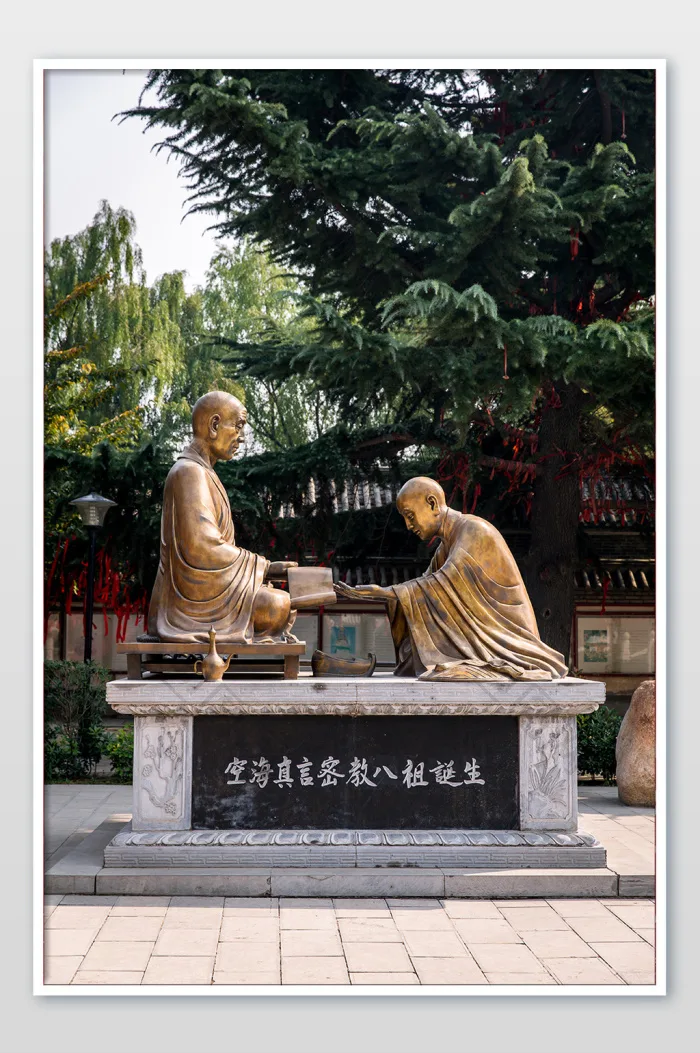
In 582 a temple called Lingan was built on the Leyou Heights. It was dissolved in 621 and renamed Qinglong Temple in 711. In the Tang it became a major centre of Esoteric Buddhism — but what later generations remember is the line of transmission from Huiguo to Kukai.
The history of one temple
Also called the Stone Buddha Temple, Qinglong Temple stands on the Leyou Heights northeast of the Giant Wild Goose Pagoda and north of the Qujiang Pool site, in what was the southern corner of Xinchang Ward in Tang Chang'an. It covers 120 mu on high, quiet ground.
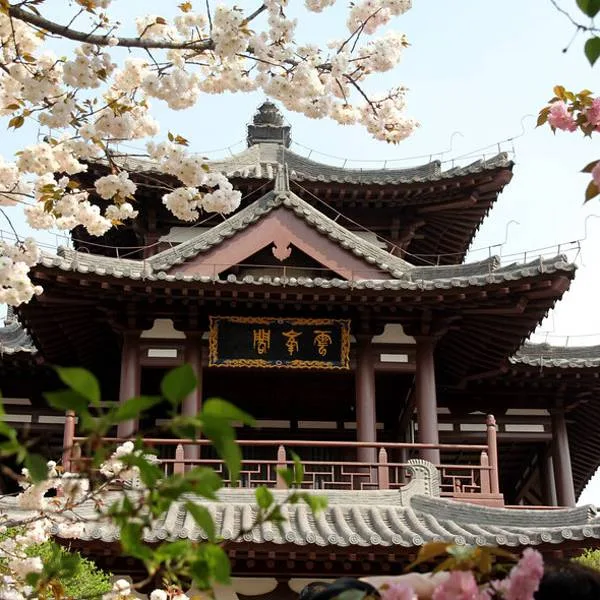
In the Ming the temple fell into ruin, its buildings vanished and its halls buried. Today it has three parts: the eastern court with the Huiguo–Kukai Memorial Hall, a western court with a two-storey side hall of nineteen bays, and a central court of ruins.
Ruins and museum
In 1996 the Sui–Tang Chang'an city site, which includes Qinglong Temple, was listed by the State Council in the fourth batch of nationally protected sites. On 30 December 2011 the heritage area opened free to the public, and in May 2012 the Qinglong Temple Site Museum opened.
In 2019 the Kukai Memorial Courtyard was named among the fourth batch of twentieth-century architectural heritage sites.
What to see
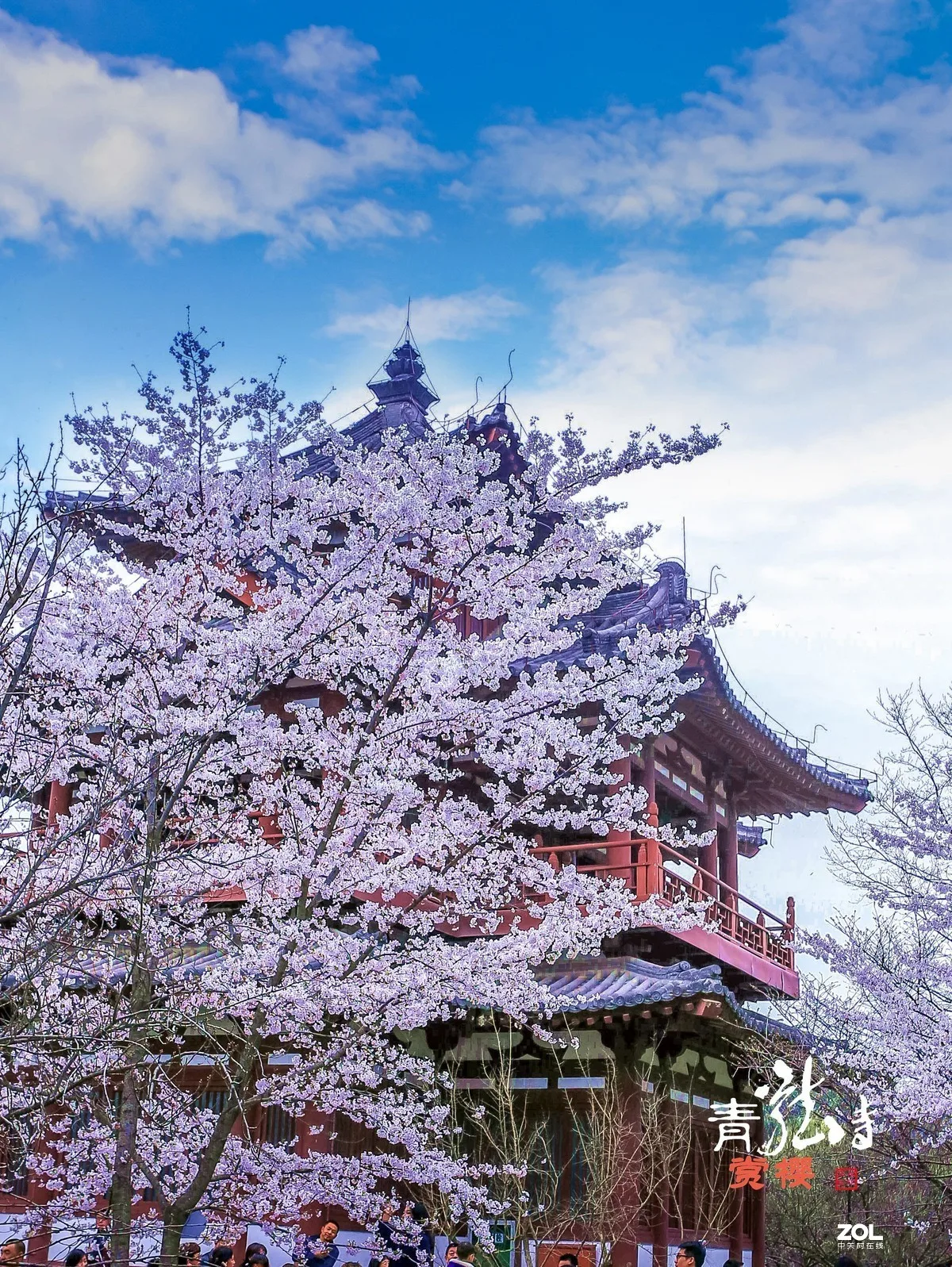
Visitors come for two reasons: the spring cherry blossom, or the history of Buddhist exchange between China and Japan. Both are genuinely here, but they are seen differently — blossom is seasonal, while the ruins and memorial hall can be visited year-round and explain far better why the temple matters.
Practical Notes
- Entry is free, but the galleries close on certain days — check first.
- Blossom season is very busy; go early or off-peak.
- On high ground at Leyou, it pairs well with Qujiang Pool and the pagoda.
Related
- Qujiang Pool: Tang Chang'an's Pleasure Water, Today a Heritage Park
- Giant Wild Goose Pagoda: Xuanzang's Tower and the Tang Examination Custom
- Xi'an City Wall Half-Day Guide: From Yongning Gate to Hanguang Gate
Photos
Sources
- Baidu Baike: Qinglong Temple