Giant Wild Goose Pagoda: Xuanzang's Tower and the Tang Examination Custom
World Travel 编辑部 · 2026-09-16 · 6 min read
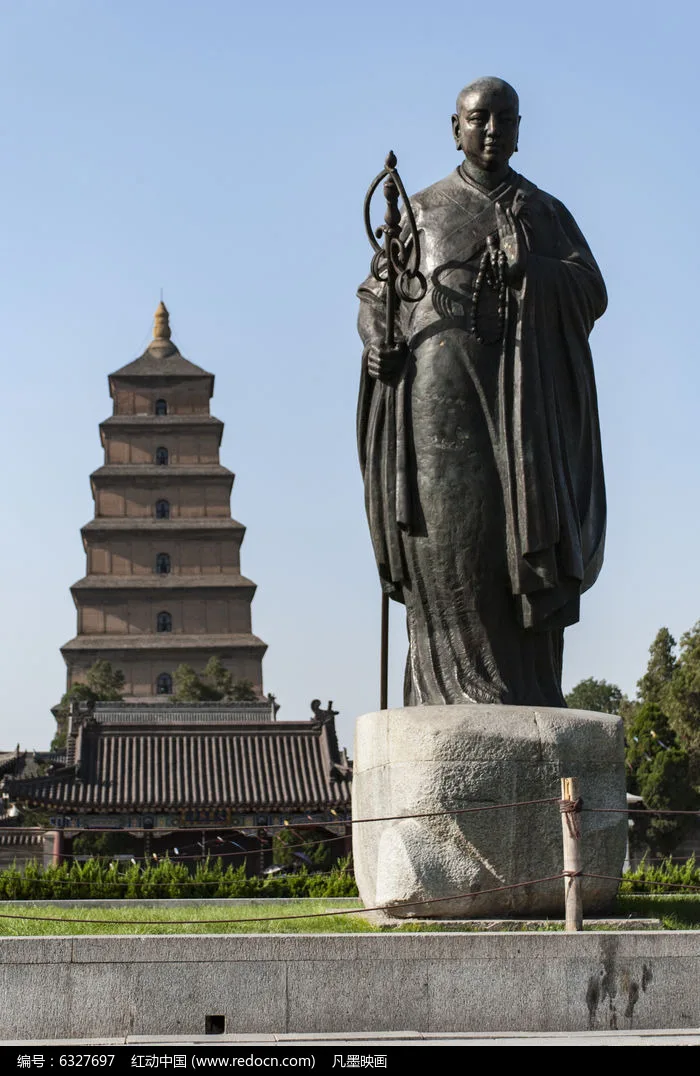
In 652, to house the hundreds of Sanskrit scriptures he had brought back from India, Xuanzang built a scripture tower in the western courtyard of Daci'en Temple. First called the Ci'en Temple Pagoda, it later took the name Wild Goose Pagoda — and, once a smaller one appeared at Jianfu Temple, the "Giant" was added.
From five storeys to seven, via ten
The first tower had five storeys, brick outside and earth within. By the Chang'an era of Wu Zetian's Zhou dynasty the brickwork had cracked and weeds had taken the joints, so the empress and nobles funded a rebuild as a seven-storey, square, multi-eaved tower. In the Dali era it briefly became ten storeys, was destroyed in war, and returned to seven.
Between 930 and 933 the western-capital governor An Chongba repaired it again, and the form settled. In 1604 more work rehung the internal stairs and added a 60 cm skin of brick around the Tang core — so the brick you touch is not necessarily Tang.
What is inside
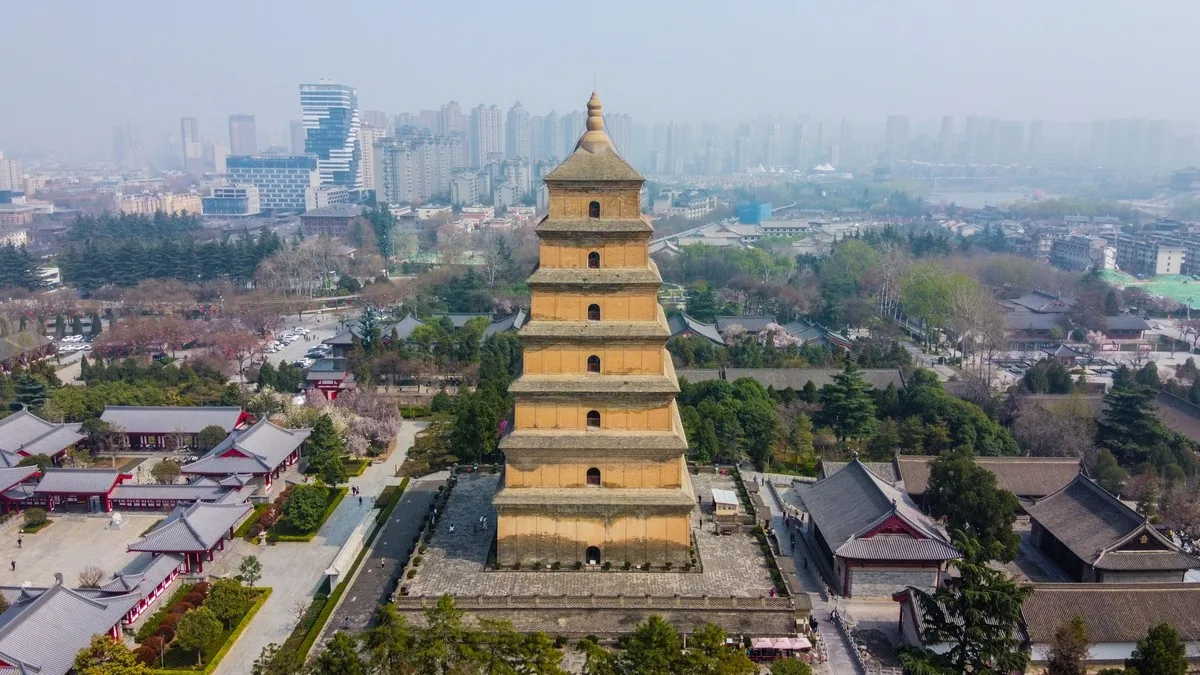
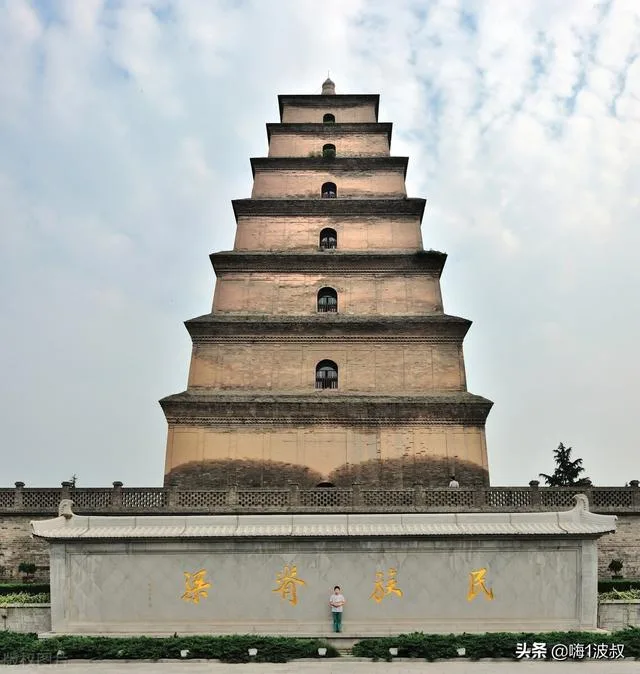
The pagoda stands in the north of Daci'en Temple: a square, multi-eaved brick tower of base, body and finial, 64.1 m tall counting the base. The base is about 4.2 m high; the lowest storey of the body measures 25 m on a side and tapers upward in a pyramid, with imitation-timber lintels, tie-beams, brackets and brick columns at each junction.
Each interior chamber carries murals, mainly of Xuanzang's journey west. Stone doors pierce all four sides of the ground floor, with faintly carved Buddhas and guardian kings on the lintels, and steles stand in the brick niches flanking the south door. A staircase of 248 steps climbs the tower.
Inscribing one's name
The pagoda's real weight is not only architectural. Newly passed Tang graduates inscribed their names beneath it, and "writing one's name at the Wild Goose Pagoda" became a byword for success in the examinations — binding one tower to a generation's ambitions.
In 1961 it was listed among the first batch of nationally protected sites; in 2014 it joined the World Heritage List as part of the Silk Roads: the Routes Network of Chang'an–Tianshan Corridor.
Practical Notes
- Climbing costs extra; the interior is narrow and the stairs steep, so skip it if you dislike heights.
- The north and south squares serve different purposes — the fountain is on the north side.
- It shares a district with the Great Tang All Day Mall and Tang Paradise; link them in the evening.
Related
- Small Wild Goose Pagoda: The Thirteen Storeys and the Morning Bell
- Great Tang All Day Mall: A 2.1 km Pedestrian Street at the Pagoda's Foot
- Tang Paradise: A Royal Garden Rebuilt on Tang Foundations
Photos
Sources
- Wikipedia: Giant Wild Goose Pagoda