Small Wild Goose Pagoda: The Thirteen Storeys and the Morning Bell
World Travel 编辑部 · 2026-09-16 · 5 min read
In 684, a hundred days after Emperor Gaozong's death, the imperial family built a temple in Chang'an to accrue merit for him, naming it Xianfu Temple; in 690 it became Jianfu Temple. Between 707 and 709 a pagoda rose there — and because it resembled the Wild Goose Pagoda on a smaller scale, it took the name Small Wild Goose Pagoda.
Fifteen storeys, thirteen left
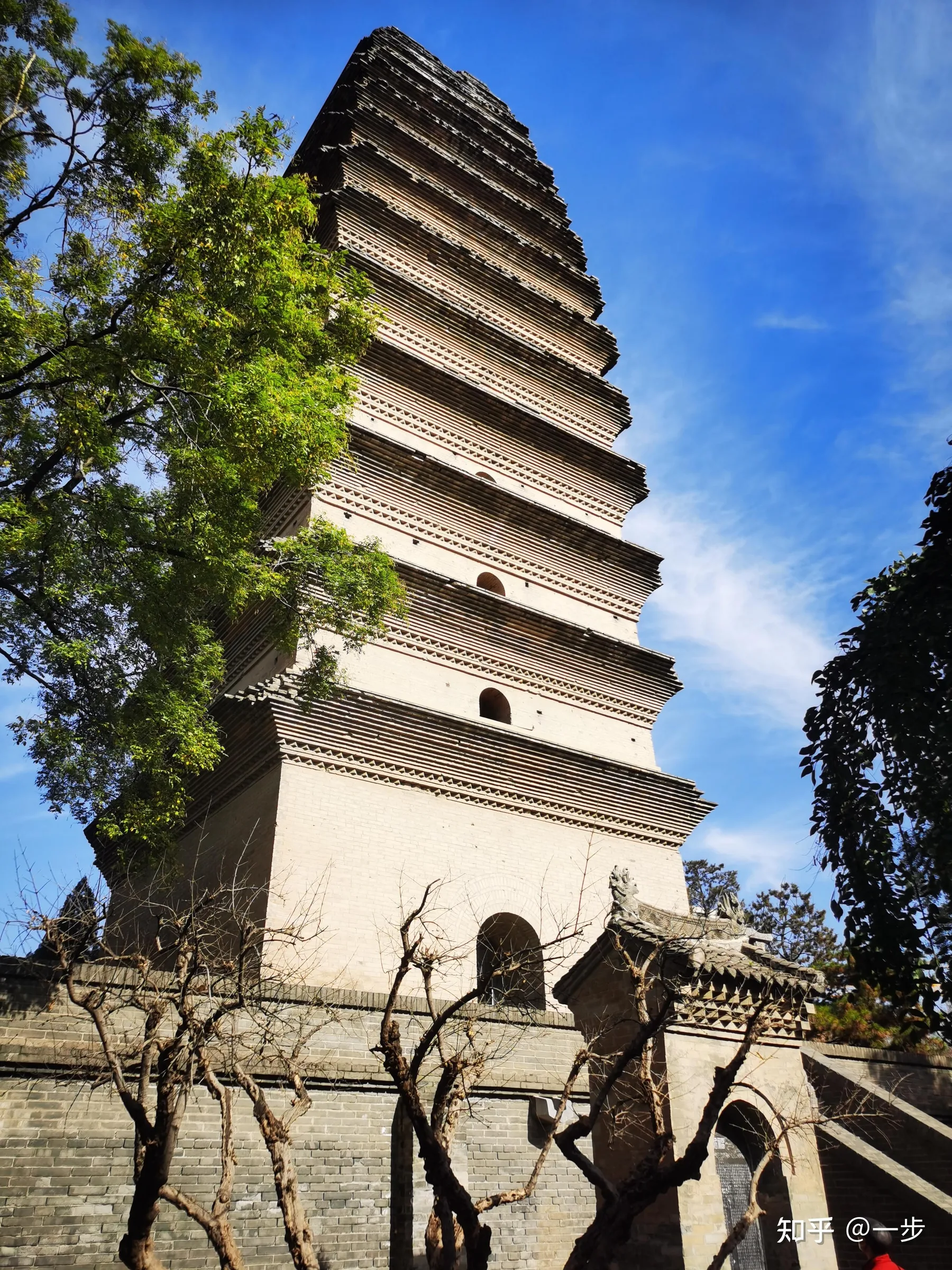
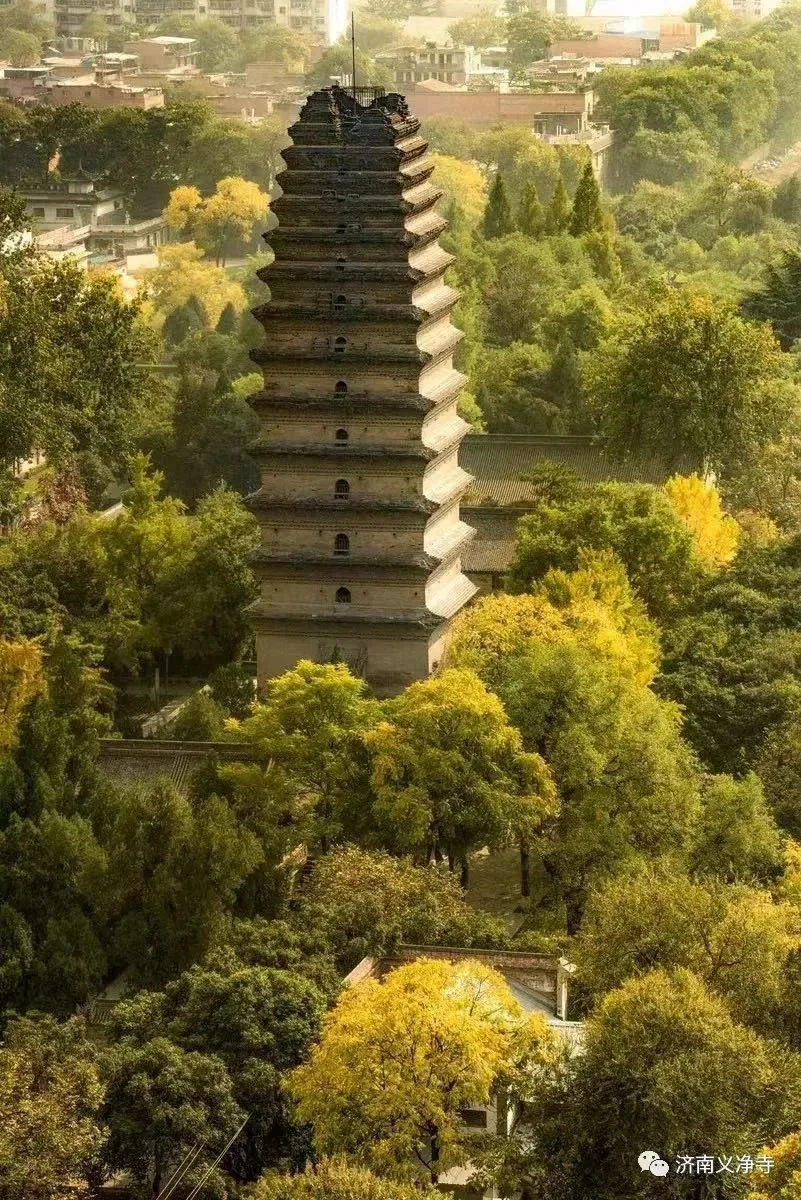
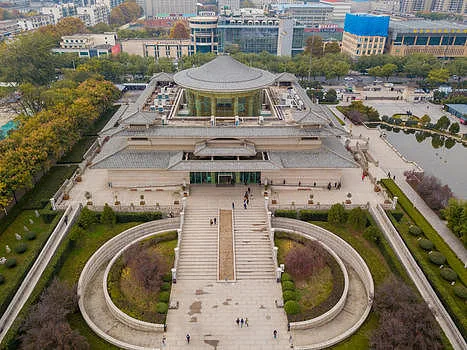
Also called the Jianfu Temple Pagoda, it stands in the Xi'an Museum grounds in Beilin District — a Tang multi-eaved brick tower. Originally fifteen storeys, it lost its top two to a Ming earthquake and now stands thirteen storeys, about 43.3 m tall.
The body sits on a square brick base 23.38 m on a side and 3.2 m high, with bluestone steps at the centre of the north and south faces. The plan is square, 11.38 m on the lowest side, tapering upward with gently rounded corners. Inside is a single-shell hollow core with timber floors and a mix of timber and brick stairs. Every storey has a brick eave of corbelled courses over two rows of dog-tooth brickwork.
The "three cracks, three healings"
Folk tradition says the pagoda cracked and closed three times in earthquakes, as if the structure sealed itself. It is a legendary compression of repeated damage and repair, not self-healing. The record reads: the great Shaanxi earthquake of 1487 opened a crack, and the quake of 1521 closed it; the Jiajing earthquake of 1556 cracked it again and destroyed the top; another quake in 1563 closed the crack; in 1691 it opened once more, and the earthquake of 1721 shut it again.
The morning bell
Under the Kangxi emperor a 3 m bell cast in 1192, in the Jin dynasty, was moved to Jianfu Temple. Monks rang it at dawn each day, and in the Qing the sound entered the "Eight Sights of Guanzhong" as the Morning Bell at the Wild Goose Pagoda.
The pagoda was listed among the first batch of nationally protected sites in 1961, and in 2014 joined the World Heritage List as part of the Silk Roads corridor.
Practical Notes
- It stands inside the Xi'an Museum, so the tower and the galleries pair naturally.
- The temple and pagoda once stood on opposite sides of a cross street; note the layout to avoid doubling back.
- Far quieter than the Giant Wild Goose Pagoda — a place to walk slowly.
Related
- Giant Wild Goose Pagoda: Xuanzang's Tower and the Tang Examination Custom
- The Beilin Museum: Nine Centuries of Steles in the Confucian Temple
- Xi'an City Wall Half-Day Guide: From Yongning Gate to Hanguang Gate
Photos
Sources
- Wikipedia: Small Wild Goose Pagoda