Roujiamo: Slow-Braised Pork in a White Ji Bread
World Travel 编辑部 · 2026-09-16 · 5 min read
The name "roujiamo" is ungrammatical: it should be bread holding meat, not meat holding bread. But the three characters have been said in Shaanxi for centuries, and no one intends to change them.
Two main kinds, and a third
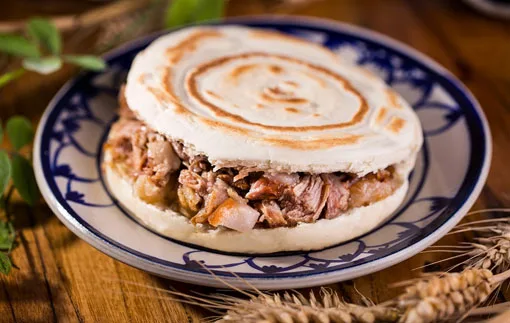
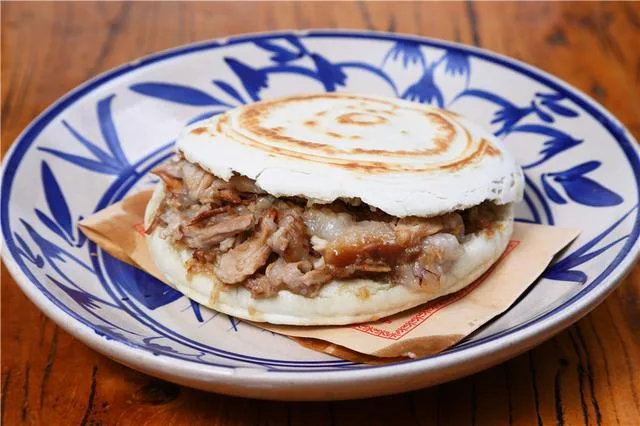
Roujiamo comes from Shaanxi and divides broadly in two: pork braised until tender and packed into a baiji bun, or minced pork sauce from the Baoji region, soured with vinegar.
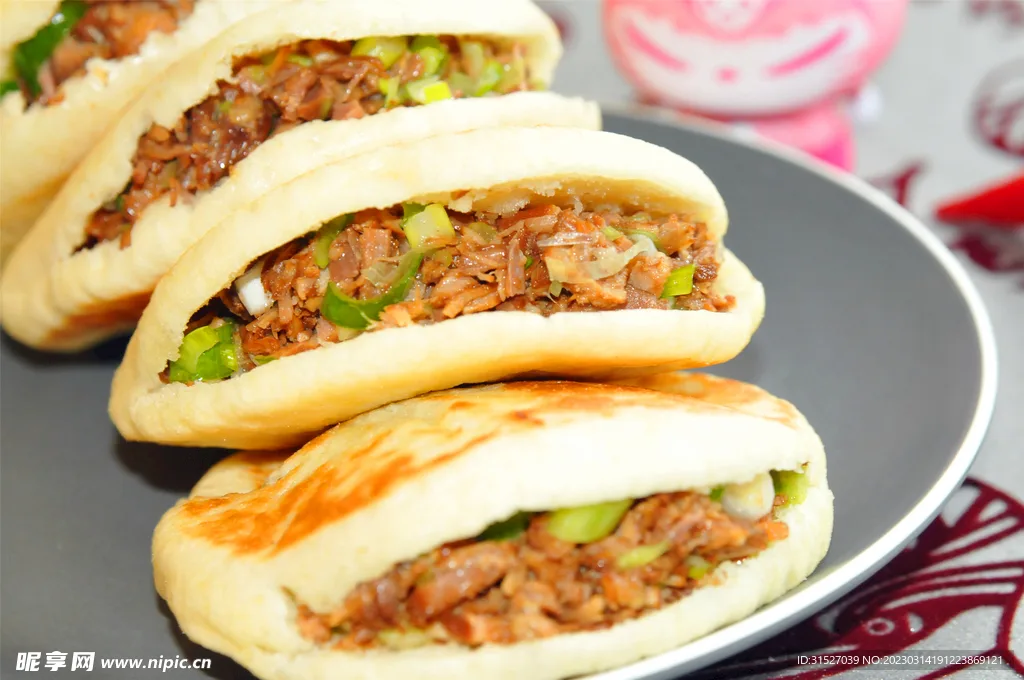
There is also the Tongguan version. Its bun differs from the baiji: charred gold outside, clear ridges, layered within, swollen and crisp outside yet tender inside, best eaten hot enough to sting the fingers. Old Tongguan roujiamo pairs a hot bun with cold meat — crisp bread, fragrant meat.
Why the meat is called "lar zhi"
The meat is pork simmered in a great pot, which must carry a thick layer of fat on the broth to hold in heat and aroma. Because of that fat, once cooled the fat goes white as wax and the lean takes on a waxy sheen — hence "lar zhi" meat. It resembles braised sauce pork but is softer and its flavour lasts longer.
The bun is a baiji cake made from leavened dough; long kneading leaves it firm so that baking preserves a particular bite. Charcoal-hung ovens were once used, now mostly gas.
How to eat it
In Guanzhong dialect any baiji bun with a filling is simply a "jiamo", with the filling named in front: dried tofu jiamo, vegetable jiamo, lar zhi rou jiamo. Adding green pepper is widely accepted; outside Shaanxi the meat is sometimes roasted in the manner of Turkish kebab — a different dish altogether.
Practical Notes
- Hot bun, hot meat, eaten while it stings the fingers — that is the best version.
- You can specify fatty or lean; for a first try, ask for a mix.
- There are halal versions in the Hui quarter, made with beef.
Related
- Yangrou Paomo: The Bowl You Tear Yourself
- Hulutou Paomo: Pork Intestine, White Broth and a Gourd Legend
- The Muslim Quarter: Xi'an's Hui Neighbourhood Inside the Walls
Photos
Sources
- Wikipedia: Roujiamo (Chinese pork burger)