Wenshu Monastery: A Thousand-Year Zen Court in the City Centre
World Travel 编辑部 · 2026-09-10 · 7 min read
Wenshu Monastery: A Thousand-Year Zen Court in the City Centre
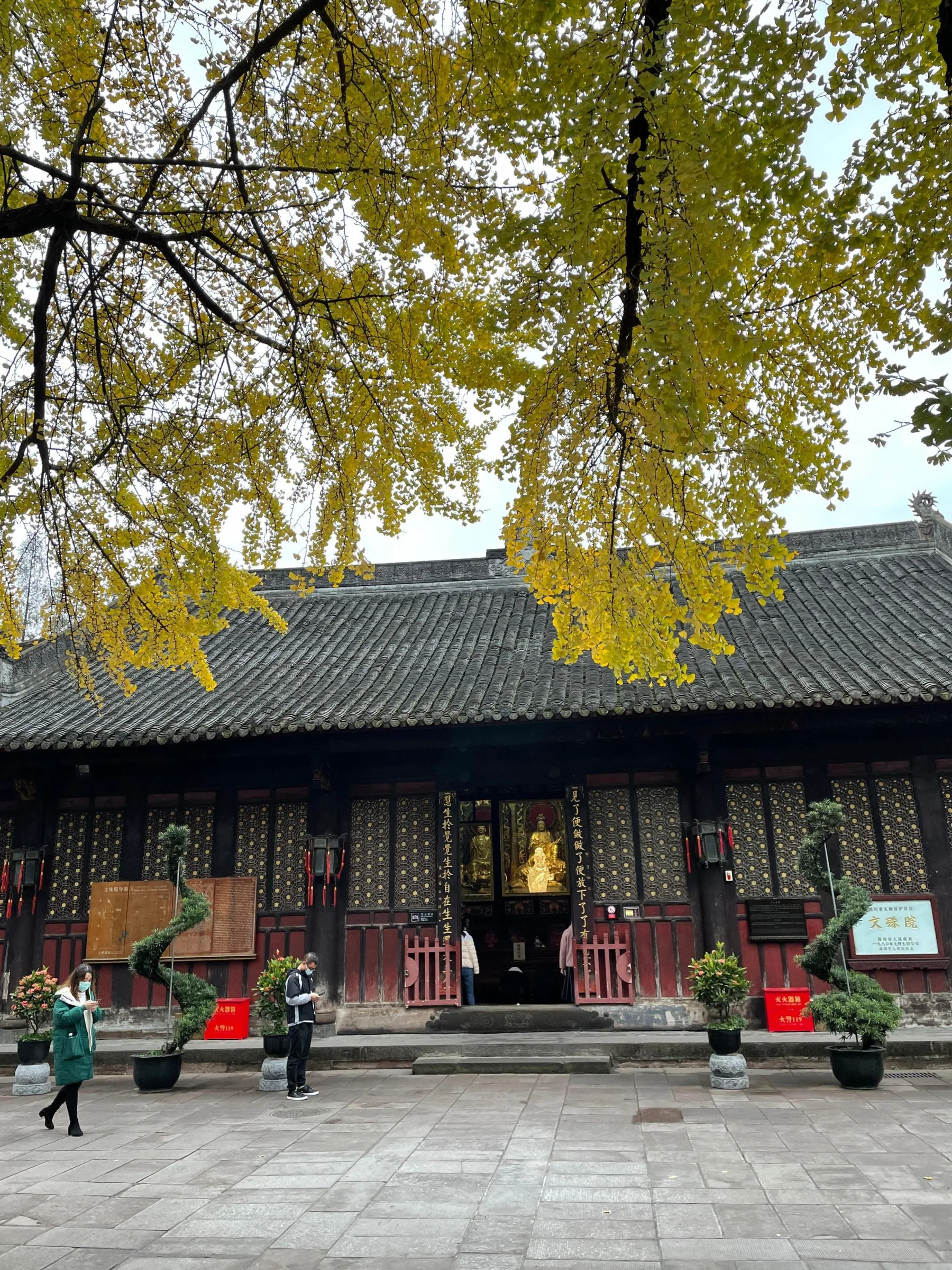
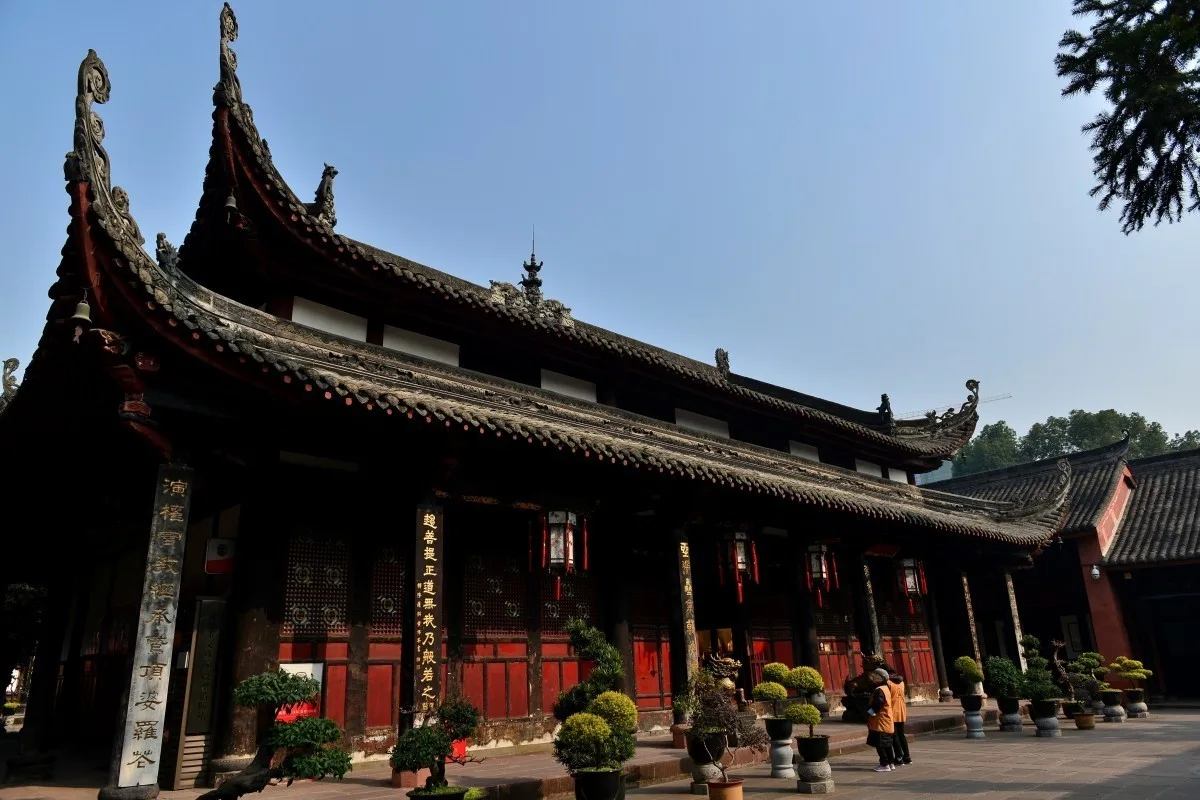
The monastery at the very centre of Chengdu is not up a mountain; it is in the city. Wenshu Monastery stands at 66 Wenshuyuan Street, Qingyang district, Chengdu, in the middle of the urban core — a Buddhist temple that combines Zen heritage, gardens and study.
From Xinxiang Temple to Wenshu
The monastery was founded in the Daye era of the Sui dynasty as Xinxiang Temple, said to have been built by a consort of Yang Xiu, Prince of Shu and son of Emperor Wen, for a nun named Xinxiang. In the late Tang and Five Dynasties it was renamed Miaoyuan Pagoda Court, and in the Song it reverted to Xinxiang Temple. At the end of the Ming it was destroyed by war and fire — every building lost except ten iron guardian-deity statues and two thousand-year-old cedars.
Master Cidu and a plaque called Konglin
The turn came in 1681, the twentieth year of the Kangxi reign, when Master Cidu arrived to sit in meditation among the ruins. Villagers, seeing light around his meditation spot at night, took him for a manifestation of Manjushri. His reputation spread, and the Kangxi emperor, hearing of him, summoned him to the capital three times — and was politely refused each time.
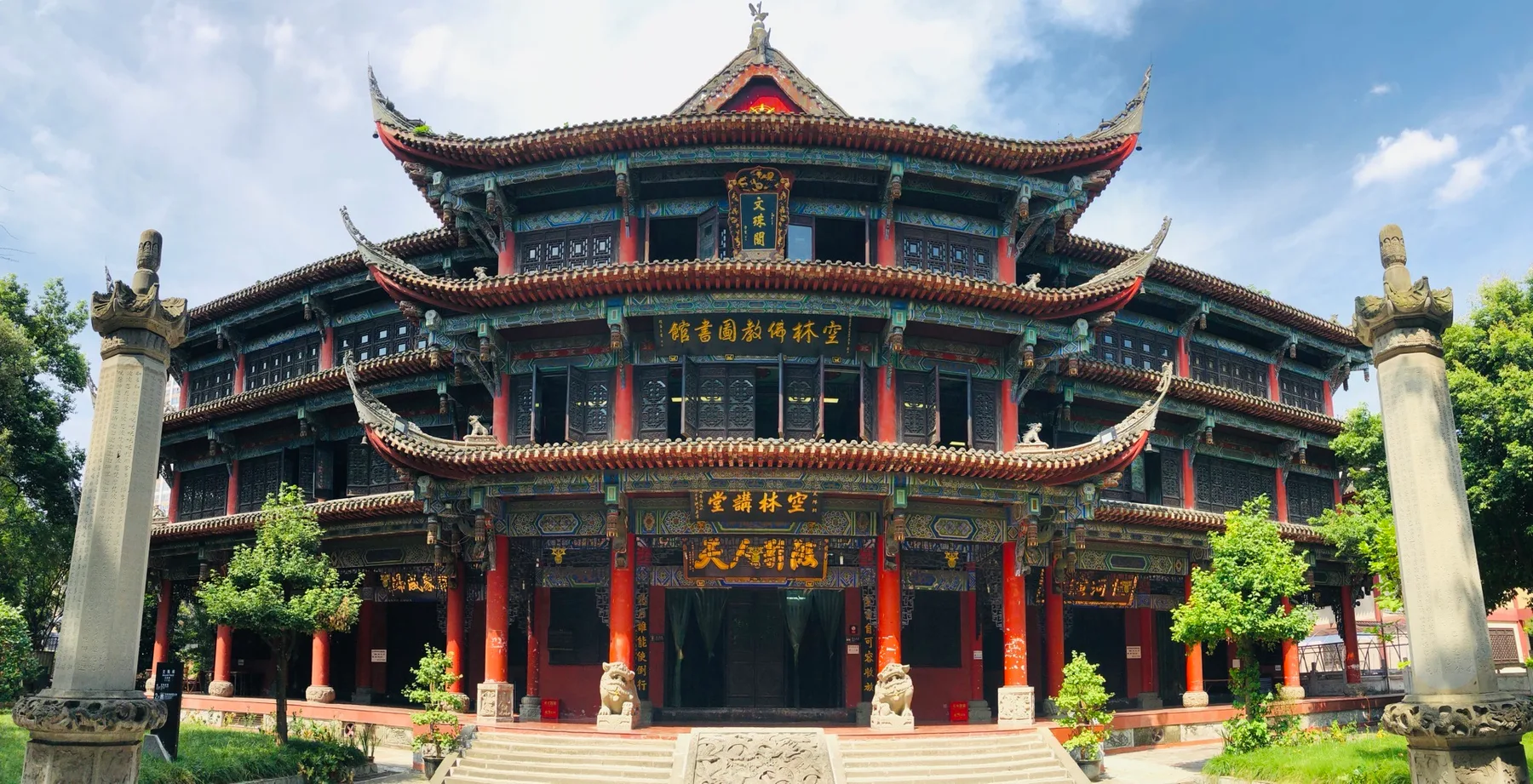
In 1697, officials and locals began rebuilding on the old site and named it Wenshu Monastery. In 1702 the Kangxi emperor granted a plaque reading "Konglin" (Empty Forest), which is why the monastery is also known as Konglin Hall. Through the Jiaqing and Daoguang reigns, abbot Master Benyuan directed its expansion.
The "Eight Sights of Konglin"
Today the monastery covers more than 200,000 sq m of floor area and is the foremost of the four great Zen courts of the upper and lower Yangtze. It has an ordination platform and serves as the place where monks and laity across Sichuan receive the precepts. Tradition lists the "Eight Sights of Konglin":
- the heaven-inscribed plaque
- the Burmese jade shrine — a jade Buddha in the Great Hall brought from Myanmar
- light from the grottoes
- the auspicious twin cedars
- the radiant robe — a kasaya embroidered by Consort Tian, favourite of the Chongzhen emperor
- treasure of the tongue — four sutras written in the writer's own blood
- the rare hair embroidery
- the gilded stupa
Xuanzang and a relic
The monastery's Sutra Pavilion holds a relic of the Buddha, brought back in the 1920s by Master Nenghai from Bodh Gaya in India. Xuanzang is part of the story too: he received full ordination at Daci Temple in Chengdu and lodged at Wenshu Monastery for five years. In the 1940s, after Xuanzang's relics were found at Bao'en Temple in Nanjing, Daci Temple brought them back and they were temporarily kept in the Sutra Pavilion here.
Wenshufang
Around the monastery a mock-antique quarter called Wenshufang has grown up; its trade in traditional instruments such as the hulusi and the ocarina, and in the four treasures of the study, has made it a cultural sight on a par with Huanglongxi on the city's edge.
Practical notes
- Location: 66 Wenshuyuan Street, Qingyang district, Chengdu — in the city centre
- Founded: Daye era of the Sui, as Xinxiang Temple
- Named: Wenshu Monastery in 1697; the "Konglin" plaque granted in 1702
- Standing: foremost of the four great Zen courts of the Yangtze; a key Han-region Buddhist temple designated by the State Council in 1983
- Heritage: listed as a Sichuan provincial cultural relic on 7 July 1980
- Highlights: the Eight Sights of Konglin, the Buddha relic in the Sutra Pavilion, the ancient cedars
Related
- Qingyang Palace: The Foremost Taoist Temple of Western Sichuan
- Du Fu's Thatched Cottage: One Hut and Two Hundred and Forty Poems
Photos
Sources
- Wikipedia: Wenshu Monastery