Biluochun: Spring on the Dongting Hills of Lake Tai
World Travel 编辑部 · 2026-09-10 · 8 min read
Biluochun: Spring on the Dongting Hills of Lake Tai
Among China's ten famous teas, Suzhou holds one: Dongting Biluochun. It ranks alongside West Lake Longjing, and it grows on two hills inside Lake Tai — East Dongting and West Dongting. Those hills produce more than tea: loquats, waxberries, oranges. And the fruity-floral aroma that defines Biluochun has everything to do with the orchards on the slopes.
Grown on two hills in Lake Tai
Biluochun's growing area is the Lake Tai basin in Suzhou: East Dongting Hill (today's Dongshan town, Wuzhong district) and West Dongting Hill (today's Jinting town on the West Hill island in Wuzhong district).
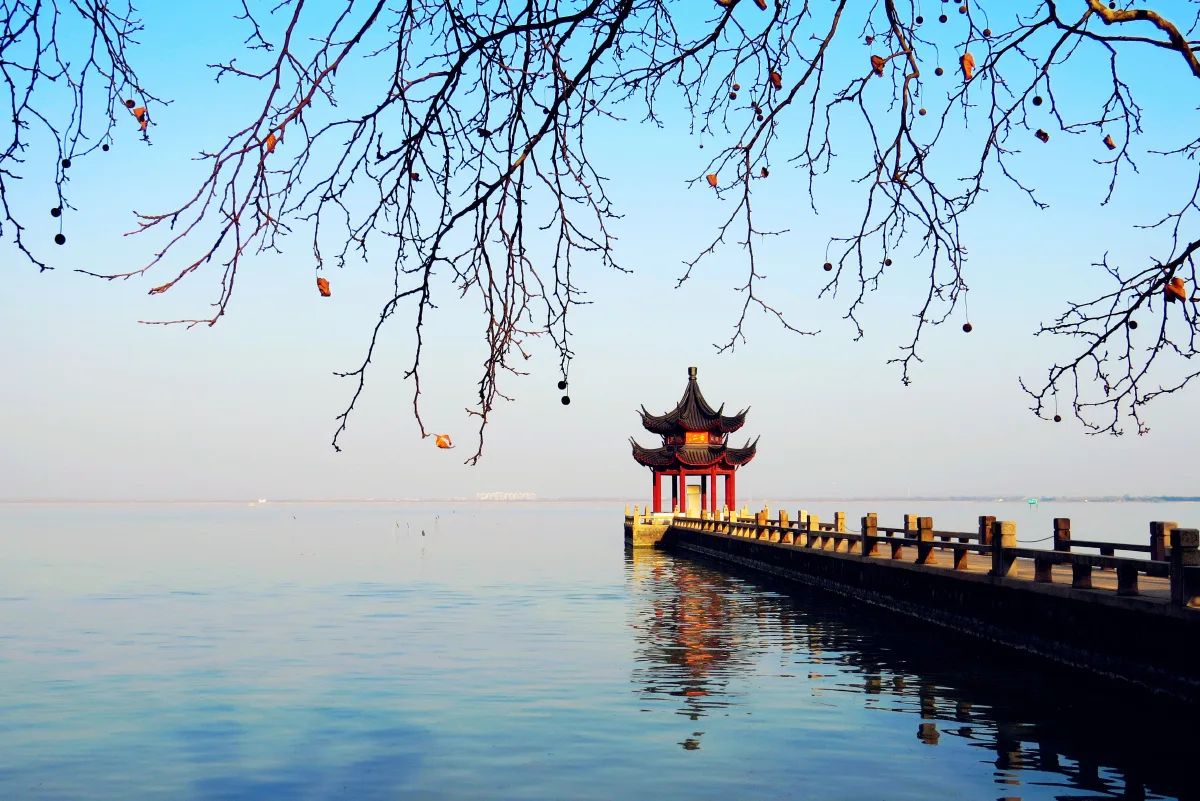
Dongshan town, also called Dongting Dongshan and formerly Xumu Mountain or Moli, sits at the southwestern tip of the Dongshan peninsula on Lake Tai's southeast shore, with a total area of 96 square kilometres. It is a Chinese historic and cultural town and a national 5A-level scenic area; its farms yield flowers and fruit, tea and aquatic produce, and it is the home of Dongting Biluochun. Jinting town was formerly Xishan town, renamed in 2007; it is a Jiangsu provincial historic and cultural town, and the West Hill island it occupies is the largest island in China's freshwater lakes, joined to the Suzhou mainland by the Taihu Bridge, the longest bridge on a Chinese inland lake.
Both hills lie in Lake Tai, China's third-largest freshwater lake: 2,578 square kilometres of surface, 2,334 square kilometres of water area, a 393.2 km shoreline, in southern Jiangsu and close to Suzhou on its east. Within this compass of water, hills and orchards, the tea grows.
Tea and fruit interplanted, hence the aroma
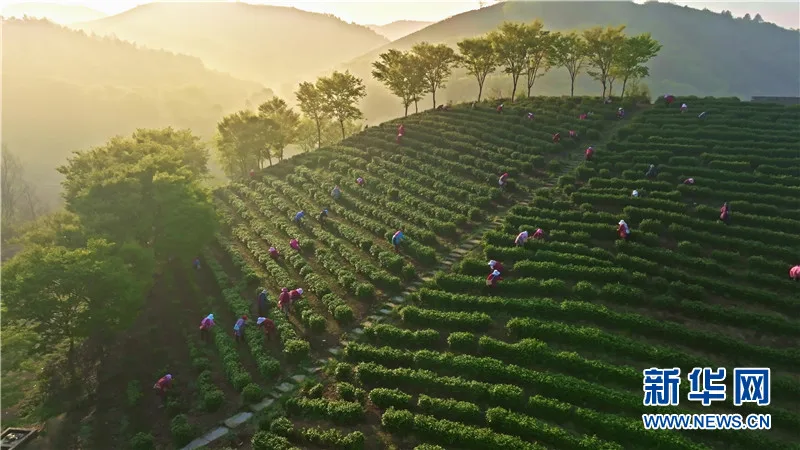
The most distinctive thing about Dongting is that tea groves and orchards are one — tea bushes interplanted with peach, plum, apricot, Chinese plum and loquat. This is the classic tea-fruit intercropping pattern. Season after season, the shared environment gives Biluochun its pronounced fruity-floral aroma — and that is the weight the name "Dongting" carries in tea circles.
In production, Dongting Biluochun demands high craft: top-grade leaves require fully hand-firing.
Reading a cup of Biluochun
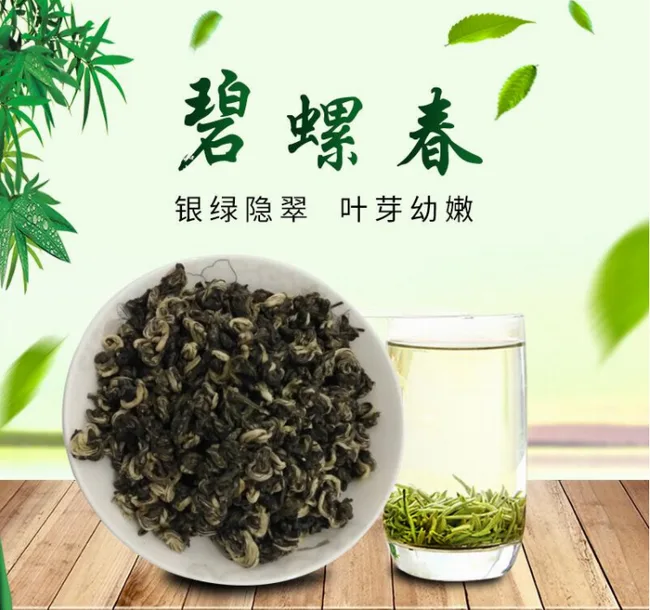
Authentic Dongting Biluochun is recognisable by shape: tight, slender strips curled like a snail, showing the "bee's leg", densely covered in white down, silver-green with hidden emerald, clean and even. Once brewed — the liquor is tender yellow-green and bright; the aroma is fresh and tender with clear fruity-floral notes; the taste is fresh, strong and brisk, the same fruity-floral note carried in the cup; and the brewed leaves are tender, even, lively, tender yellow-green and bright.
For this, it is called the "fairy among teas" and honoured as "the finest tea under heaven".
How to choose
- Look at the shape: authentic Dongting Biluochun is tight and slender, curled like a snail, densely downy, and "silver-green with hidden emerald" rather than a flat green
- Smell it: both the dry leaf and the liquor should show clear fruity-floral notes — the signature of tea-fruit intercropping
- Check the origin: the core area is Dongshan town and Jinting town in Suzhou's Wuzhong district, in the Dongting hills of the Lake Tai basin
- Choose the season: it is a green tea, so freshness matters. In the spring tea season you can drink the year's new tea right by the terraces on Dongshan and West Hill
Practical
- Region: Dongting hills in the Lake Tai basin, Suzhou — Dongshan (East Dongting) and Jinting (West Dongting)
- Standing: one of China's ten famous teas, ranked with West Lake Longjing; called the "fairy among teas" and "the finest tea under heaven"
- Craft: top-grade leaf is fully hand-fired
- Flavour keywords: clear fruity-floral aroma, silver-green with hidden emerald, bee's leg
- Worth adding on: Dongshan town is a national 5A scenic area and a Chinese historic town; Jinting town sits on the largest inland-lake island, with the Taihu Bridge alongside
Related
- Gorgon Nut: Suzhou's Autumn Sweet Soup
- Guanqian Street and Taijian Long: The Old Guard of Suzhou Cuisine
Photos
Sources
- Baidu Baike: Dongting Biluochun, Dongshan town, Jinting town, Lake Tai