Guanqian Street and Taijian Long: The Old Guard of Suzhou Cuisine
World Travel 编辑部 · 2026-09-10 · 10 min read
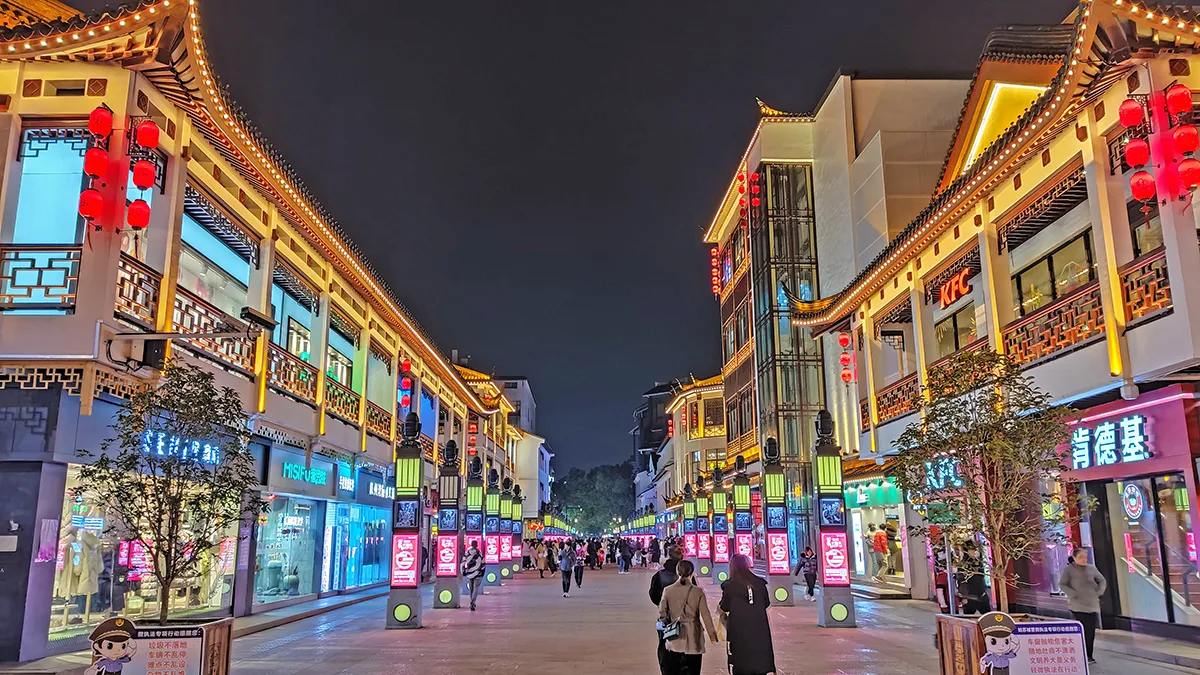
The centre of Suzhou's old city is a street that has run since the Song dynasty. Guanqian Street starts at Renmin Road in the west, ends at Cufang Bridge where it meets Lindun Road in the east, and takes its name from the thousand-year-old Taoist temple that faces south onto it.
If you have only one day for eating in Suzhou, spend it here and on the lane that branches off its south side. Three centuries of orthodox Suzhou cooking are packed into a couple of hundred metres.
At a glance
- Area: Guanqian Street, Xuanmiao Temple, Taijian Long (the food lane)
- Suggested time: half a day, with lunch on Taijian Long
- Best for: time-honoured brands, classic Suzhou (Subang) cooking
- Getting there: Metro Line 1 to Leqiao or Line 4 to Chayuanchang, both a short walk away
Xuanmiao Temple
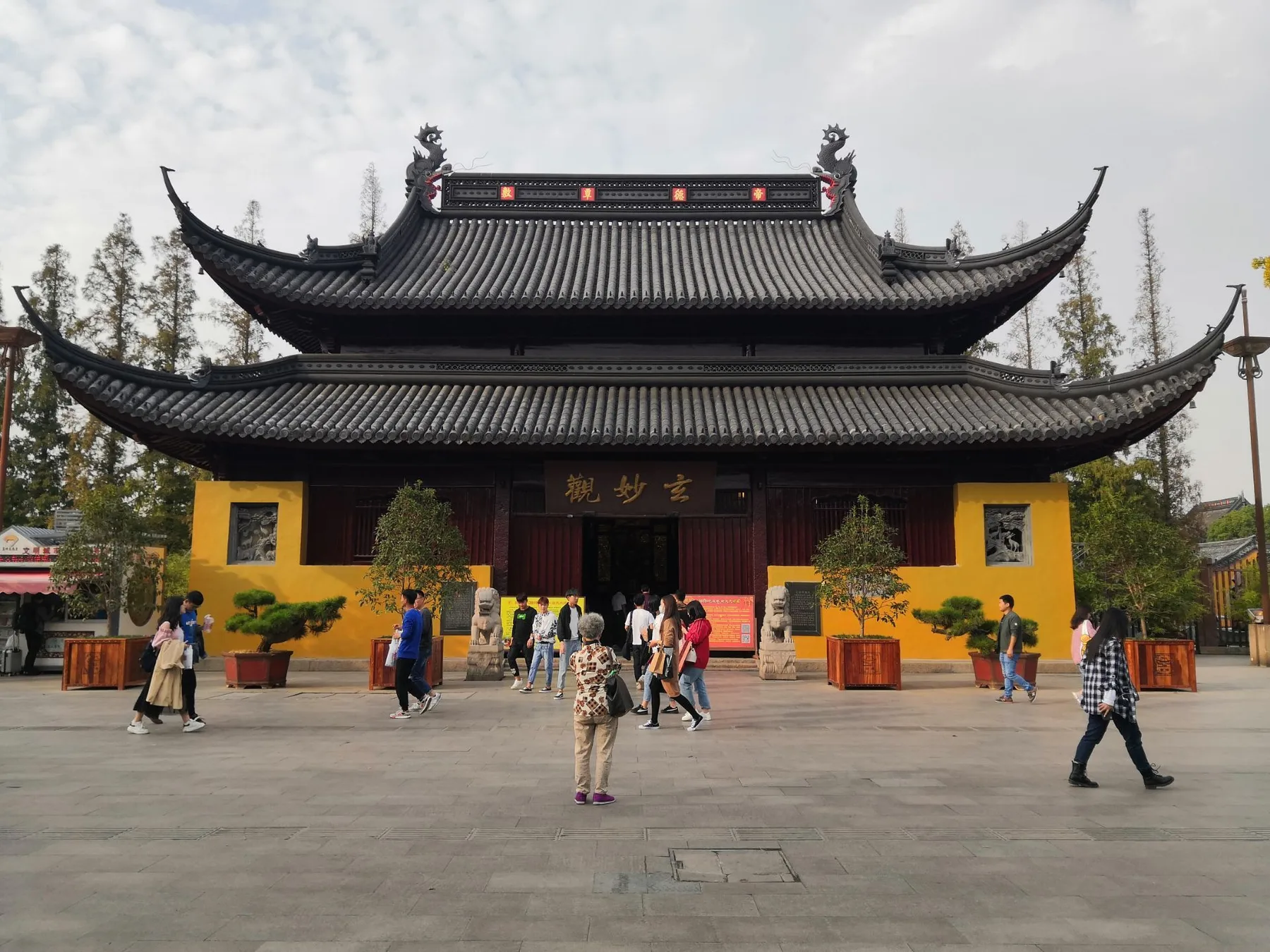
The temple is the geographic origin of the street. It sits north-facing-south in the middle of Guanqian Street, and its Sanqing Hall is the most important surviving Taoist structure in the city centre and a national key cultural relic.
The street's name is a chronology in itself. In the Northern Song the temple was called Tianqing Guan, so the road was Tianqing Guan Qian ("in front of Tianqing Temple"). In the Yuan the temple was renamed Xuanmiao, and the road followed. In the Ming, when the peach trees inside bloomed the temple grounds looked like brocade, and the street was nicknamed Suijin Jie, "Splintered Brocade Street". Only later was it shortened to Guanqian.
There are sightseeing carts along the street; a ride costs one yuan.
Taijian Long
The reason to come. Taijian Long runs east-west, from Gong Lane across Beiju to Shaomozhen Lane, just over 200 metres in total, and is regarded as Suzhou's traditional food street.
The name means "Eunuchs' Lane". In the Ming dynasty the eunuchs who ran the Suzhou imperial silk manufactory lived here. It was first called Gong Xiang Nan Xi Xiang, and later - after two of those eunuchs - Jinyu Ruyi Long.
The lane's rise tracks the city's. After the upheaval of 1860, Suzhou's commercial centre shifted inside the city walls from Changmen to the Guanqian area. Around 1911 the old Ming-Qing dye works at Beiju was redeveloped into a new entertainment district: the YMCA, Suzhou Cinema, Daguangming Cinema and the Dongwu Qiankun Theatre (later Kaiming) all clustered here. Crowds came, and restaurants followed.
What to eat
Suzhou cooking - Subang cai - belongs to the Su-Xi branch of Jiangsu cuisine, close enough to Wuxi's that the two are often grouped together. The profile: fermented rice lees used as seasoning, a strong command of freshwater produce, and a sweet lean. It matured through the Kangxi, Yongzheng, Qianlong, Jiaqing and Daoguang reigns of the Qing.
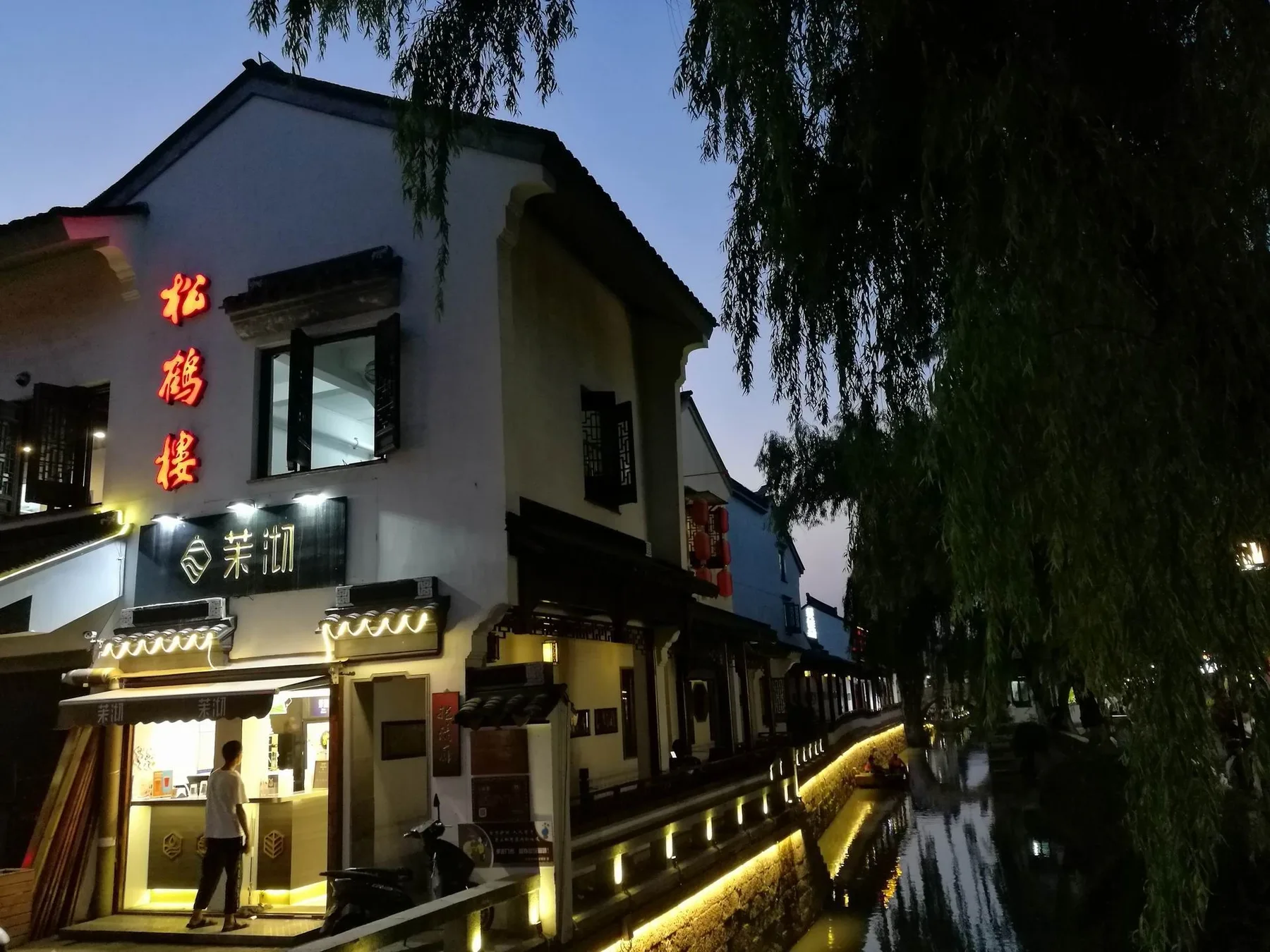
Songhelou, 72 Taijian Long. Founded in 1757 (the 22nd year of the Qianlong reign) by an owner surnamed Xu, and named for the pine and the crane - both symbols of longevity. It began as a pastry and noodle shop and only later moved into wine and cooked dishes. Today it is listed alongside Quanjude in Beijing, Fuchun Teahouse in Yangzhou and Louwailou in Hangzhou as one of China's four great restaurants. Its squirrel mandarin fish won the national Jinding Award in 1990; the Ministry of Internal Trade named it a China Time-honoured Brand in 1999. Order the squirrel mandarin fish, and add sizzling eel in hot oil and Suzhou braised duck.
Deyuelou, 43 Taijian Long. Traced to the Jiajing era of the Ming, though the original shop stood at Yefangbang on Bantang, near Tiger Hill, and was demolished. In 1963 the film Are You Satisfied? used a Deyuelou that did not then exist as its setting; on 25 April 1982 the authorities actually restored it on Taijian Long. Its facade was named one of Suzhou's ten great buildings in 1986. Look for Deyue spring chicken, hand-peeled river shrimp, cherry pork and eight-treasure duck.
Xinjufeng dates to 1904 (the 30th year of the Guangxu reign) and is the place for the old dark-sauce style: sizzling eel in hot oil, whole duck braised in soy, braised snakehead in lees.
Addresses and founding dates above follow public records and encyclopaedia entries; signature dishes are editorial and menus change with the season and by branch. Check with the restaurant directly.
How to plan it
Arrive around 10am and walk the temple first, then follow Guanqian Street from Renmin Road eastward - it hands you off to Lindun Road, which points towards Pingjiang Road. Give lunch to Taijian Long: Songhelou and Deyuelou face each other, tens of metres apart, and settling in for a slow Suzhou meal is the correct way to use this street. In the afternoon, head west to Renmin Road or north towards Beisi Pagoda and the Humble Administrator's Garden.
Practical
- Getting there: Metro Line 1 (Leqiao) or Line 4 (Chayuanchang)
- What to order: squirrel mandarin fish (Songhelou); sizzling eel, whole duck in soy (Xinjufeng); Deyue spring chicken (Deyuelou)
- Flavour note: Suzhou food leans sweet and uses rice lees heavily. If that is not your register, ask the kitchen to dial the sugar back
- Queues: time-honoured restaurants fill up fast at lunch on holidays - go before 11am or after 1pm
- In-street transport: sightseeing carts, one yuan a ride
Related
Photos
Sources
- Wikipedia: Guanqian Street, Taijian Long, Songhelou, Deyuelou
- Baidu Baike: Su-Xi cuisine