Pingjiang Road and Garden Dining: New Suzhou Cuisine in Old Houses
World Travel 编辑部 · 2026-09-10 · 13 min read
In the north-east corner of the old city lies a district of 116.5 hectares that still keeps the shape it had 800 years ago.
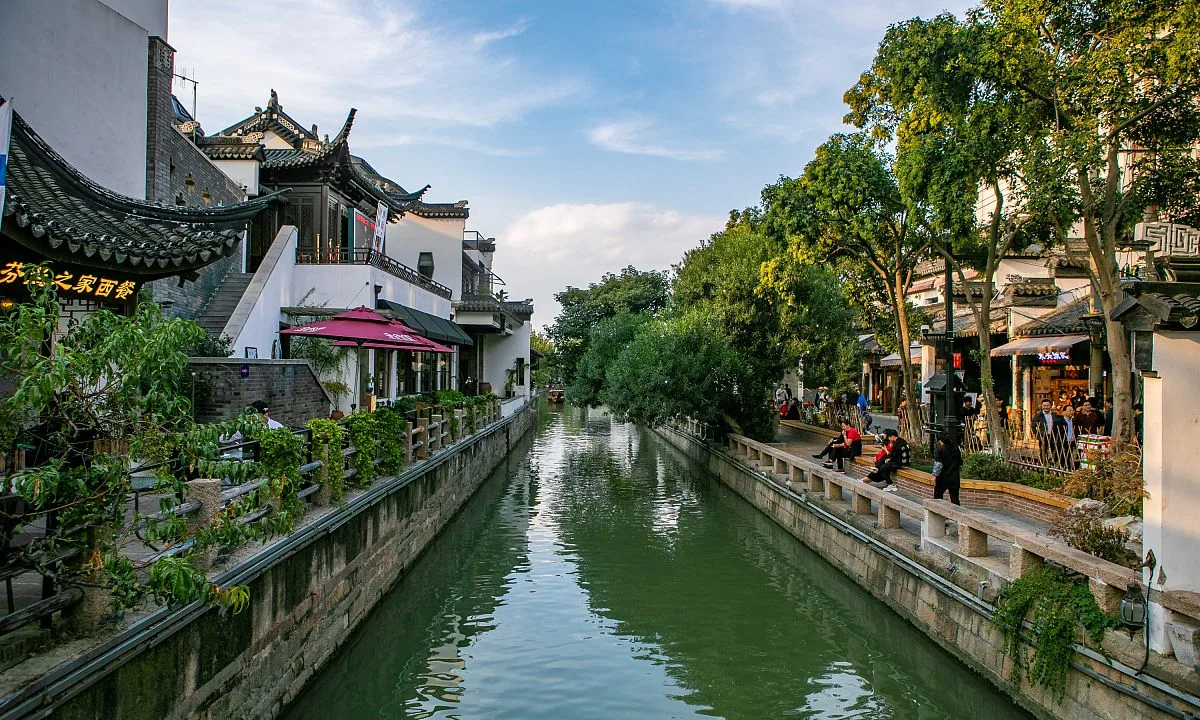
The Pingjiang Historic District is organised around Pingjiang Road and the Pingjiang canal: the outer moat to the east, Lindun Road to the west, Ganjiang Road to the south and Baita East Road to the north. Suzhou was called Pingjiang in the Song dynasty, and the district takes its name from that. Its layout still broadly matches the Southern Song Pingjiang Map, holding the double-grid pattern of streets and waterways running side by side, with the white walls, tiled roofs and narrow canals of a Jiangnan water town. It is the most complete surviving historic quarter in Suzhou.
Pingjiang Road itself runs 1,606 metres from Dongbei Street in the north to Ganjiang East Road in the south. Inside the district there is one World Heritage site - the Couple's Garden Retreat - plus the national-level Quanjin Guild Hall and the Pan residence at Weidao Temple, 16 provincial and municipal protected sites, 44 controlled heritage buildings and ten ancient wells.
And Suzhou's gardens are joined to this water: the great private gardens sit just off these lanes.
What to see
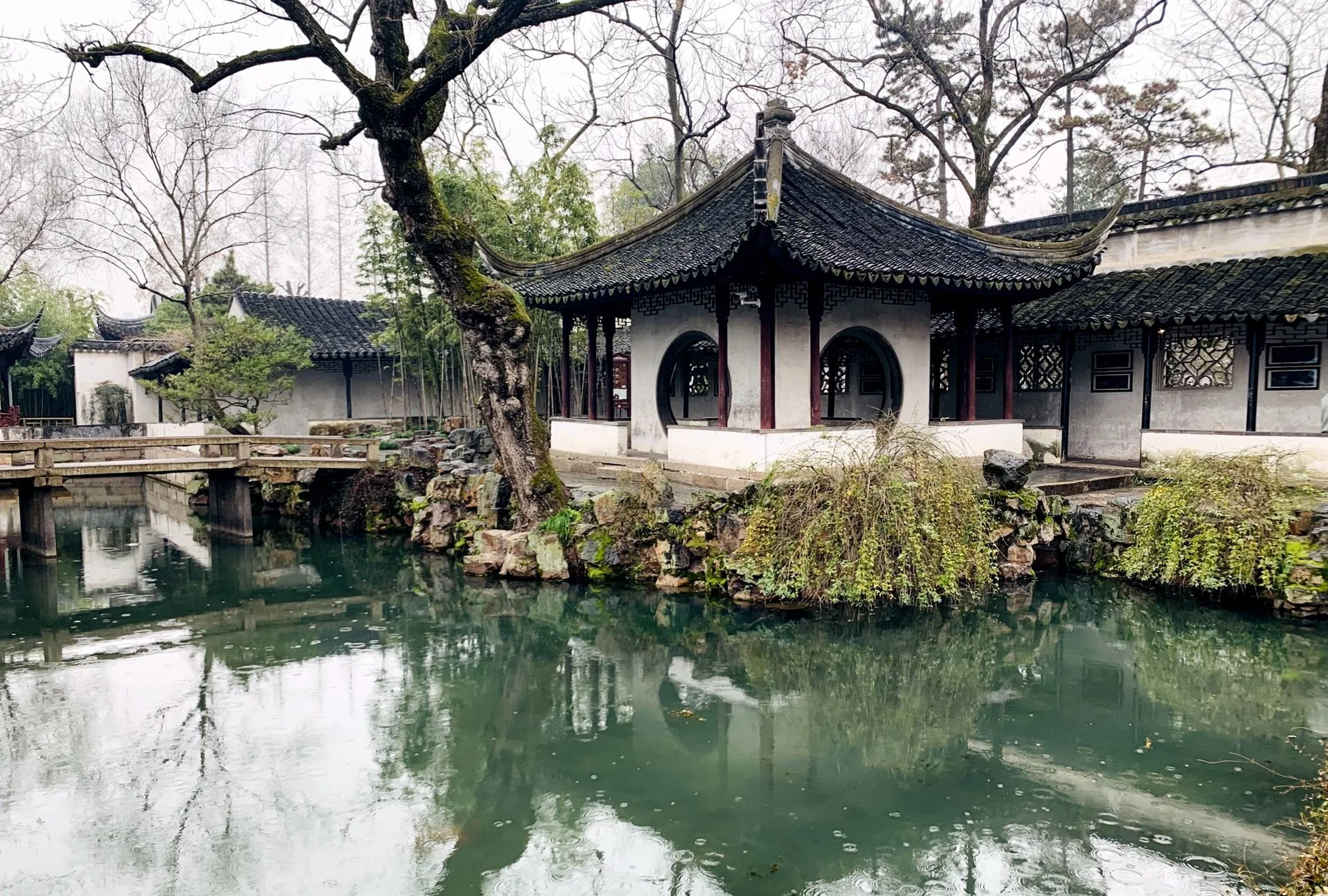
The Humble Administrator's Garden at 178 Dongbei Street was begun in 1509 (the fourth year of the Zhengde reign) by Wang Xianchen, a censor who had resigned office, on the site of Tang poet Lu Guimeng's residence and the former Dahong Temple. The name comes from a line in Pan Yue's Rhapsody on Idle Living: "to plant and to water the garden, for the morning and evening meal - this too is the governance of a humble man." It is said that Wen Zhengming of the Wu School painted the design. It is one of China's four great gardens and the model of the Jiangnan private garden, listed as a national key cultural relic in 1961 and as World Heritage by UNESCO in 1997 alongside several other gardens.
The Lion Grove Garden at 23 Yuanlin Road, beside the Taiping Heavenly Kingdom's Zhongwang residence and the Humble Administrator's Garden, covers 1.1 hectares and is one of Suzhou's four great gardens. In 1342 (the second year of the Zhizheng reign of the Yuan) a group of disciples built a Chan retreat for the monk Tianru, and the garden within it was designed by the painter and garden-maker Ni Zan. Tianru named it Shizilin after his master, who attained enlightenment at Lion Rock on Mount Tianmu; and because the garden held many bamboos and one rockery resembling a lion, the name stuck.
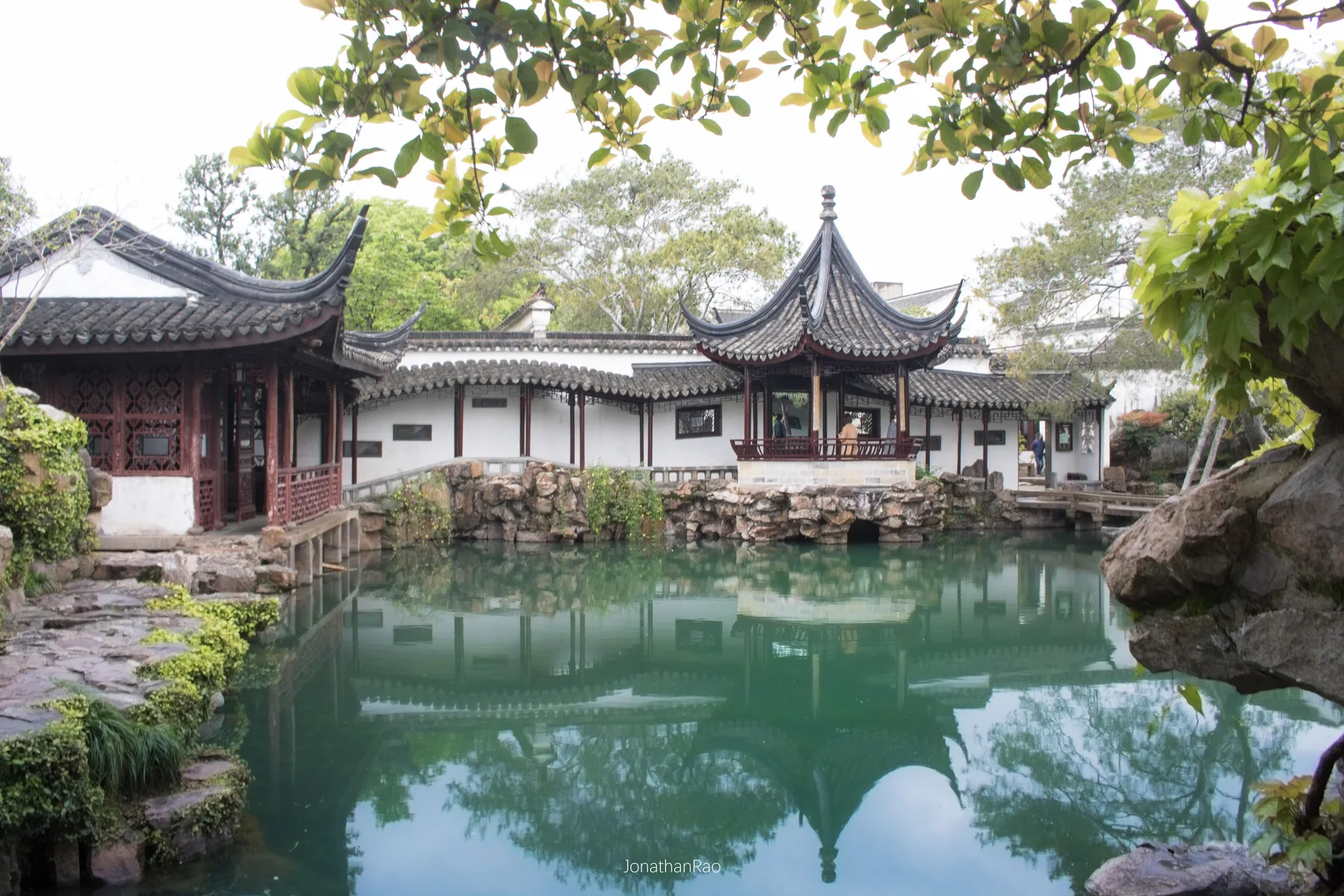
The Master of the Nets Garden at 11 Kuojiastou Lane was begun in the early Chunxi era of the Southern Song on the former site of the Wanjuan Hall of the Southern Song vice minister Shi Zhizhi, originally called "Fisherman's Retreat". In the Qianlong era it was bought and rebuilt by Song Zongyuan and renamed Wangshi Yuan - because Suzhou people call a fisherman a "wangshi". It became a national key cultural relic in 1982 and World Heritage in 1997.
The Suzhou Museum on Dongbei Street opened on New Year's Day 1960. It has two parts: the old eastern wing is the former residence of the Taiping Heavenly Kingdom's Zhongwang, and the new western wing was designed by the architect I. M. Pei and opened in 2006, covering about 10,750 square metres. The collection runs to more than 40,000 objects, mostly Suzhou excavations, literati painting and Jiangnan folk craft, with nearly 250 items in the top national grade. The main building at 204 Dongbei Street requires a reservation and is free, Tuesday to Sunday.
The wider system behind all this: Suzhou's classical gardens began in the Spring and Autumn period, developed through Jin and Tang, flourished under the Song and peaked in the Ming and Qing. By the late Qing there were more than 170 gardens inside and outside the walls; over 50 survive. They combine house and garden - to look at, to walk in, to live in - and are known for "creating a world within a foot of ground".
Where to eat
If Guanqian Street is the old Suzhou table, this district is the new one - the same palate, moved into heritage houses.
Pingjiang Song holds one Michelin star and serves new-style Jiangnan cooking in a restored old house with garden aesthetics. The kitchen works fine: fermented-lees prawns with caviar layers the aroma of rice lees over a soft-centred prawn; duck broth with Jinhua ham and water chestnut flour builds its savour with duck and ham; sous-vide seasonal river fish applies modern technique to local produce - which is exactly the ground Suzhou cooking has always stood on, water produce and rice lees.
Dingshan Jiangyan, in the Michelin Guide, does a Suzhou family banquet. That word matters: the dishes stay close to what lands on a Suzhou table. House-smoked fish is a cold-plate classic, hand-picked crab roe with tofu is a test of picking skill, and seasonal Liangtouwu braised pork uses the Liangtouwu pig breed to make the city's signature dish more particular still.
Neither Pingjiang Song nor Dingshan Jiangyan has a public encyclopaedia entry. Dish descriptions above are editorial; addresses, hours and menus should be confirmed with the restaurants, and Michelin ratings with the Michelin Guide.
How to plan it
Give it a full day. Start at the Humble Administrator's Garden (178 Dongbei Street) when it opens, cross the road to the Suzhou Museum (book ahead), then walk south to the Lion Grove (23 Yuanlin Road). In the afternoon follow Pingjiang Road south the full 1,606 metres, looking at the way street and canal run together - the Quanjin Guild Hall, the Pan residence at Weidao Temple and the Couple's Garden Retreat are all along it. Eat dinner in this district; both Pingjiang Song and Dingshan Jiangyan need booking.
With a second day, add the Master of the Nets Garden (11 Kuojiastou Lane) - small in area, precise in plan, and a deliberate contrast to the grand manner of the other two.
Practical
- Reservations: the Suzhou Museum main building (204 Dongbei Street) needs one, free, Tuesday-Sunday; the Humble Administrator's Garden is a World Heritage honeypot, so buy ahead
- Restaurants: Pingjiang Song and Dingshan Jiangyan are in demand - book weeks ahead, longer around holidays
- Pace: Pingjiang Road is 1,606 metres; with the side lanes, allow two to three hours
- Getting there: Metro Line 4 to Beisi Pagoda or to the Humble Administrator's Garden/Suzhou Museum station
- Season: spring and autumn suit gardens and streets best; in summer heat, do the gardens in the morning
Related
- Guanqian Street and Taijian Long: The Old Guard of Suzhou Cuisine
- Suzhou Noodles and Dim Sum: The Craft Behind a Bowl
Photos
Sources
- Wikipedia: Pingjiang Historic District, Humble Administrator's Garden, Lion Grove Garden, Master of the Nets Garden, Suzhou Museum
- Baidu Baike: Suzhou classical gardens