Daming Palace: The Greatest Palace Complex of Tang Chang'an
World Travel 编辑部 · 2026-09-16 · 6 min read
In 634 Emperor Taizong built a summer palace on the Longshou Heights northeast of Chang'an for his father Li Yuan, naming it Yong'an Palace. Li Yuan died the next year and the palace became Daming Palace, also called the Eastern Inner Court. No one expected it to become the seat of government for more than two centuries.
From summer retreat to main court
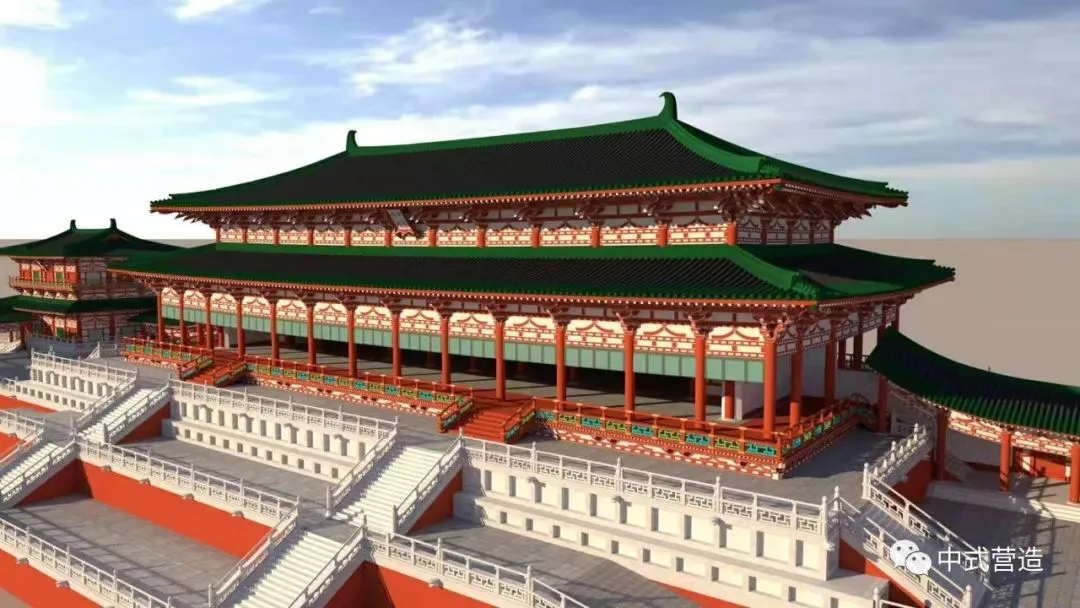
Daming Palace had been part of the Sui imperial park. When Emperor Gaozong took the throne he found the old Taiji Palace damp, and in 662 he expanded Daming Palace on a large scale, renamed it Penglai Palace and moved in; in 670 it became Hanyuan Palace, and in 705 the name Daming returned.
From Gaozong onward the Tang emperors mostly lived and governed here, for 234 years. Wang Wei's line about palace gates opening to the nine heavens and envoys of ten thousand lands bowing before the crown describes the scene.
The scale of a city
The palace was sited on the Longshou Heights northeast of Tang Chang'an's palace city, using the natural terrain to form a largely self-contained fortress. The southern half is rectangular and the northern half a trapezoid wider in the south; the walls run 1.5 km east–west and 2.5 km north–south, 7.6 km around, enclosing about 3.11 sq km. All walls are rammed earth about 10.5 m thick at the base, brick-faced and widened at corners and gates, with gate towers and corner towers above.
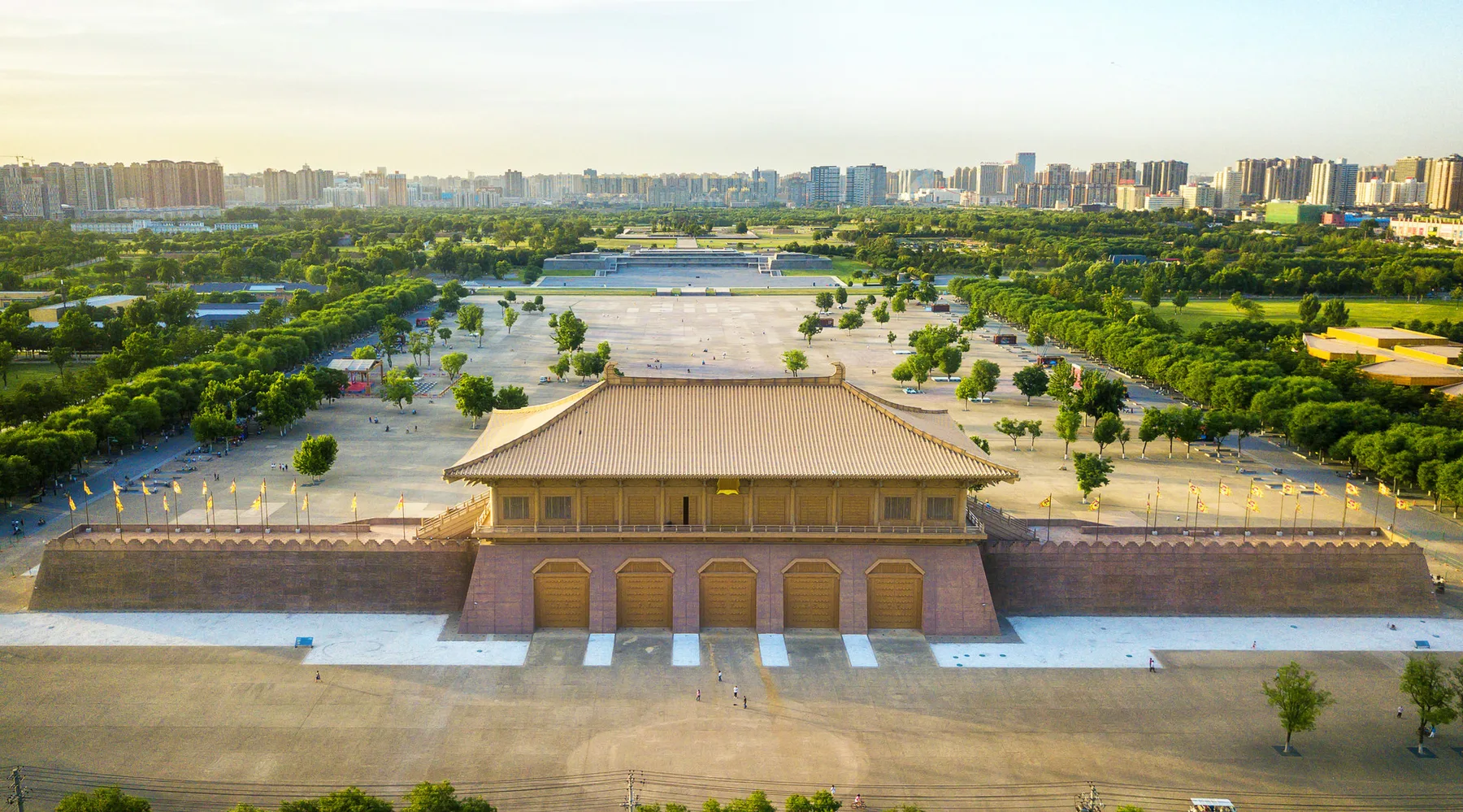
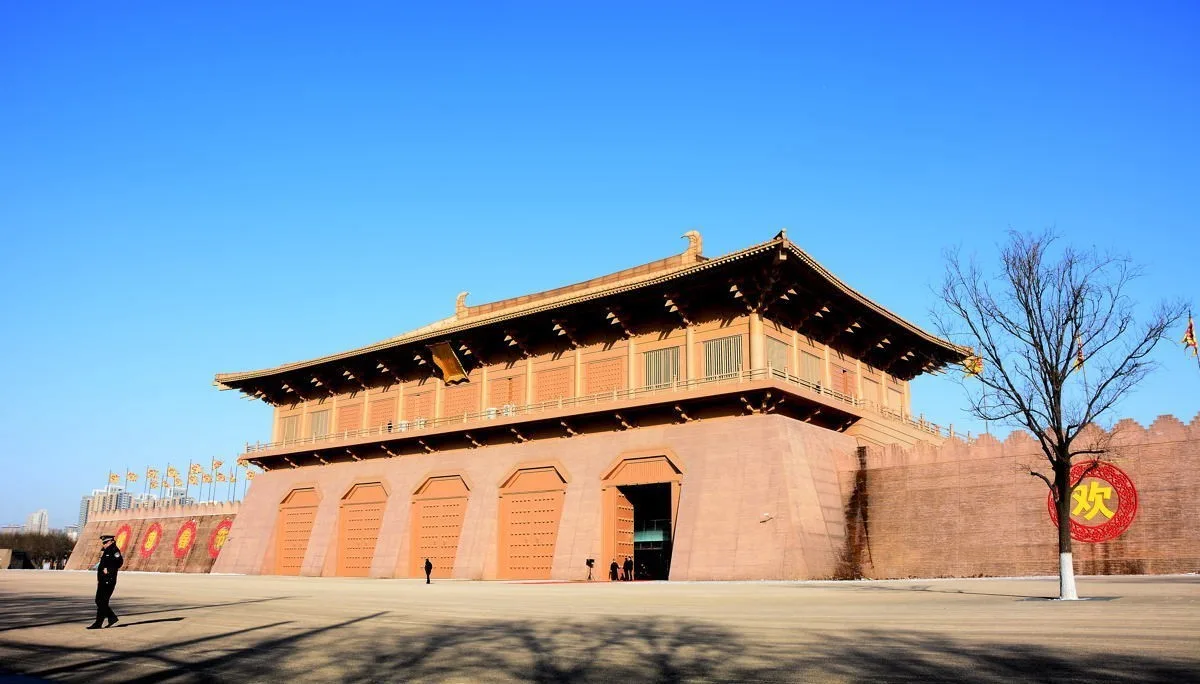
Nine gates pierce the wall. Danfeng Gate, centred in the south, has five passages; the rest have one. The whole precinct divides into an outer court for audiences and an inner court for residence and recreation.
Burned, then turned into a park
In the mid and late Tang, Zhu Ci and later Huang Chao each seized the palace and declared themselves emperor. Under Emperor Xizong it suffered repeated attacks and burned in 896; a few years later its remains were pulled down for defence, leaving ruins.
In 1961 the site was listed among the first batch of nationally protected sites. In 2010 the Daming Palace National Heritage Park was created to protect and present it. What you see today is rammed-earth platforms and reconstruction markers rather than palaces — it takes some imagination.
Practical Notes
- The park is vast; enter by Danfeng Gate and walk north along the axis.
- Hanyuan Hall is the one stop worth lingering over — read the panels here first.
- There is little shade in summer; avoid midday.
Related
- The Bell and Drum Towers: Two Timekeepers Above the Four Great Streets
- Great Tang All Day Mall: A 2.1 km Pedestrian Street at the Pagoda's Foot
- Weiyang Palace: The Great Audience Hall of Han Chang'an
Photos
Sources
- Wikipedia: Daming Palace